January 17, 2023
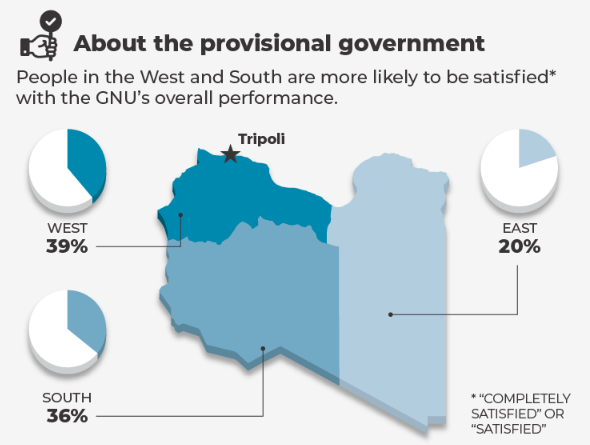
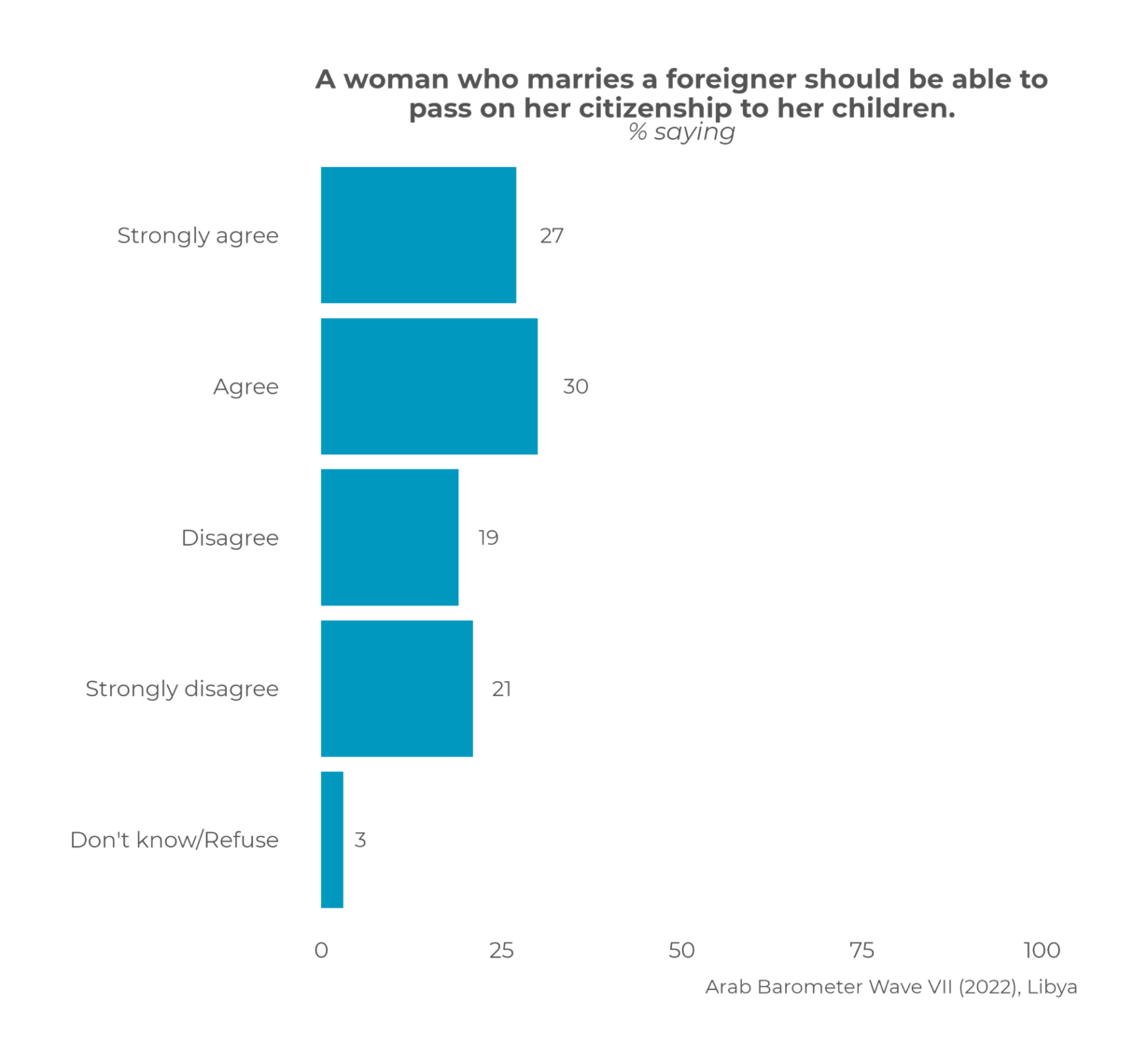
On October 19, 2022, the Government of National Unity (GNU) in Libya decreed that children of Libyan women married to foreigners must enjoy the same rights as Libyan citizens, including access to free healthcare and education inside the country and acceptance at Libyan schools abroad. The decree also waived visa requirement for the group. Children of Libyan women married to…
While the domestic balance of power shifts a little in favor of Fatah, about 70% express worry, in light of the attempt to assassinate Dr. Nasser al Sha’ir, that internal armed strife might erupt at one point in the future, almost 90% do not trust the statements by the PA government regarding the transfer to Palestinian banks of the salaries…
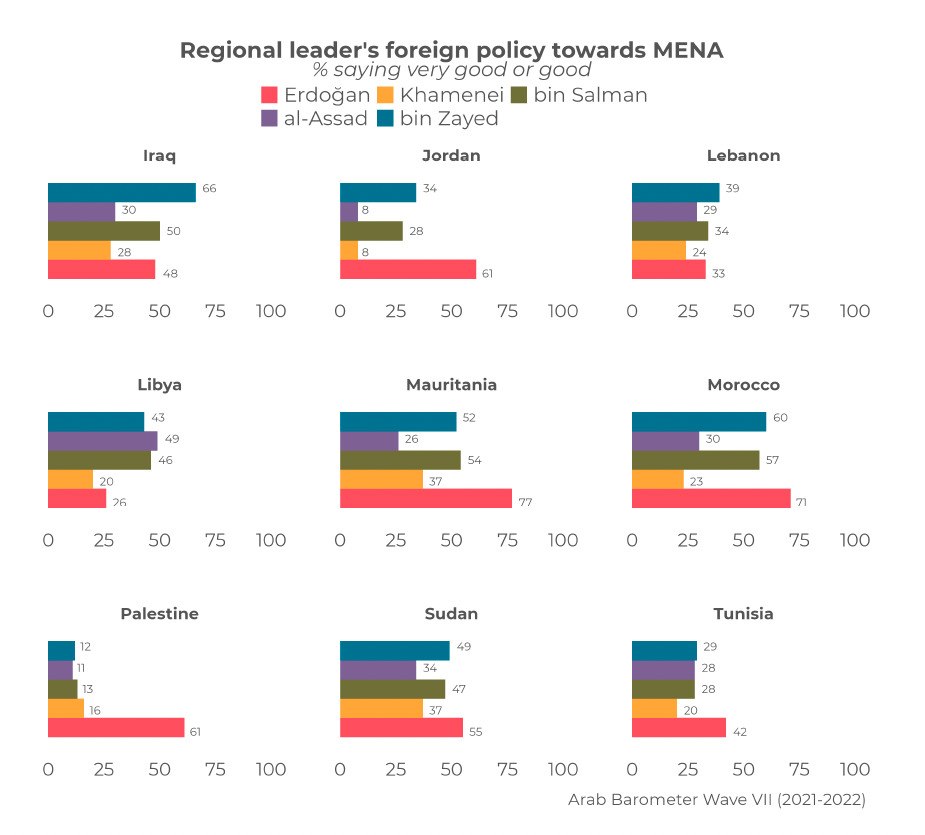
Over the last decade, there has been an ongoing competition for leadership within the Middle East and North Africa. Some have described this as a new Arab Cold War, with an anti-Iran and anti-Islamist block led by Saudi Arabia and the United Arab Emirates on one side with a more pro-Iran and pro-Islamist bloc led by Turkey and Qatar on…
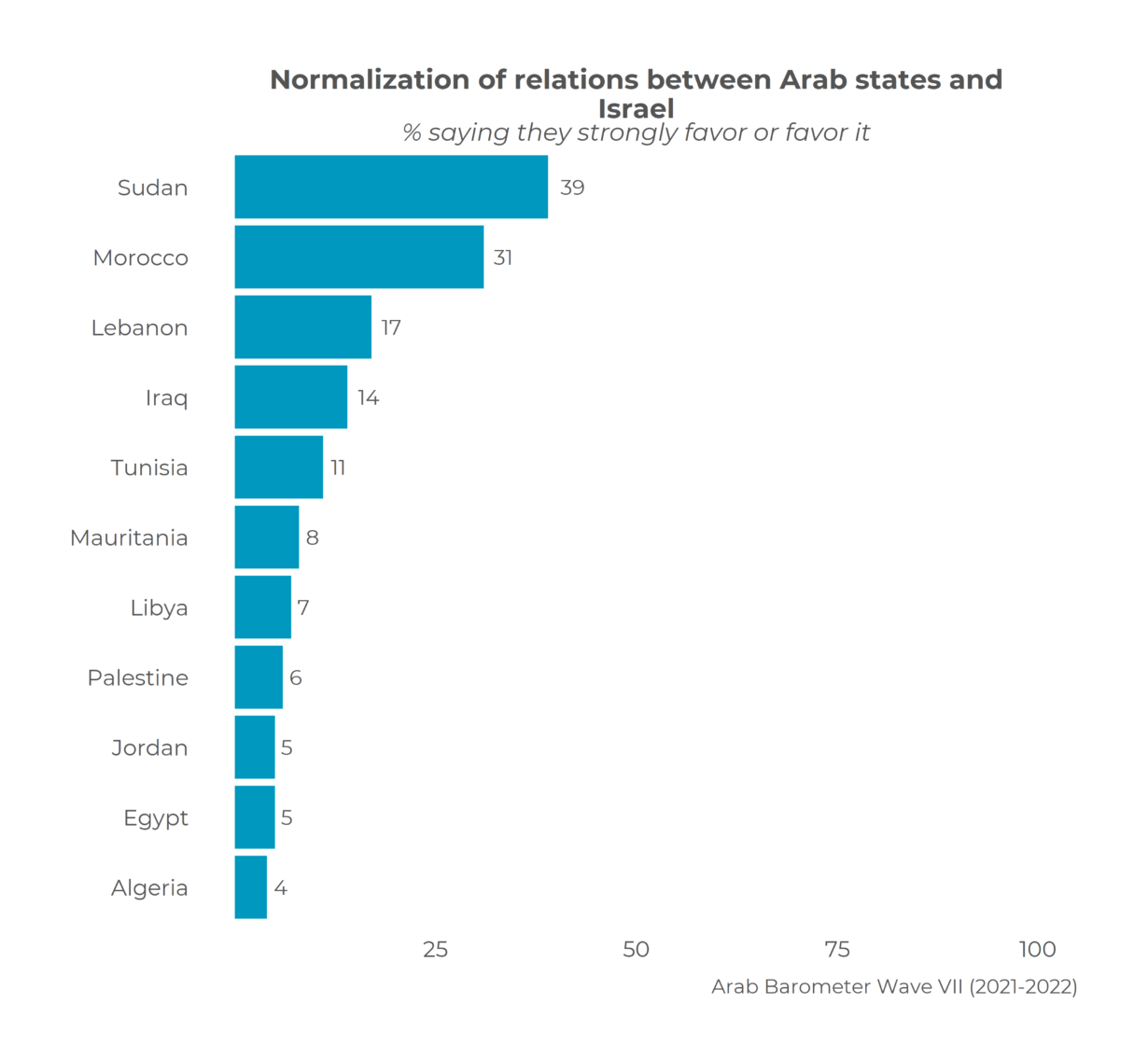
There is broad rejection among ordinary citizens across MENA of the U.S.-backed Abraham Accords and a broader peace deal with Israel. Although at most about a quarter of citizens in the region say they follow news on this issue a great deal or fair amount, including just one-in-ten in Tunisia, Palestine, Lebanon, Jordan, and Iraq, these peace agreements are widely…
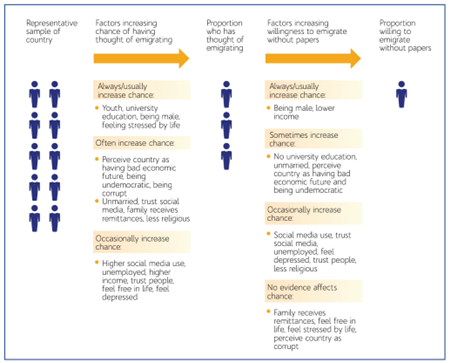
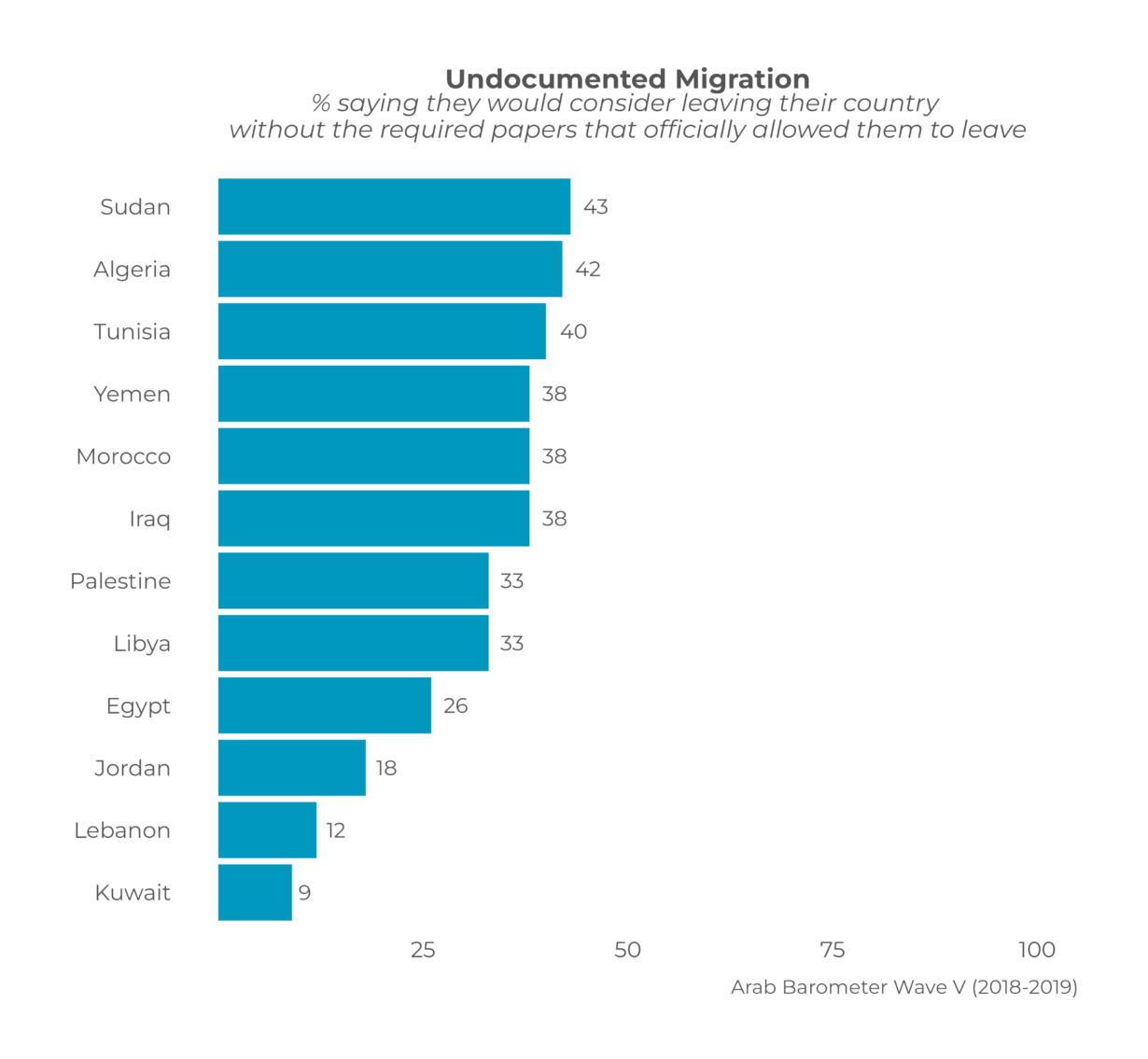
Why do individuals vary in their desire to emigrate? Why are some willing to emigrate irregularly? My recently published open access article in Comparative Migration Studies tests four theoretical approaches to these two questions—socio-demographics; economic and political context; access to migrant networks; and psychological factors—across 12 countries in the Middle East and North Africa. To do so, it uses logistic…
Lebanese are the most pessimistic about their country’s economic future of any country surveyed in Arab Barometer’s sixth wave between 2020 and the spring of 2021. Among all the economic worries, the rising cost of living is seen as the biggest challenge. Unsurprisingly, about half citizens (48 percent) are seeking to leave their homeland for better opportunities abroad. Yet, when…
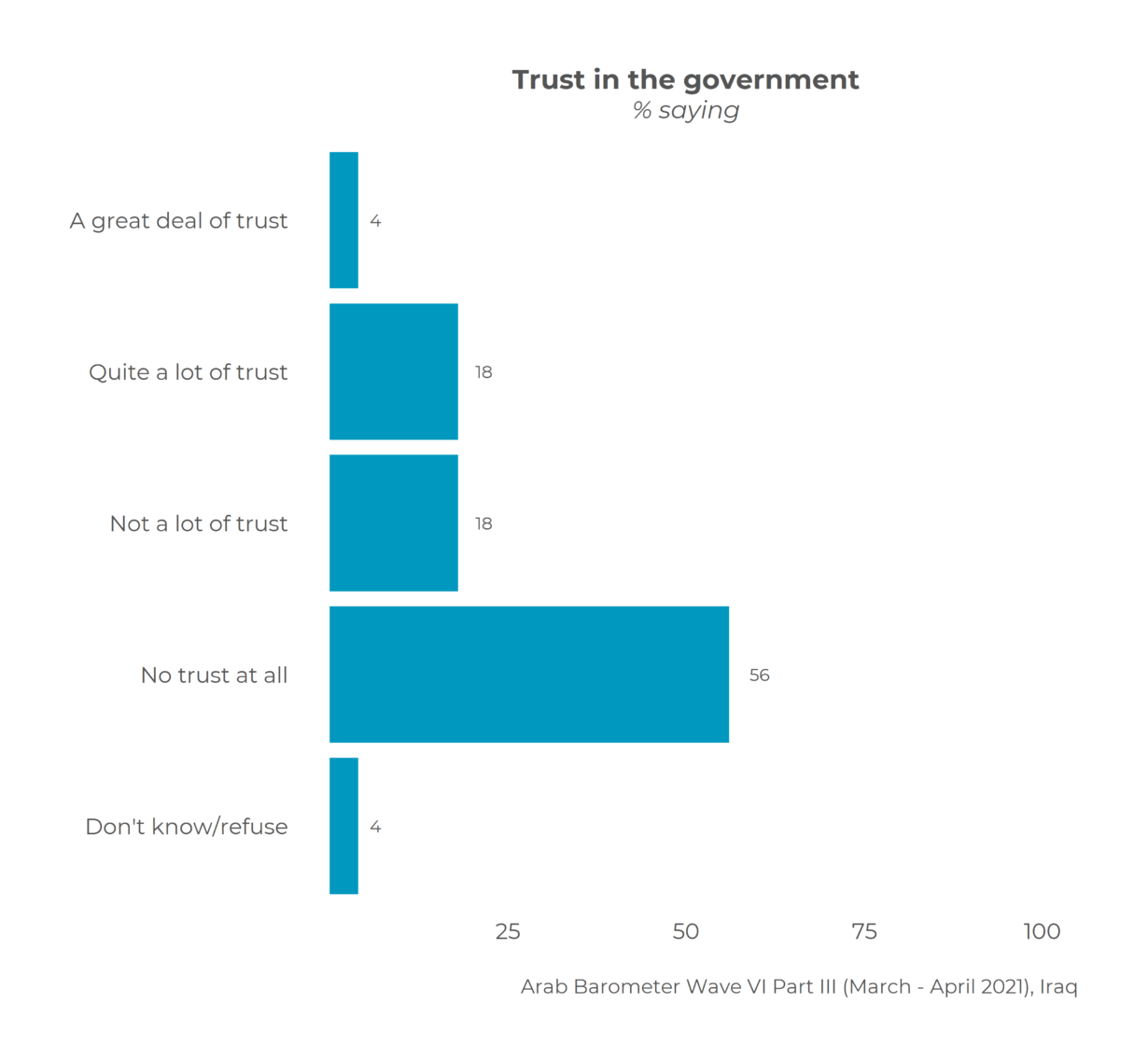
Nearly 19 years have passed since the removal of Saddam Hussein from power and the establishment of the second republic of Iraq. While the structures of the State and the political system have been deeply and extensively reshaped, the impact of this transformation on the life of Iraqis remains debated. The latest Arab Barometer’s (AB) survey (Wave VI which was–…
The public favors a neutral stand in the Russian war against Ukraine even as slightly more people blame Russia for starting the war; closer to home, Israel-PA “confidence building measures” are increasingly viewed favorably even as two-thirds share the view that Israel is an apartheid state; and domestically, ten months after the Israel-Hamas War, Fatah’s popularity returns to its pre-May…
From 28 to 31 March 2022, the inaugural Middle East and North Africa Climate Week 2022 in Dubai, UAE will bring together key stakeholders to take the pulse of climate action in the region, explore climate challenges and opportunities to build forward from the pandemic and showcase ambitious solutions. Arab Barometer’s 2018-2019 wave of surveys found that citizens across MENA…
Arab Barometer is a central resource for quantitative research on the Middle East.
Our objective is to disseminate and apply survey findings in order to contribute to political reform and to strengthen institutional capacity for public opinion research.
Subscribe to our newsletter to stay updated with news from Arab Barometer directly to your inbox.
Subscribe