Key Findings from Arab Barometer Wave IX (2025)
Background
Jordanian public opinion is being shaped by persistent economic hardship, continued regional upheaval, and the war in Gaza. Against this backdrop, Arab Barometer’s ninth wave surveyed Jordanians on the economy, governance and institutions, migration, civic and political engagement, democracy, gender, the environment, and international affairs.
This factsheet highlights key findings from Arab Barometer’s Wave IX survey in Jordan.
How we did this survey
These findings are based on a nationally representative face-to-face survey conducted in Jordan. The survey included 1,266 randomly selected Jordanian citizens from across all governorates and was fielded from October 1–12, 2025 by the Center for Strategic Studies at the University of Jordan, using a multistage clustered sample. The margin of error for the reported results is ±3 percentage points. The survey is part of Arab Barometer’s ninth wave.
Key Takeaways
- Economic hardship remains widespread despite modest improvements in economic assessments and growing confidence in government.
- The war in Gaza continues to shape Jordanians’ views of the U.S. and normalization with Israel, while prompting widespread expressions of solidarity.
- Migration aspirations and declining perceptions of civil liberties point to longer-term pressures facing Jordan. Traditional gender attitudes and rising concerns over women’s safety, water security, and climate point to additional challenges.
Seven Key Finding
Economic hardship remains the defining concern
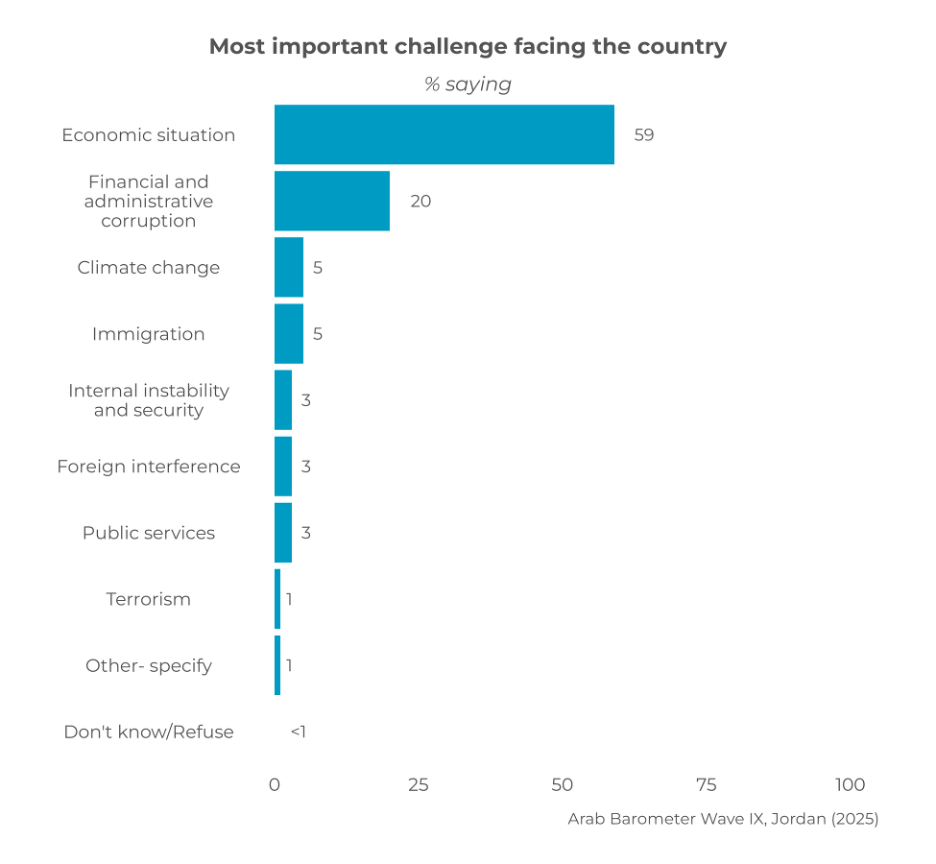
- 59% say the economy is Jordan’s most important challenge, while 20% cite corruption.
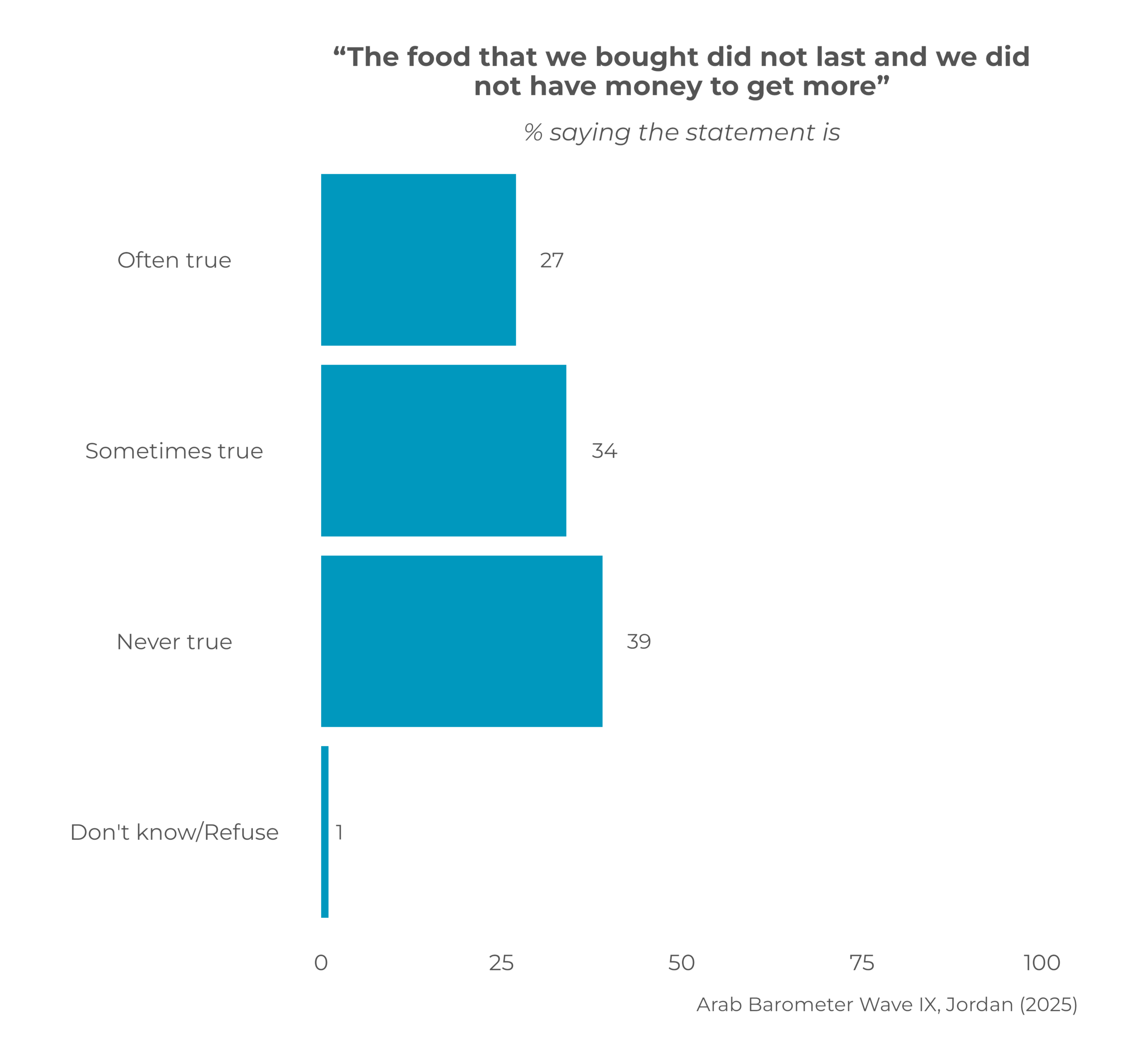
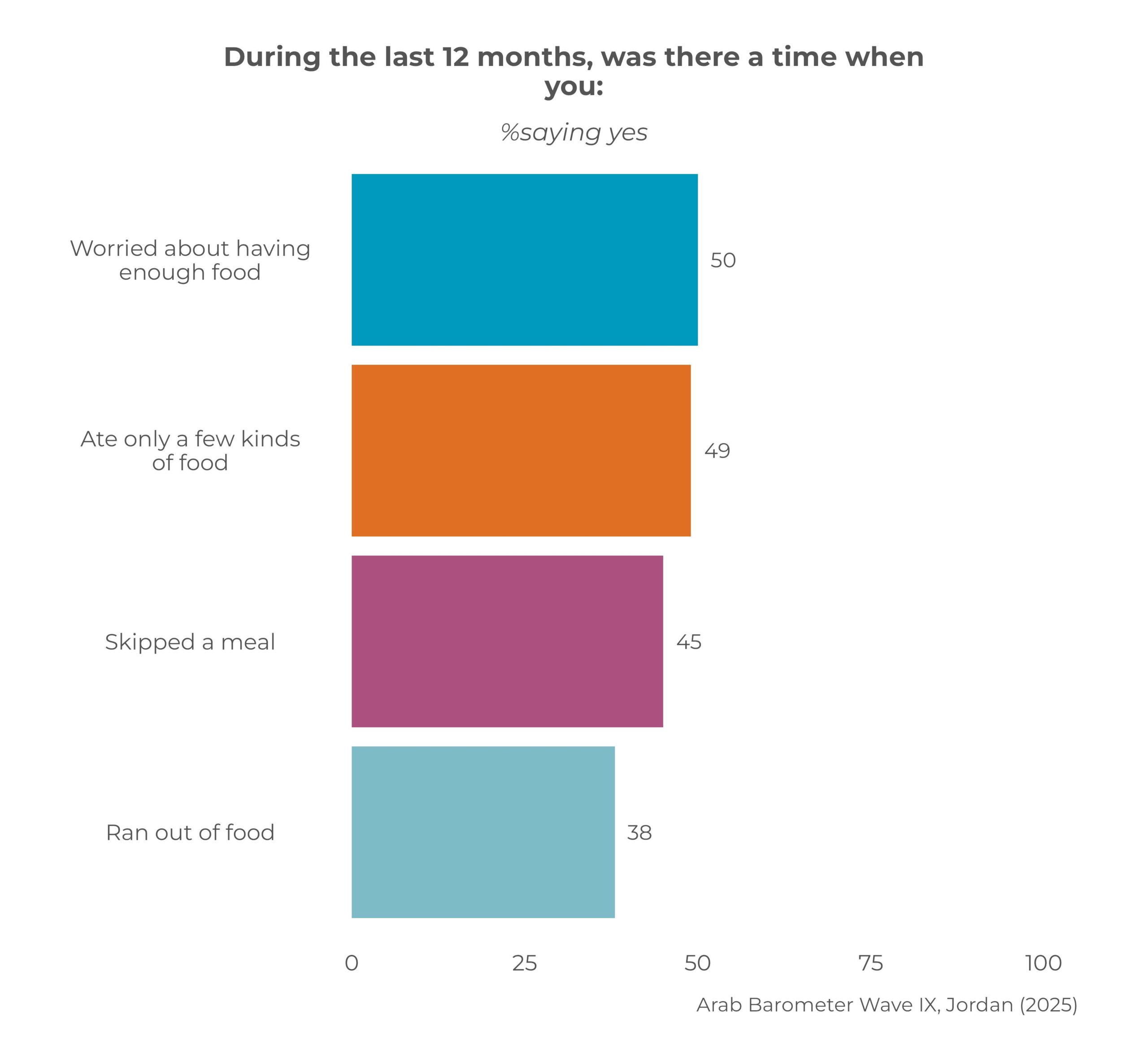
- 61% experienced food insecurity in the previous month because they lacked money to buy more food. 38% say their household had run out of food at some point in the previous year.
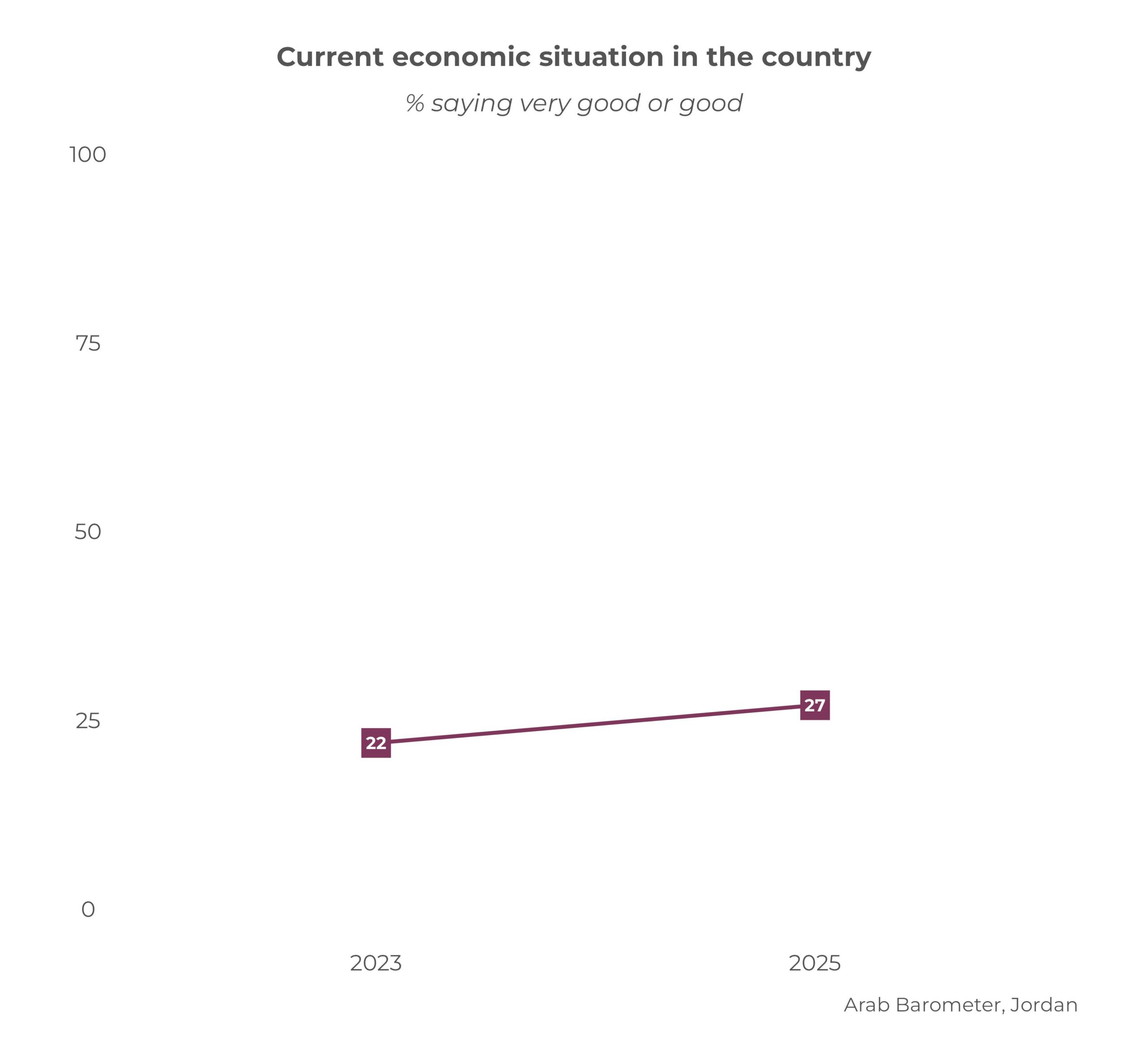
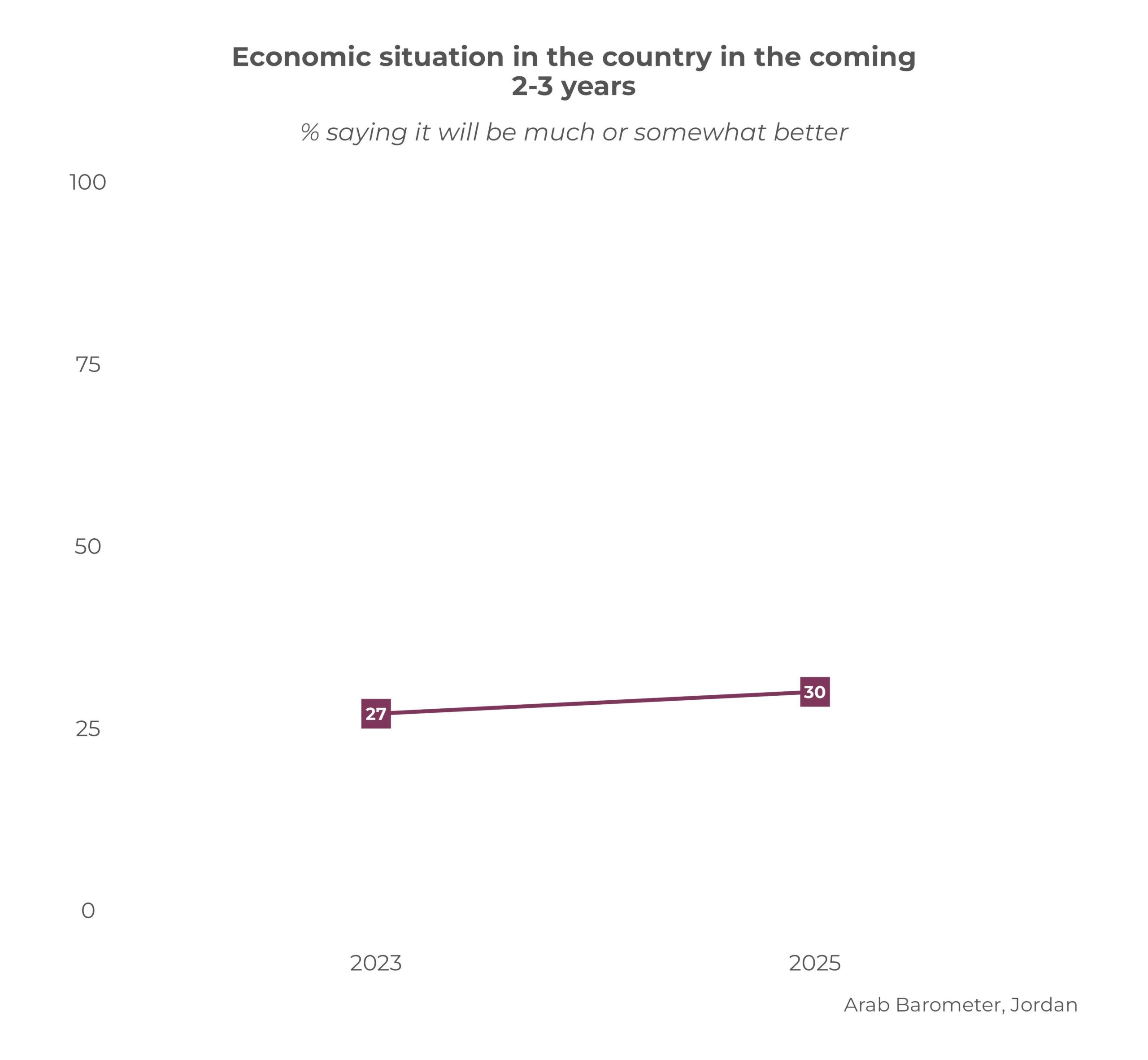
- Views of current economic conditions (27%) have improved modestly since the late 2023 survey, but only 30% expect the economy to improve over the next two to three years.
Confidence in government has improved, but economic frustrations persist
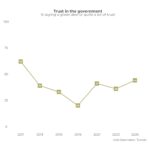
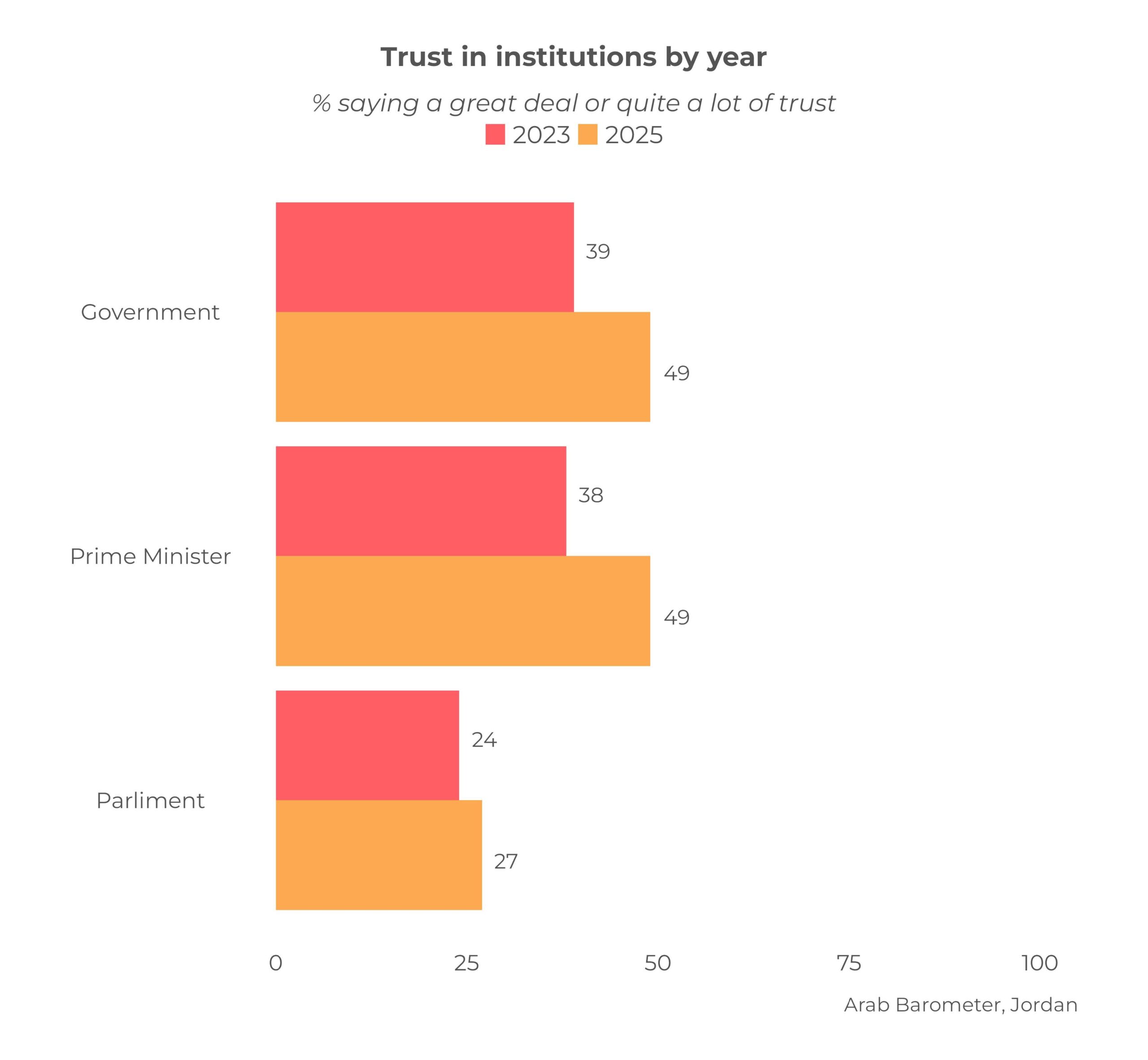
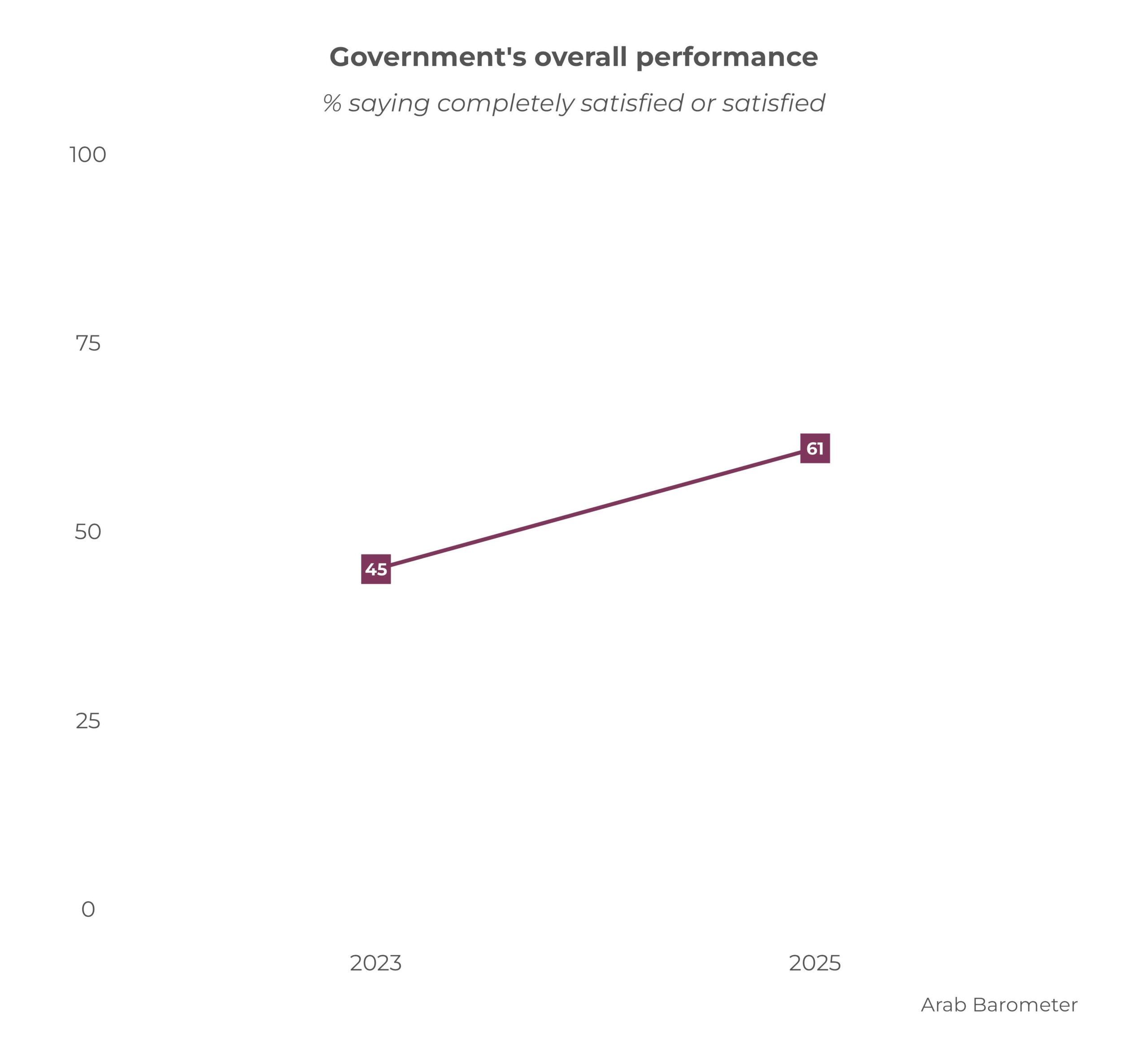
- Confidence in government has increased since the late 2023 survey, with 49% trusting the government (up 10 points) and 61% satisfied with its overall performance (up 16 points).
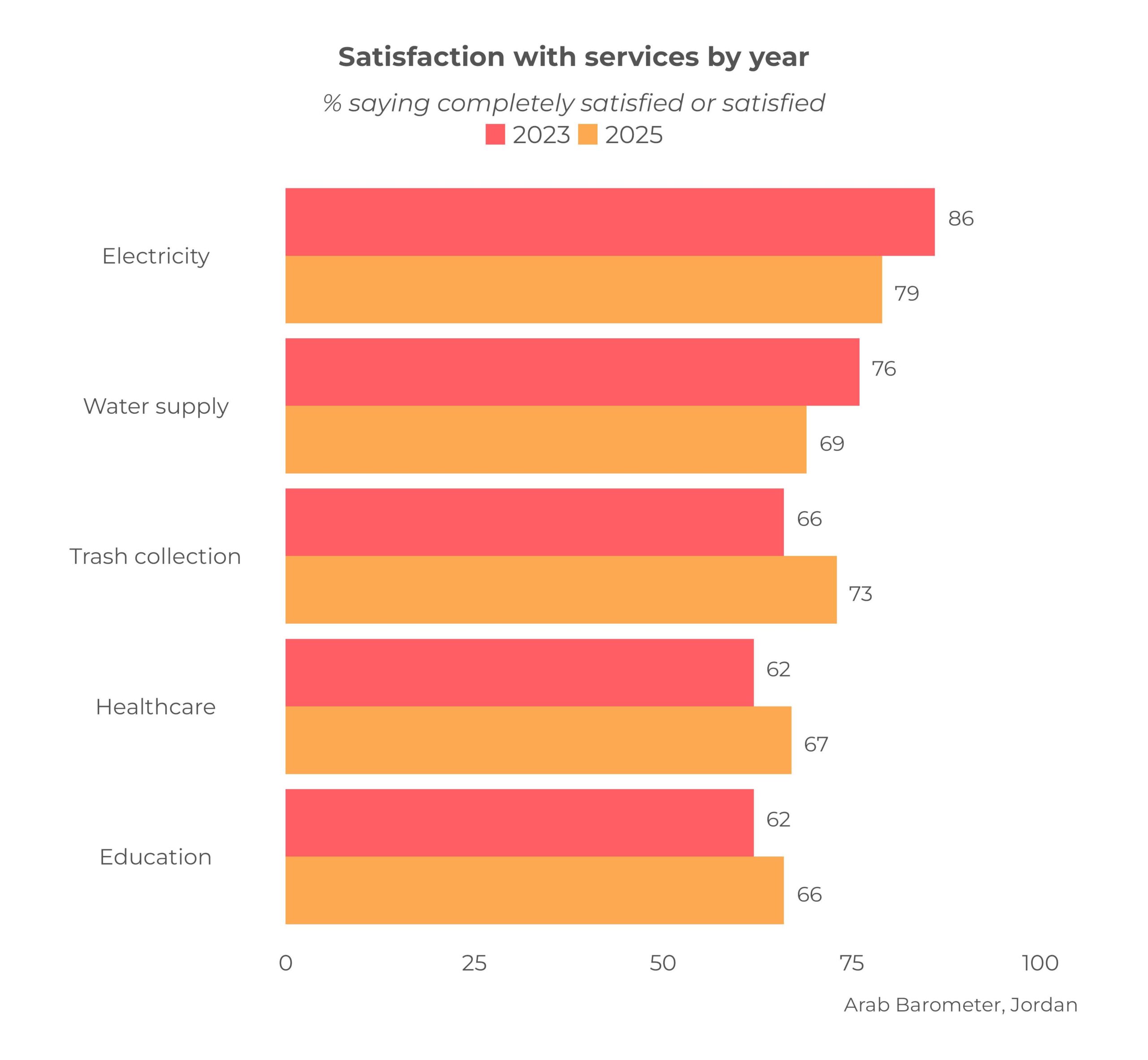
- Public services receive generally positive ratings: 79% are satisfied with electricity, 73% with trash collection, 69%with water supply, 67% with healthcare, and 66% with education.
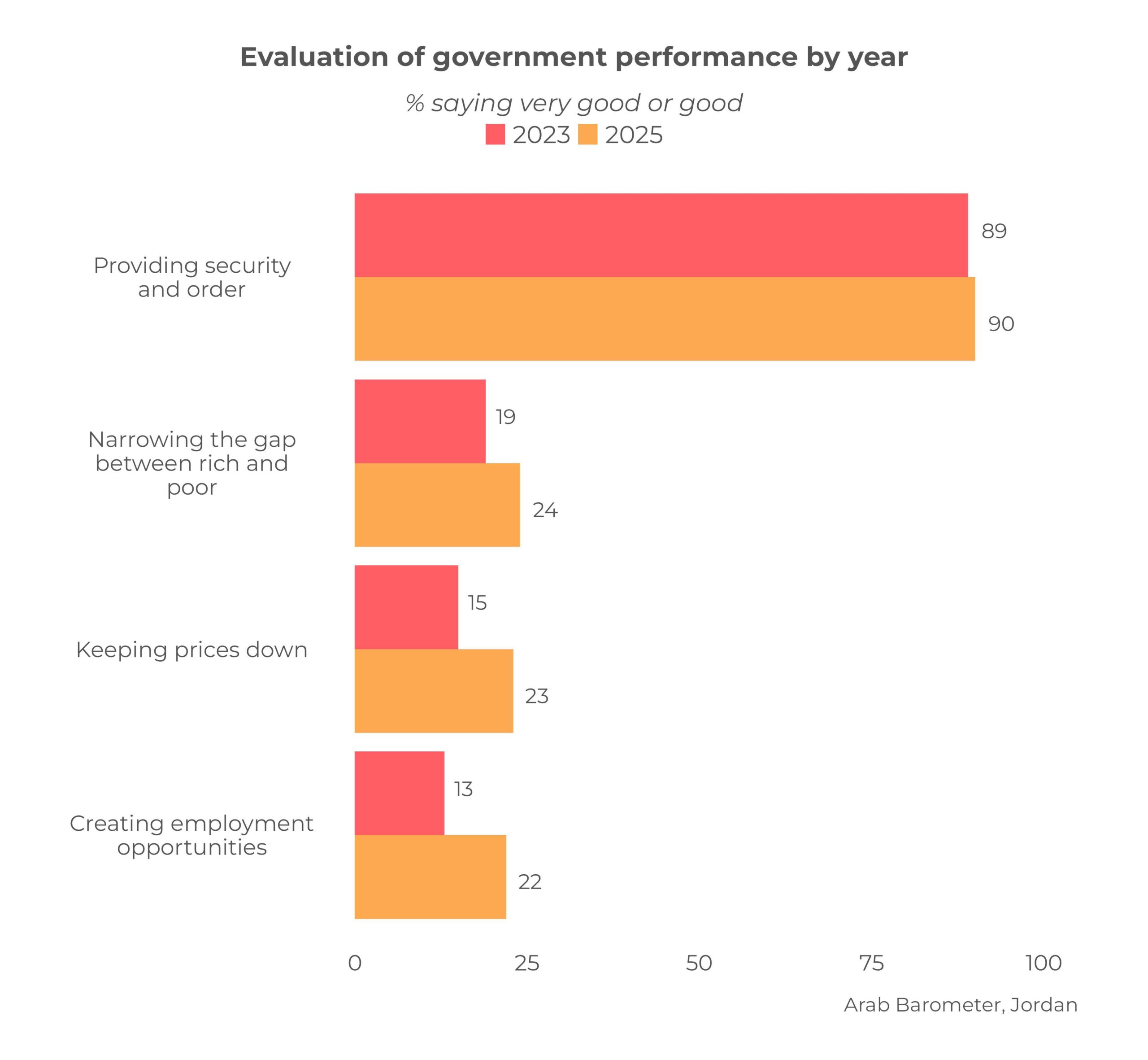
- Economic performance receives much lower ratings: only 22% approve of the government’s efforts to create jobs, 23% to keep prices down, and 24% to reduce inequality.
- 90% approve of the government’s performance in maintaining security and order.
Many Jordanians continue to look abroad for opportunities
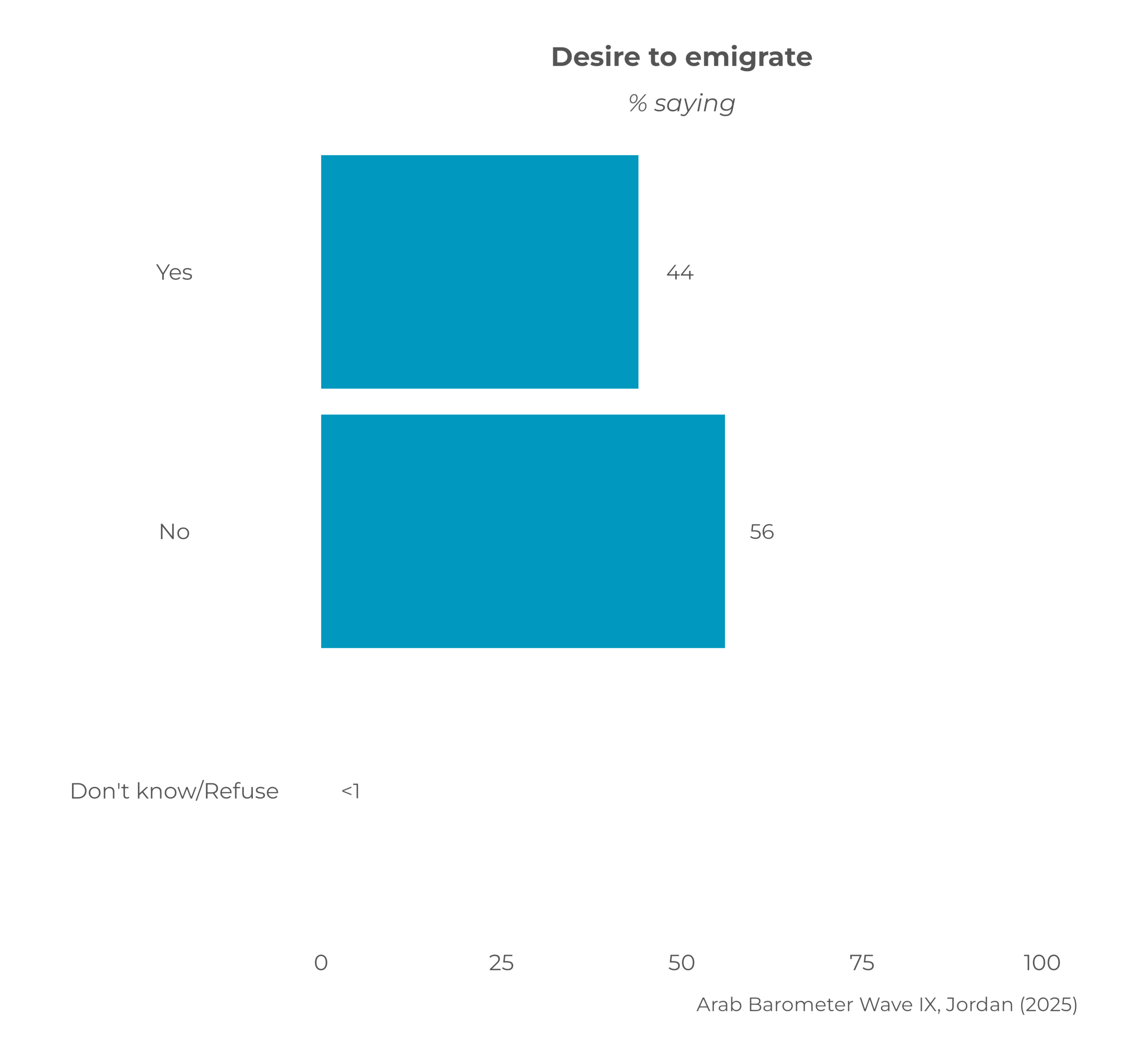
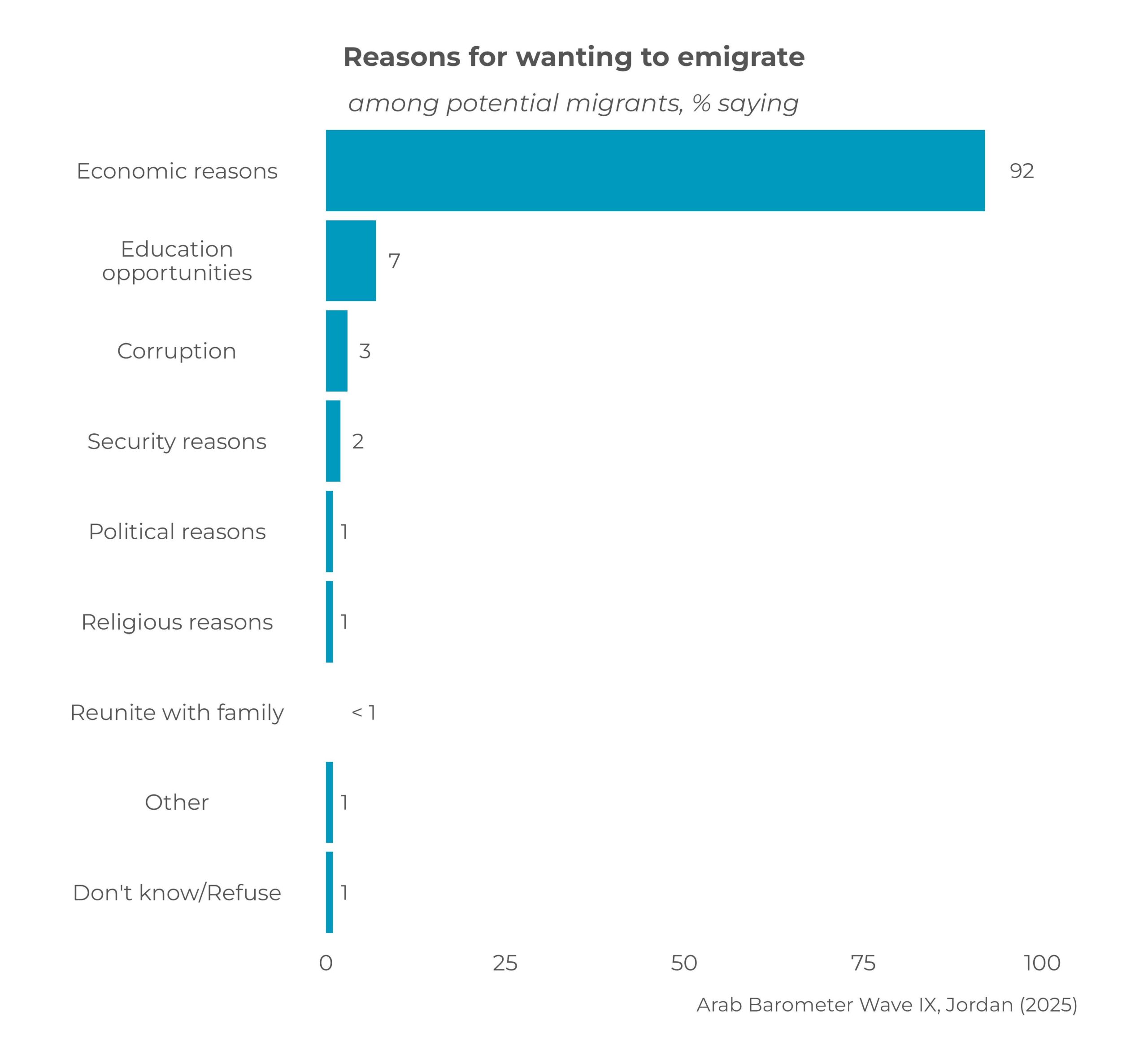
- 44% have considered emigrating, with 92% of potential migrants citing economic reasons.
- Young adults and university graduates are the most likely to consider leaving Jordan.
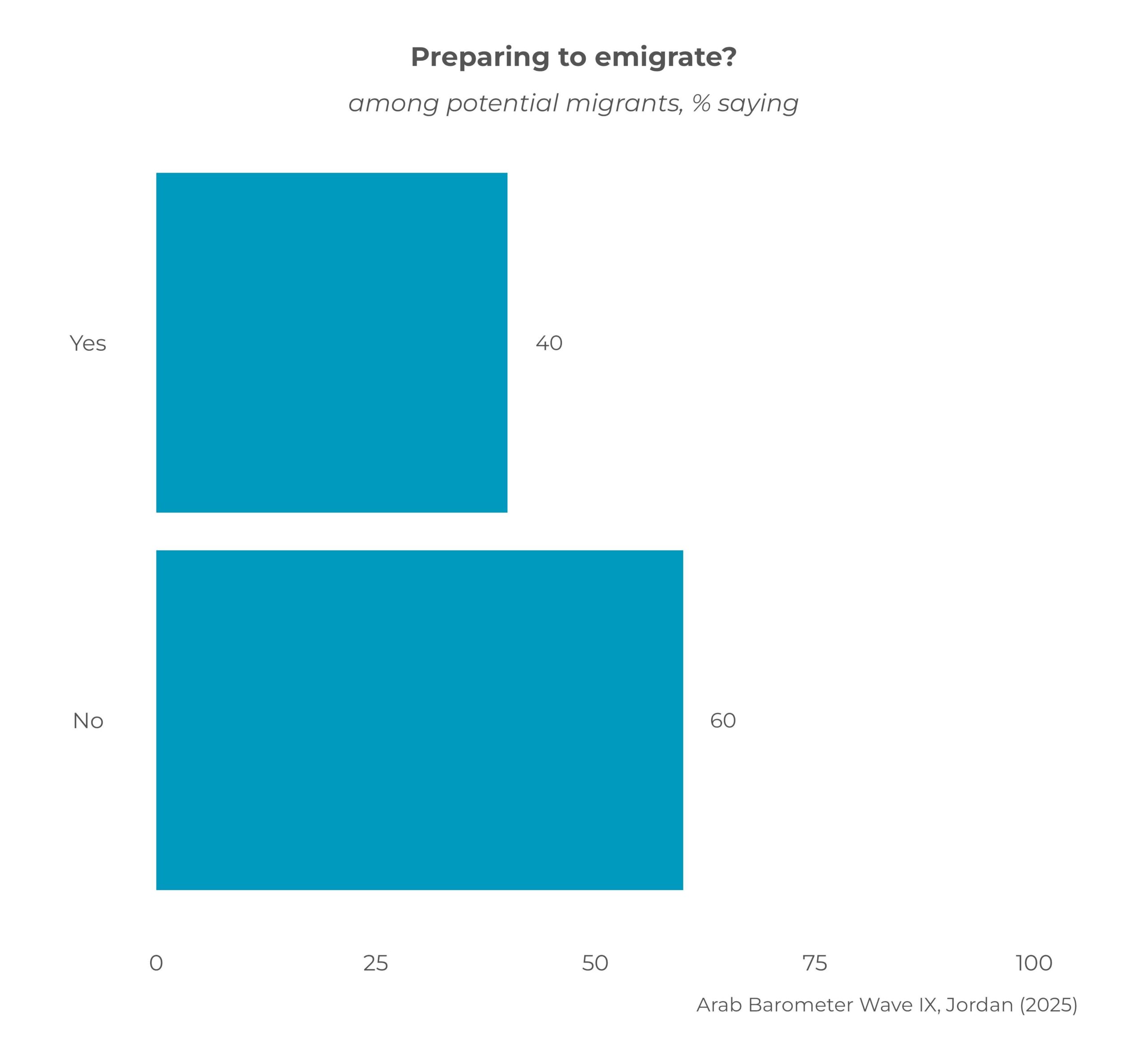
- Among potential migrants, 40% say they are actively preparing to leave.
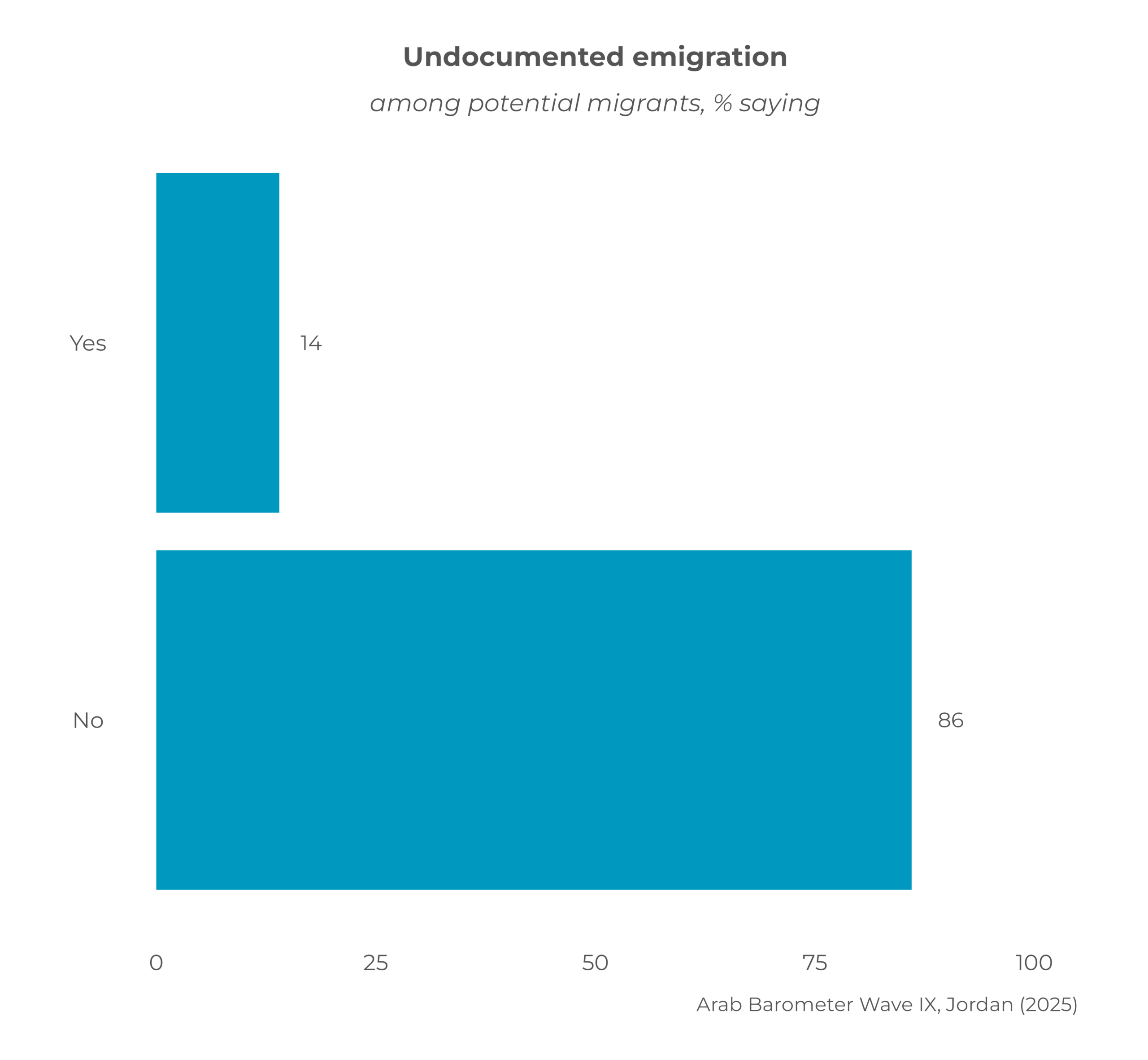
- 14% of those considering emigration say they would contemplate leaving without the required documents, down from 19% in the late 2023 survey.
Declining perceptions of civil liberties
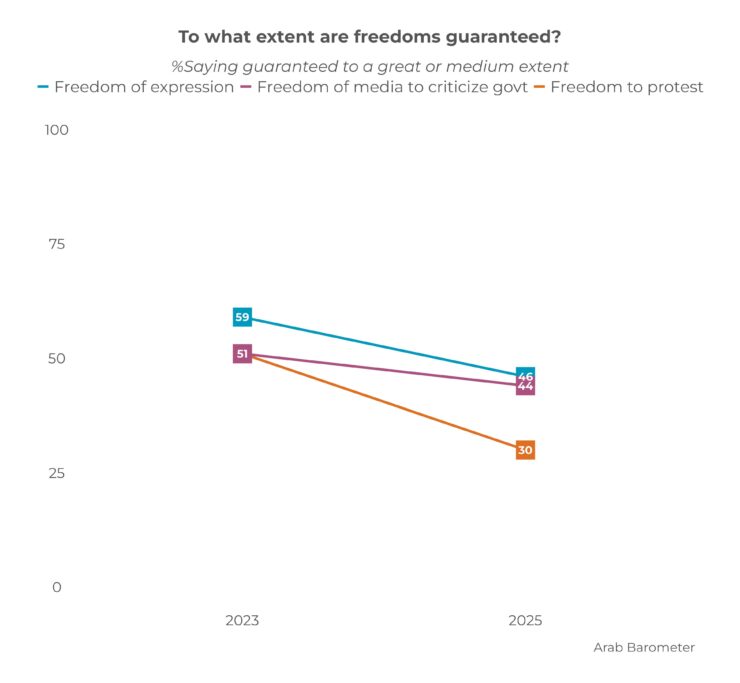
- 46% say freedom of expression is guaranteed, down 13 percentage points from late 2023, while 30% say the right to peaceful protest is guaranteed, down 21 points.
- 44% say the media are free to criticize the government.
Women’s rights coexist with persistent barriers
Equal rights ≠ Equal roles
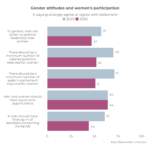
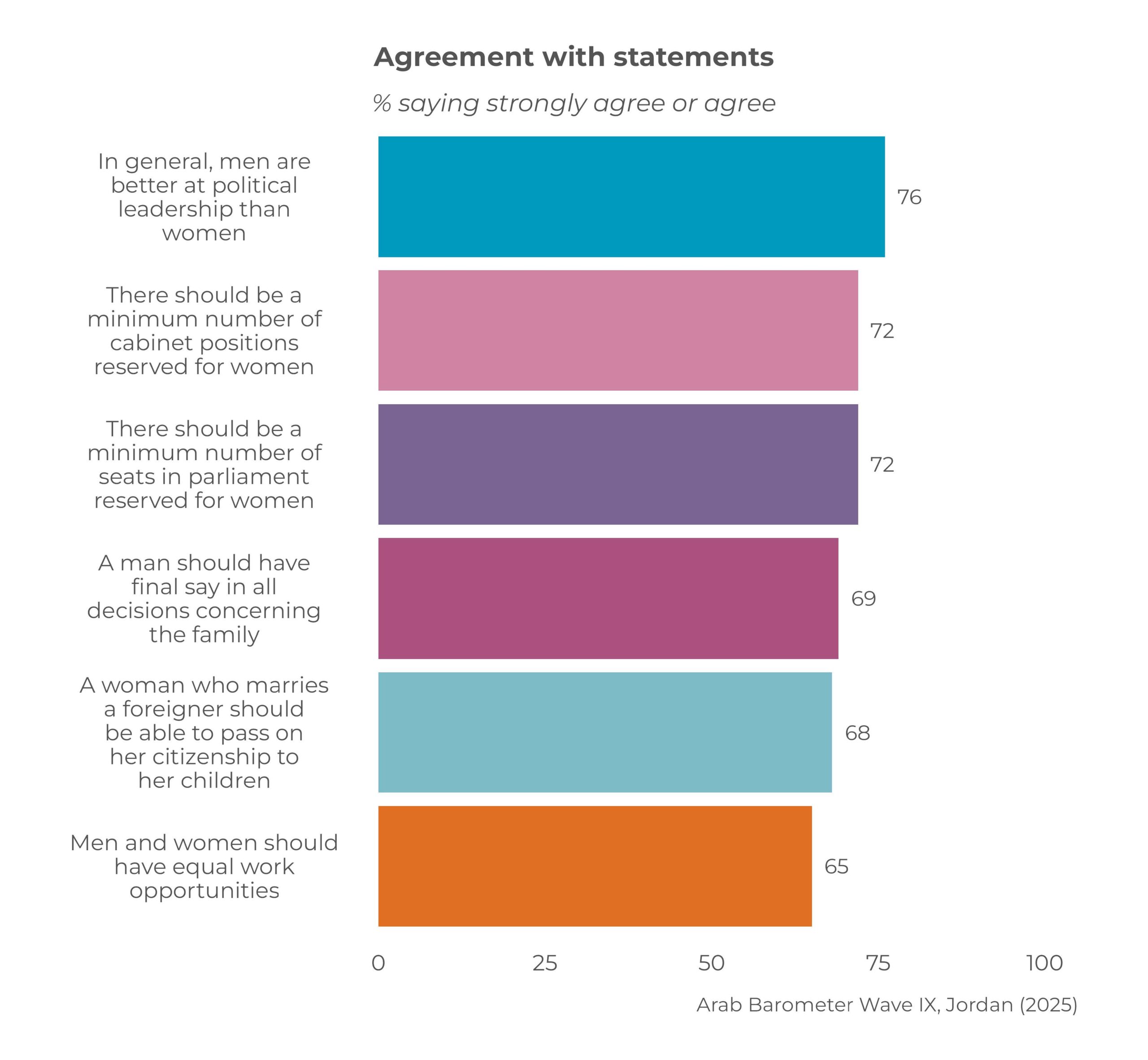
- Support for women’s equality coexists with traditional gender attitudes: 65% favor equal workplace opportunities for women and 72% support women’s political representation, while 76% say men make better political leaders and 69% say men should have the final say in family decisions.
Safety concerns remain widespread
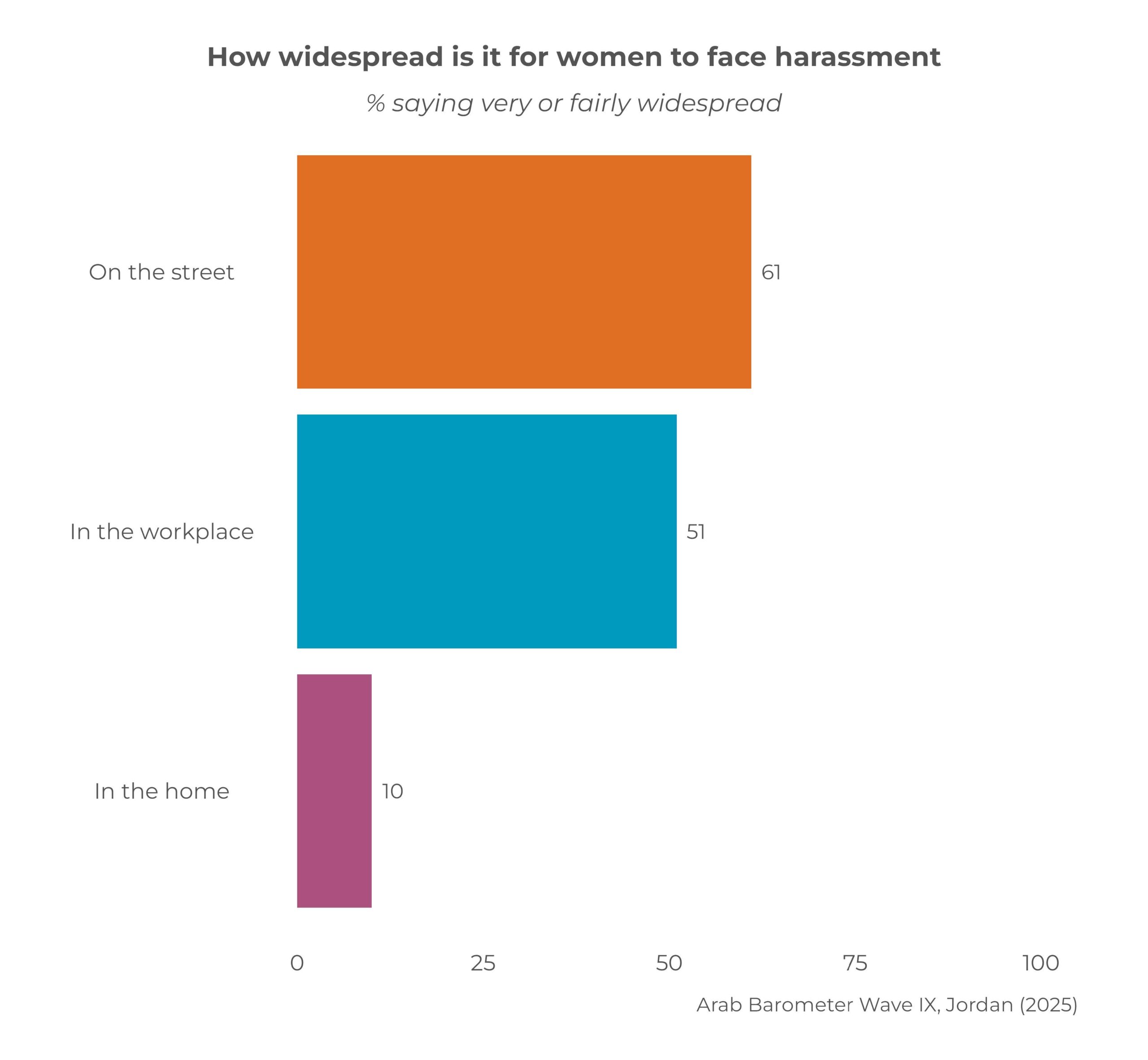
- 61% say harassment of women is widespread in public spaces, while 51% say the same about harassment in workplaces.
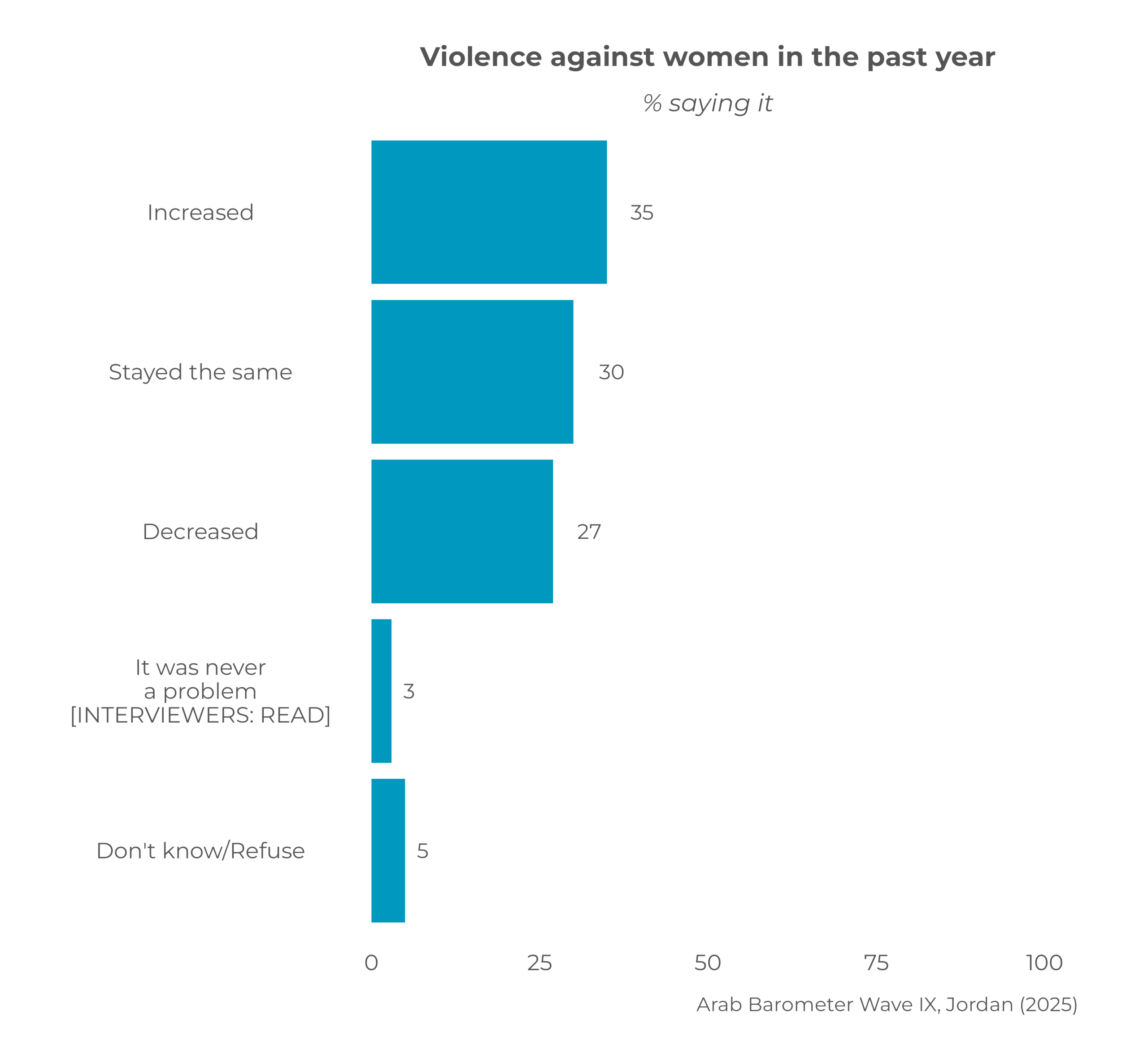
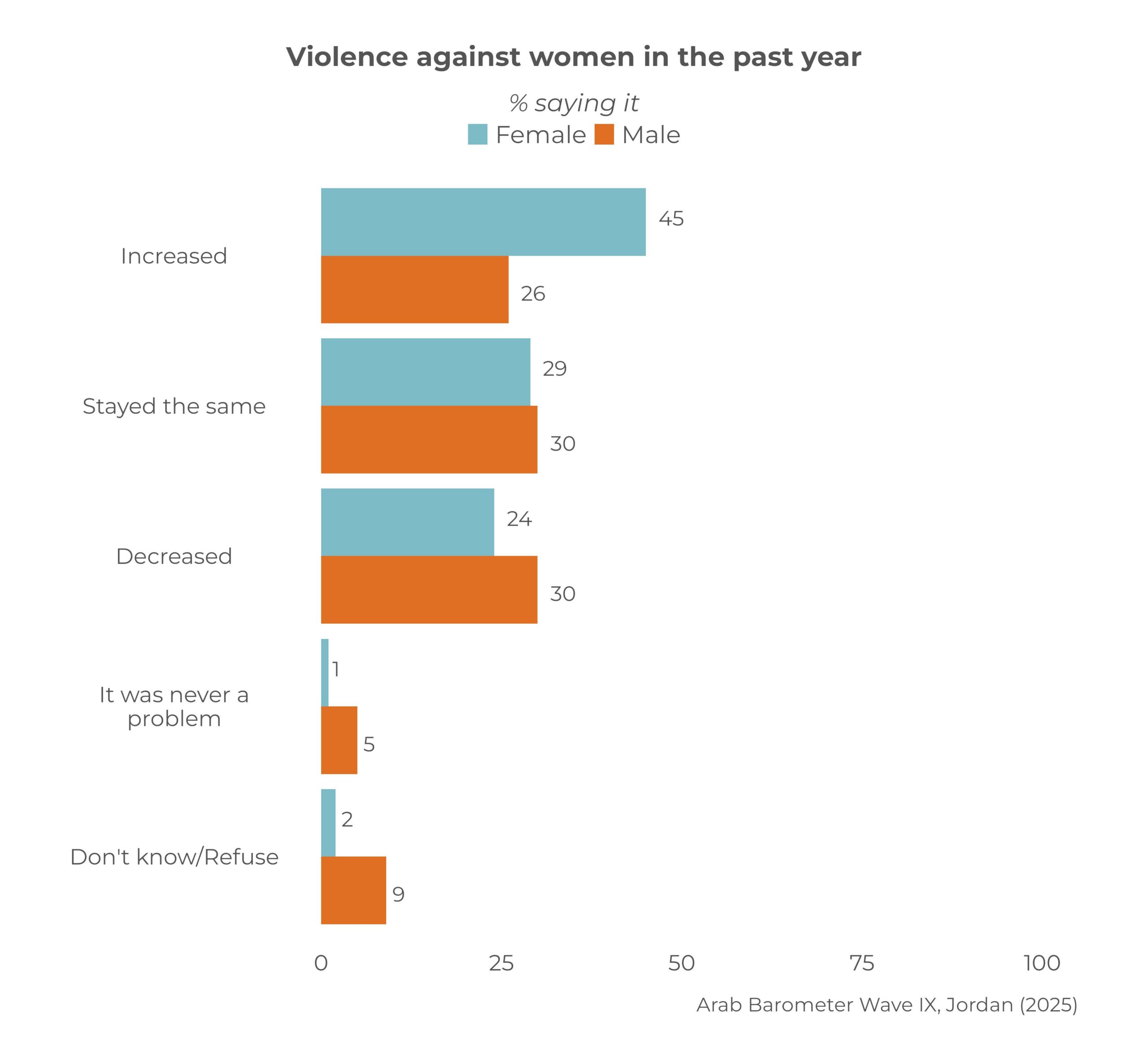
- 35% say violence against women in their community increased during the previous year; women are 19 percentage points more likely than men to say so (45% vs. 26%).
Water security is rising on the public agenda
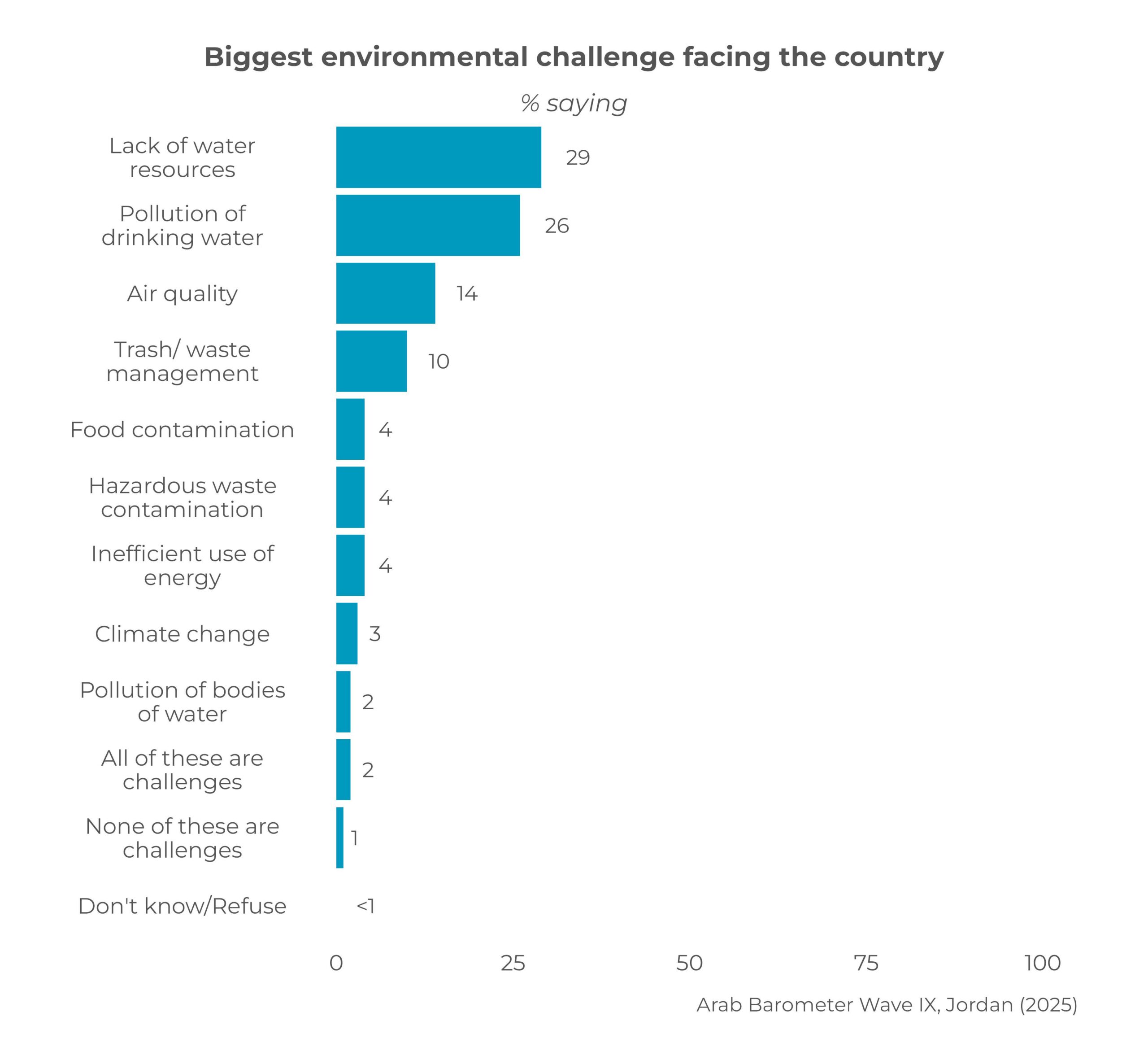
- 57% identify water scarcity or water pollution as Jordan’s most serious environmental problem, up 10 percentage points since the late 2023 survey.
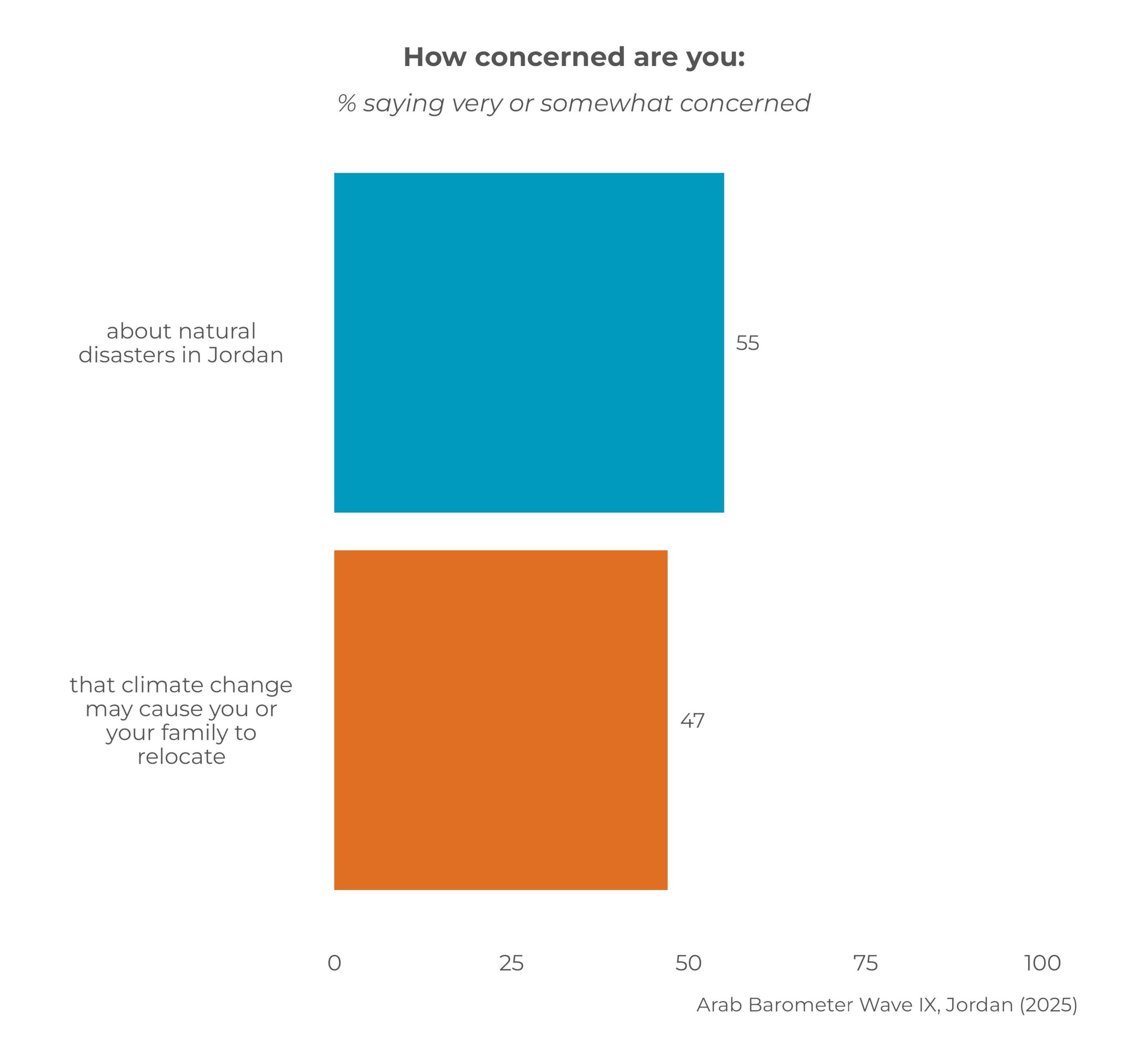
- Climate change is increasingly seen as a security and livelihood concern:55% worry about climate-related natural disasters, while 47% fear it could force them to relocate from their homes.
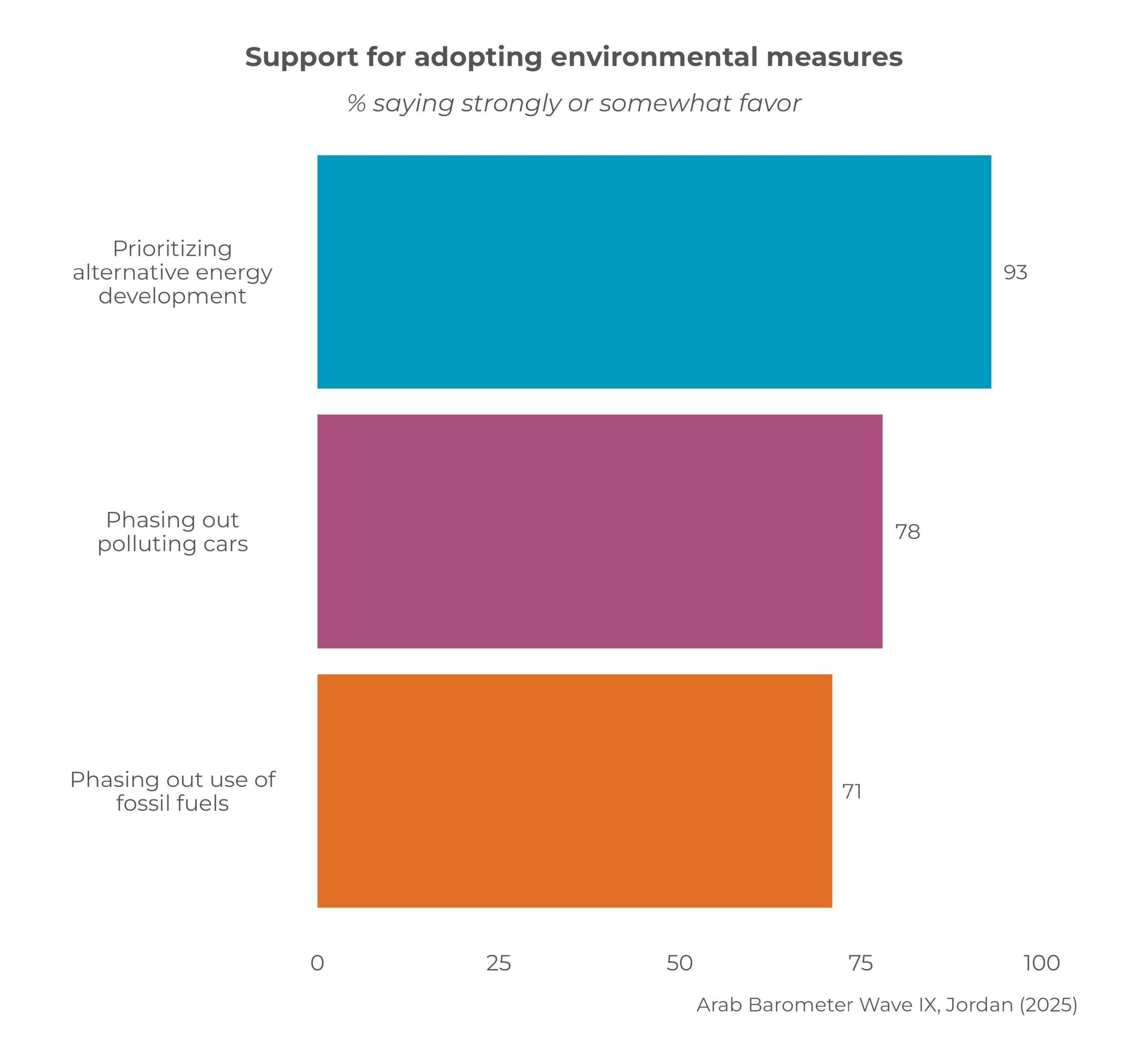
- 60% say the government should do more to address climate change, while 93% support expanding alternative energy.
The war in Gaza continues to shape attitudes and actions
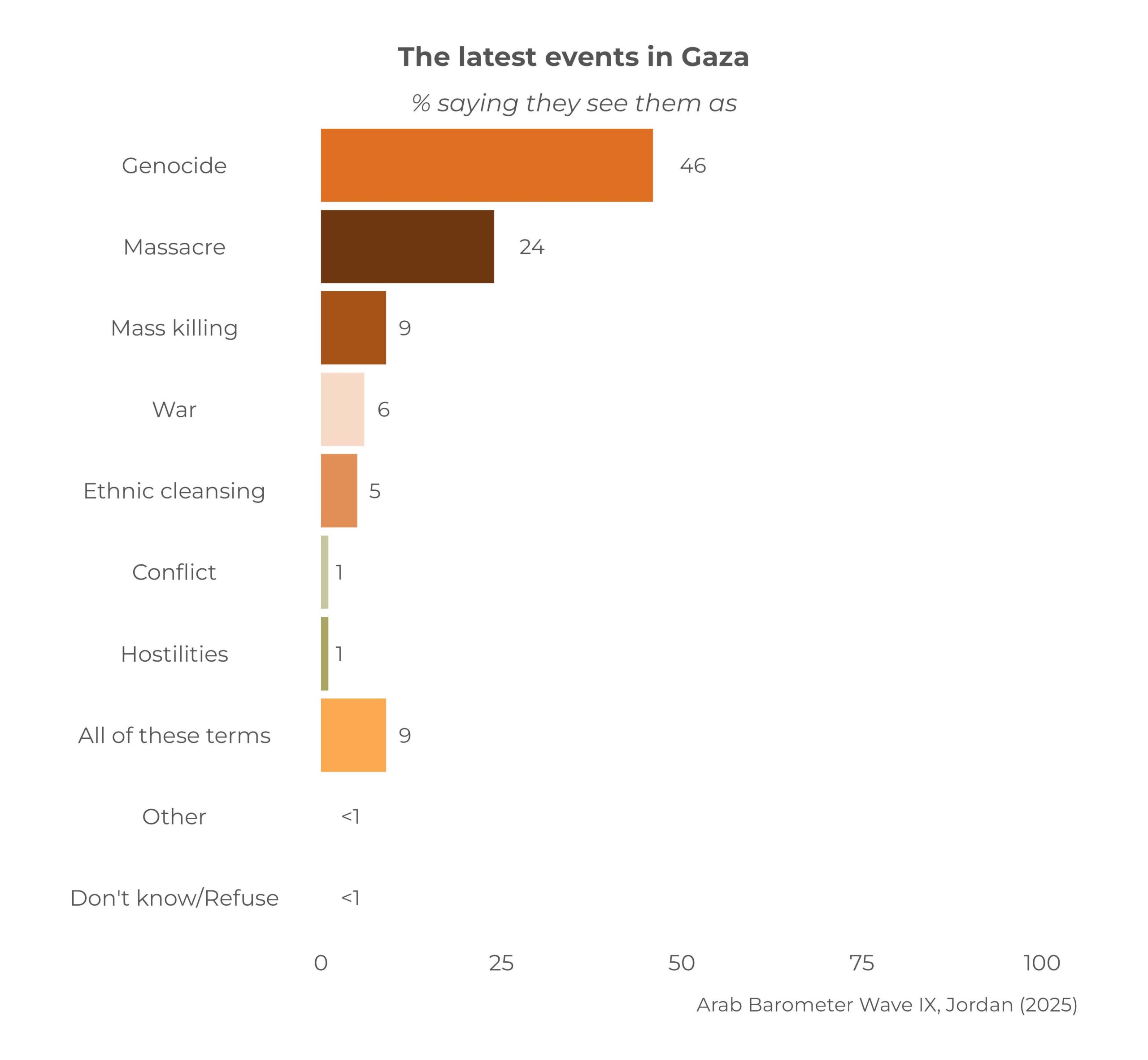
- 70% describe the events in Gaza as either a genocide or a massacre.
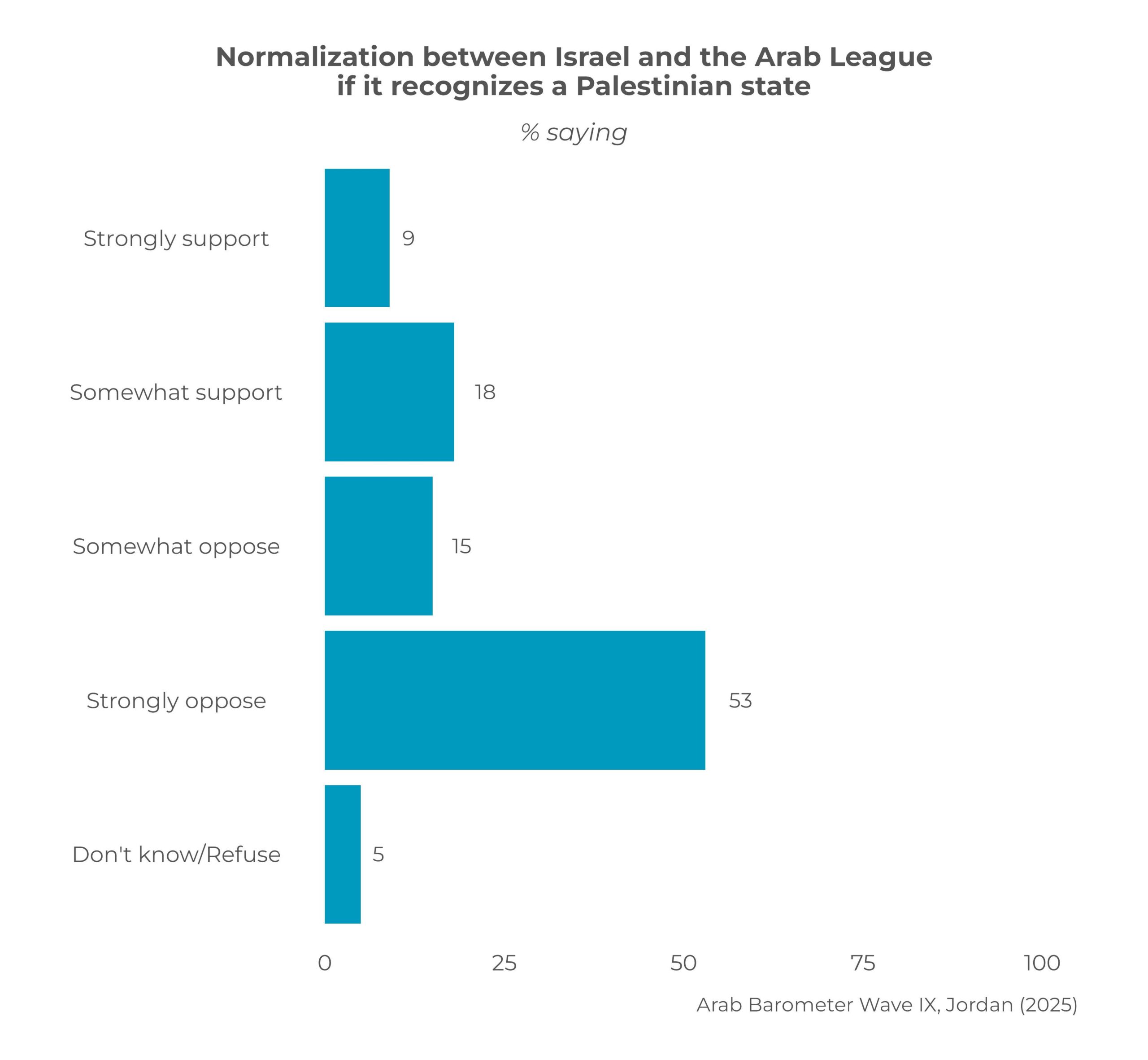
- 67% oppose normalization with Israel even if it recognizes a Palestinian state based on the 1967 borders with East Jerusalem as its capital.
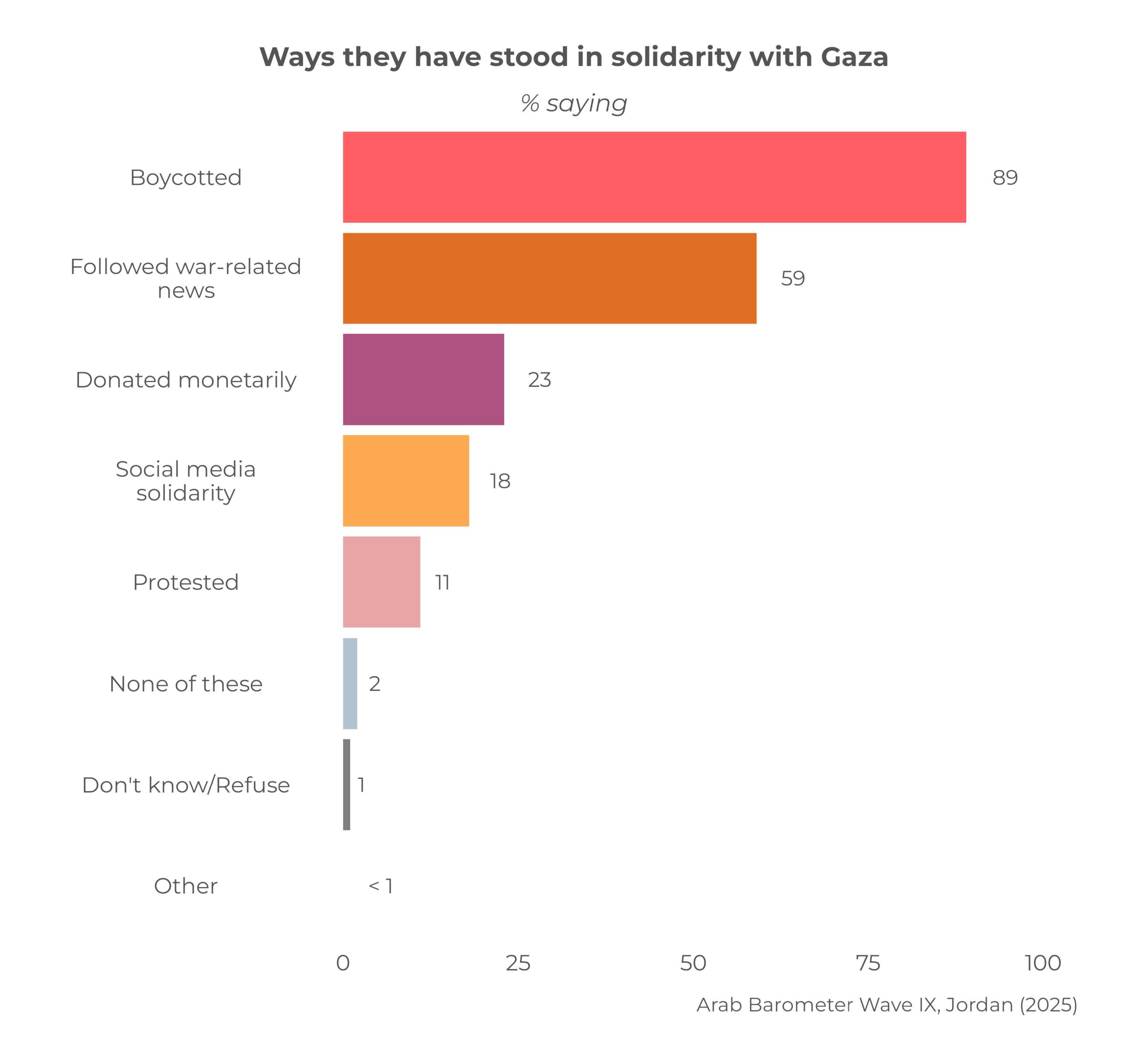
- Expressions of solidarity extend beyond public opinion: 89% say they have boycotted companies that support Israel, 59% closely follow war-related news, 23% have made monetary donations, 18% have shared solidarity messages on social media, and 11% have participated in protests or other public solidarity activities.
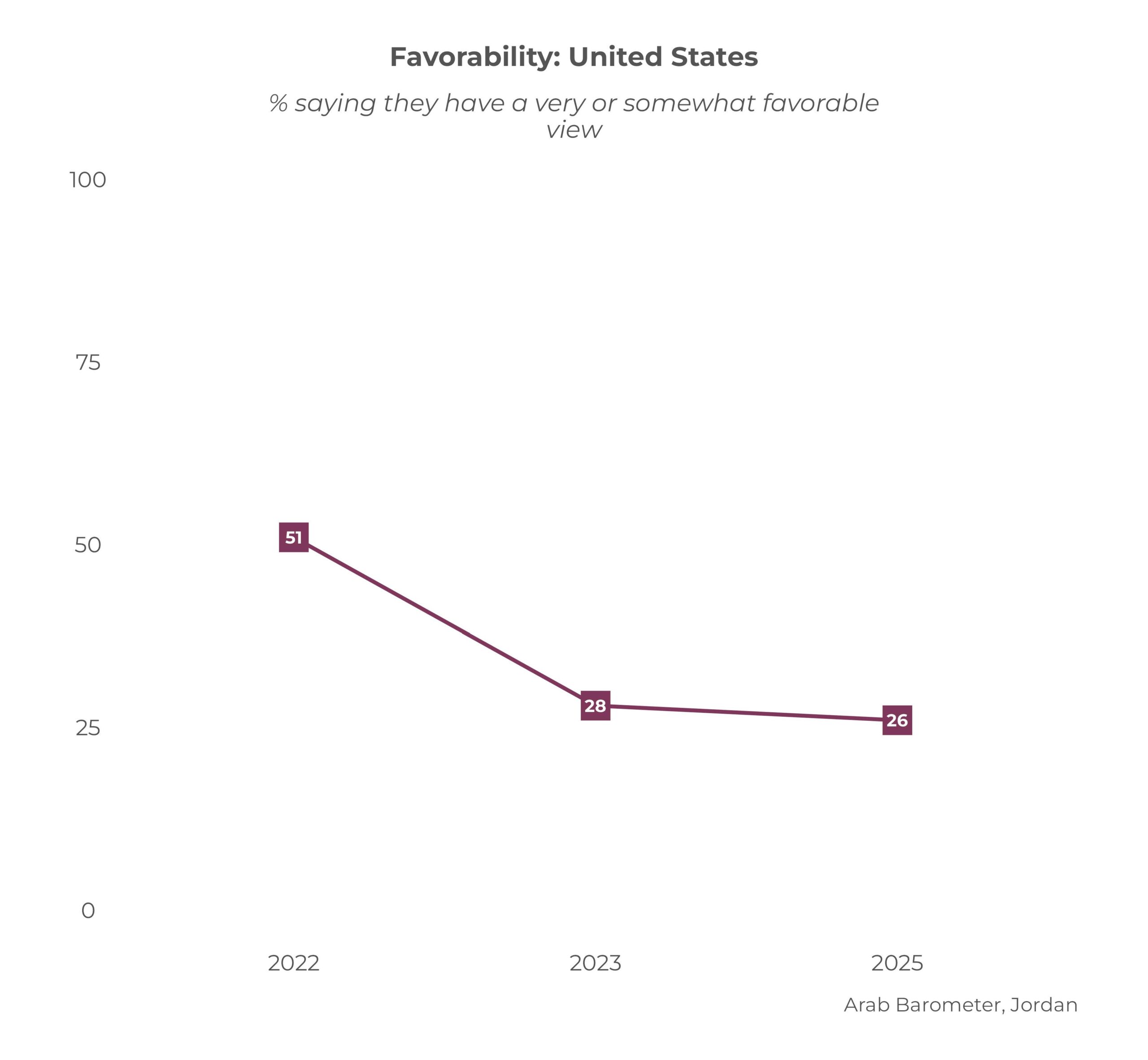
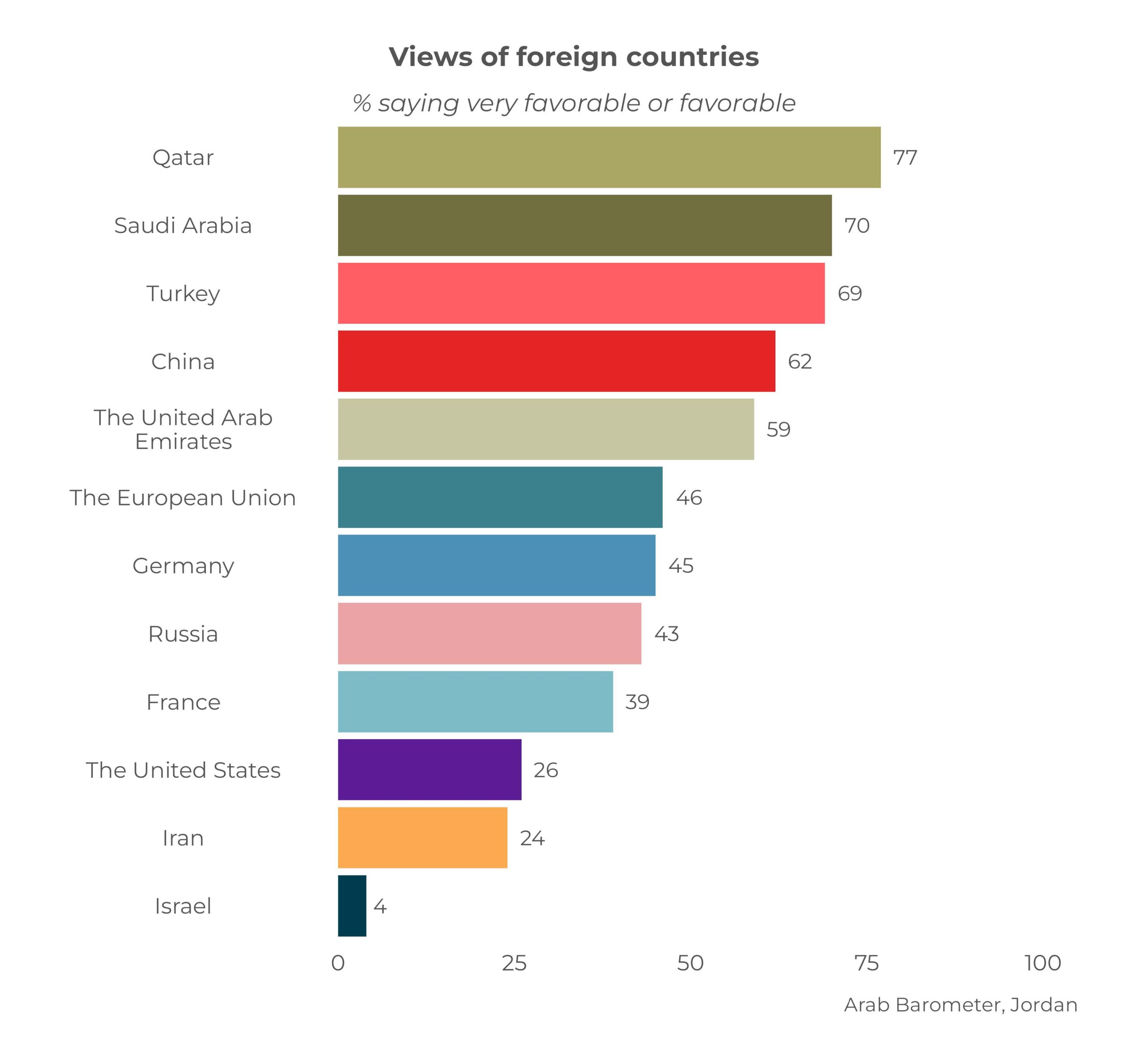
- 95% view Israel unfavorably, while the United States also remains deeply unpopular.
📙Full Analysis: For additional results, graphs, and detailed breakdowns, please refer to the full report “Jordan: Public Opinion Report 2025“.
Please credit Arab Barometer in any dissemination.
ENDS //
Arab Barometer Media Resources
For media inquiries, please contact Aseel Alayli, Director of Brand, Marketing, and Global Communications, at aalayli@princeton.edu.