What MENA Citizens Really Think of Iran’s Khamenei

On February 28, Iranian Supreme Leader Ali Khamenei was killed by an Israeli airstrike.  From September-November 2025, Arab Barometer conducted nationally representative surveys in seven Middle East and North African countries, which included questions about support Khamenei’s foreign policy toward the Arab region. In no country did a majority describe them as good or very good.  However, in many countries…

Who speaks for the Muslim world?

  There are many contenders, but Turkey’s president leads the pack Whether speaking to a small group or a mass rally, Recep Tayyip Erdogan, Turkey’s president, often appears to have a bigger audience in mind than the people right in front of him. A talk he gave in mid-February, on the eve of Ramadan, the Muslim holy month, seemed addressed…

Voluntary Fasting, Involuntary Hunger: Food Insecurity and Ramadan in MENA

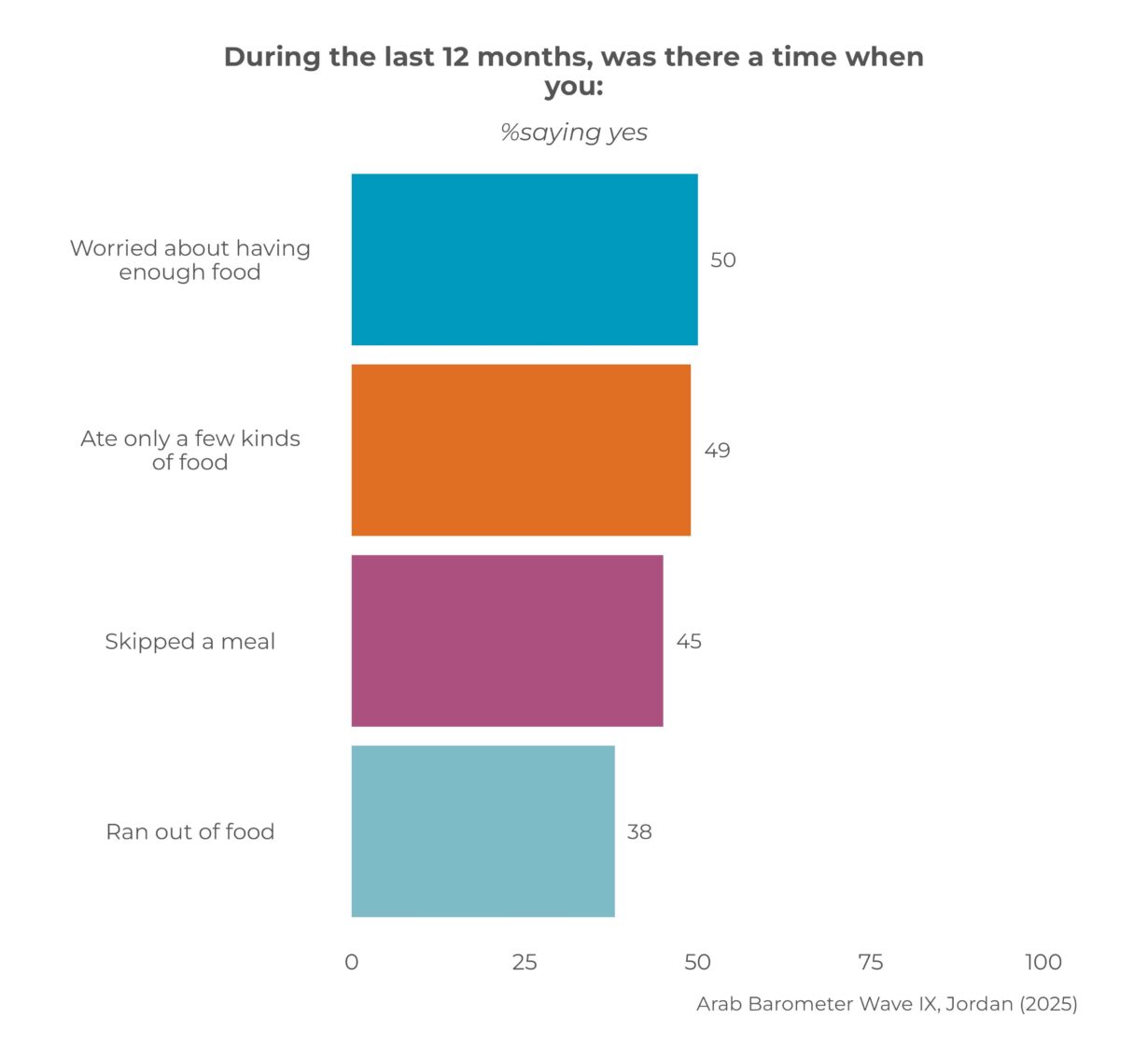
As citizens across the Middle East and North Africa (MENA) region welcome the holy month of Ramadan, concerns over economic conditions and food insecurity loom large. In 2022, Arab Barometer reported on the pervasiveness of food insecurity in several countries across the region. Four years later, little has changed for ordinary citizens. Indeed, prolonged economic struggles, coupled with conflict and…

New Arab Barometer Findings Featured in Munich Security Conference Middle East Report

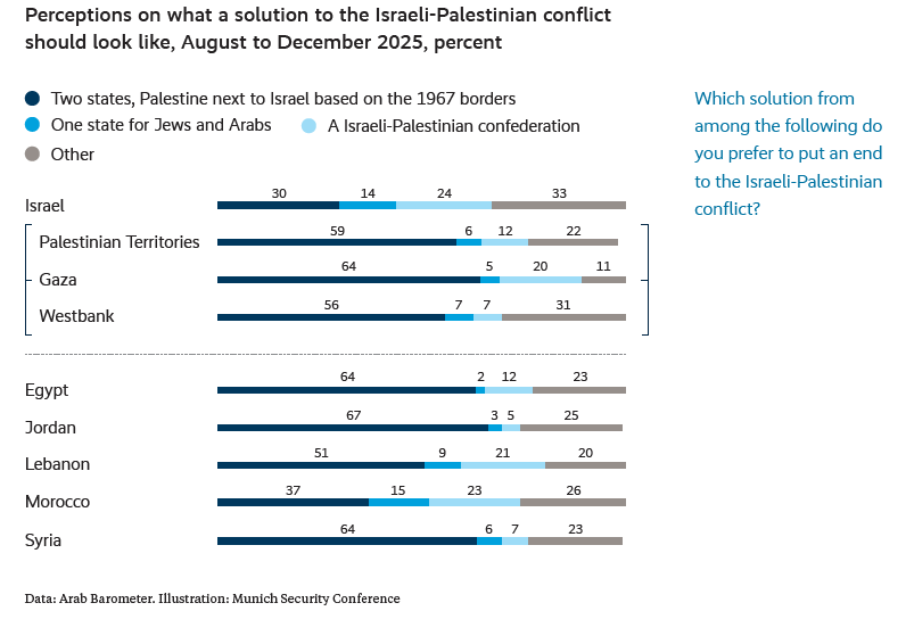
The Munich Security Conference (MSC) today released the Middle East Consultation Group (MECG) report at the opening of its 62nd annual conference (February 13–15), featuring Arab Barometer’s Wave IX public opinion findings. The report draws on nationally representative surveys conducted in Palestine, Israel, Lebanon, Syria, Egypt, Jordan, and Morocco to inform its analysis of regional cooperation and security, political transitions,…

What Syrians Want

A New Survey Shows the Promises and Perils Facing the Country’s New Government A year after the fall of President Bashar al-Assad, Syria remains a country very much in transition. Much of its infrastructure is in tatters, and the price tag for rebuilding the war-torn state stands at over $200 billion. It is in desperate need of laws and institutions…

Palestine 2025: Views on Governance and Domestic Power Balance

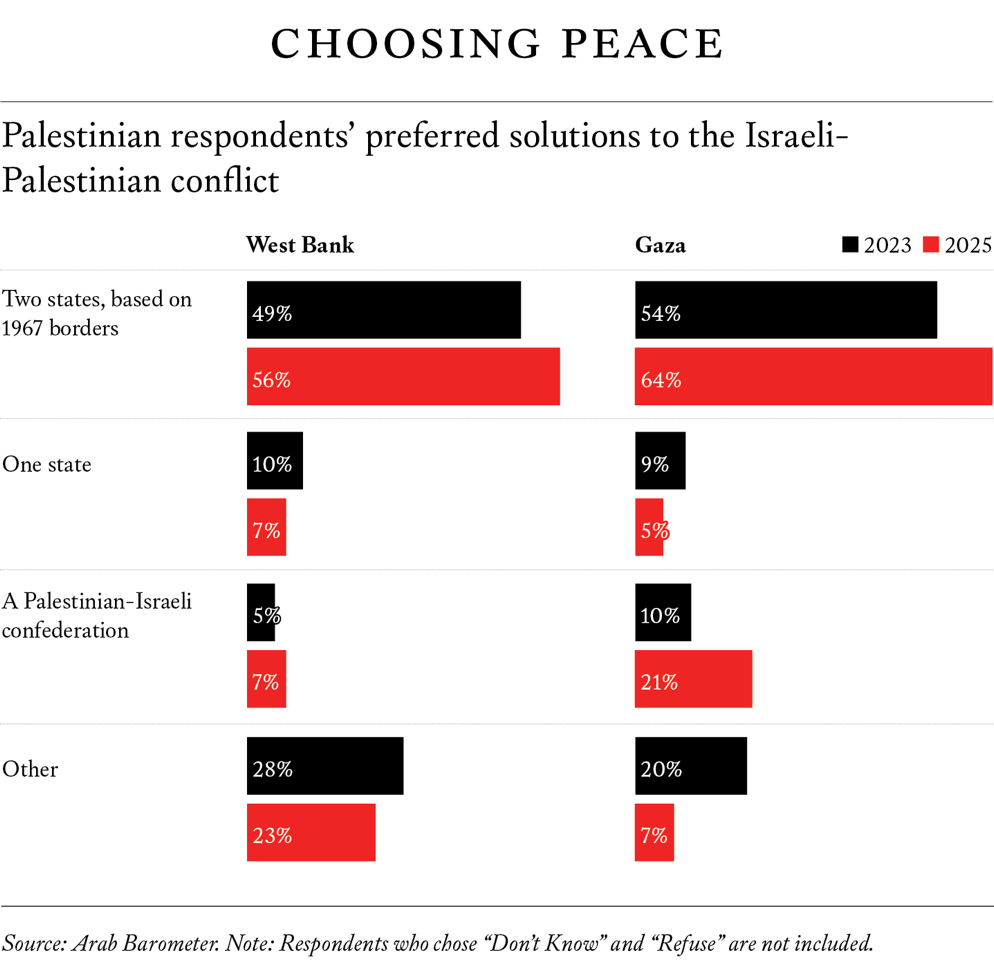
Gaza War reshaped Palestinian society: priorities shifted from growth to basic services; trust mixed but satisfaction fell; civil liberties eroded. Public still values democracy yet increasingly favors a strong leader who can deliver stability. Politically, Fatah’s support has collapsed, while Hamas has maintained its base, but the largest group is the politically alienated. Social norms grew more conservative. This landscape…

A Hidden Force in the Middle East: How Arab Public Opinion Constrains Normalization With Israel

When Israel began to normalize relations with some of its neighbors in 2020, as part of the U.S.-brokered Abraham Accords, many analysts began to wonder whether the Palestinian cause still mattered to the Arab world. Doubts about the salience of the issue for Arabs grew in late 2023, when it appeared that Saudi Arabia might also join the accords, normalizing…

Foreign Affairs: Arab Public Opinion Constrains Normalization with Israel

For Immediate Release **Please credit Arab Barometer and Foreign Affairs Magazine** A new Foreign Affairs article analyzes Arab Barometer’s latest wave of surveys, revealing a sharp decline in support for normalization with Israel—and in favorability toward its Western allies—across the Middle East and North Africa following Israel’s war in Gaza post-October 7. Public opposition has halted normalization efforts, constraining regional governments’…

The largest repository of publicly available data on citizens' views in MENA.

Infographics