Key Findings from Arab Barometer Wave IX (2025)
Background
Morocco’s King Mohammed VI appointed Fatima Ezzahra El Mansouri as the country’s first woman prime minister on September 29, following parliamentary elections. Her appointment marks a historic moment for Morocco and makes El Mansouri the third woman to serve as prime minister in the Arab world.
Against this backdrop, Arab Barometer’s 2025 public opinion survey finds that Moroccan attitudes toward gender roles are becoming less traditional, while support for some measures to increase women’s political representation has declined.
This factsheet examines what Moroccans think about gender roles and women’s participation, from political leadership and decision-making in the family to employment, as well as perceptions of harassment and violence against women.
How we did this survey
These findings are based on a nationally representative face-to-face survey conducted in Morocco. The survey included 1,210 Moroccan citizens from across all 12 regions of the country and was fielded from August 23 to September 6, 2025, by One to One for Research and Polling, using a multistage clustered sample. The margin of error for the reported results is ±3 percentage points. The survey is part of Arab Barometer’s ninth wave.
Moroccans’ Views on Gender Are Changing, but Barriers to Women’s Political and Economic Participation Remain
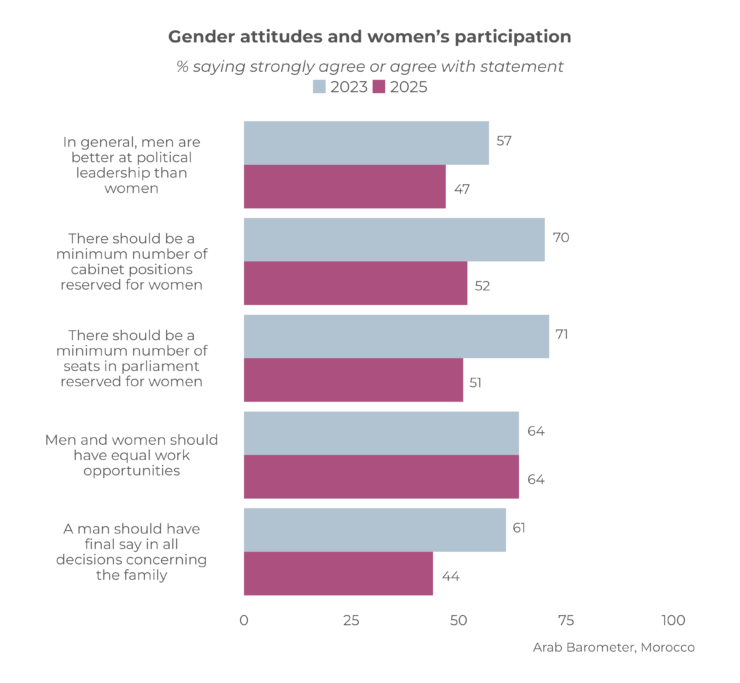
- Support for traditional gender roles has declined, particularly around men’s authority in politics and the family. 47% agreed that men make better political leaders than women, down 10 points from 2023-24, while 44% said a man should have the final say in family decisions, down 17 points. Men and women were equally likely to say men make better political leaders. At the same time, support for equal workplace opportunities remains unchanged at 64%.
- The decline in traditional attitudes toward gender roles has not been matched by support for quotas to increase women’s political representation. Support for reserving a minimum number of parliamentary seats for women fell from 71% to 51%, while support for cabinet quotas declined from 70% to 52%. At the same time, 64% continued to support equal employment opportunities for women and men, unchanged from 2023-24.
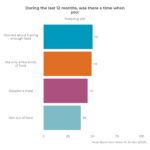
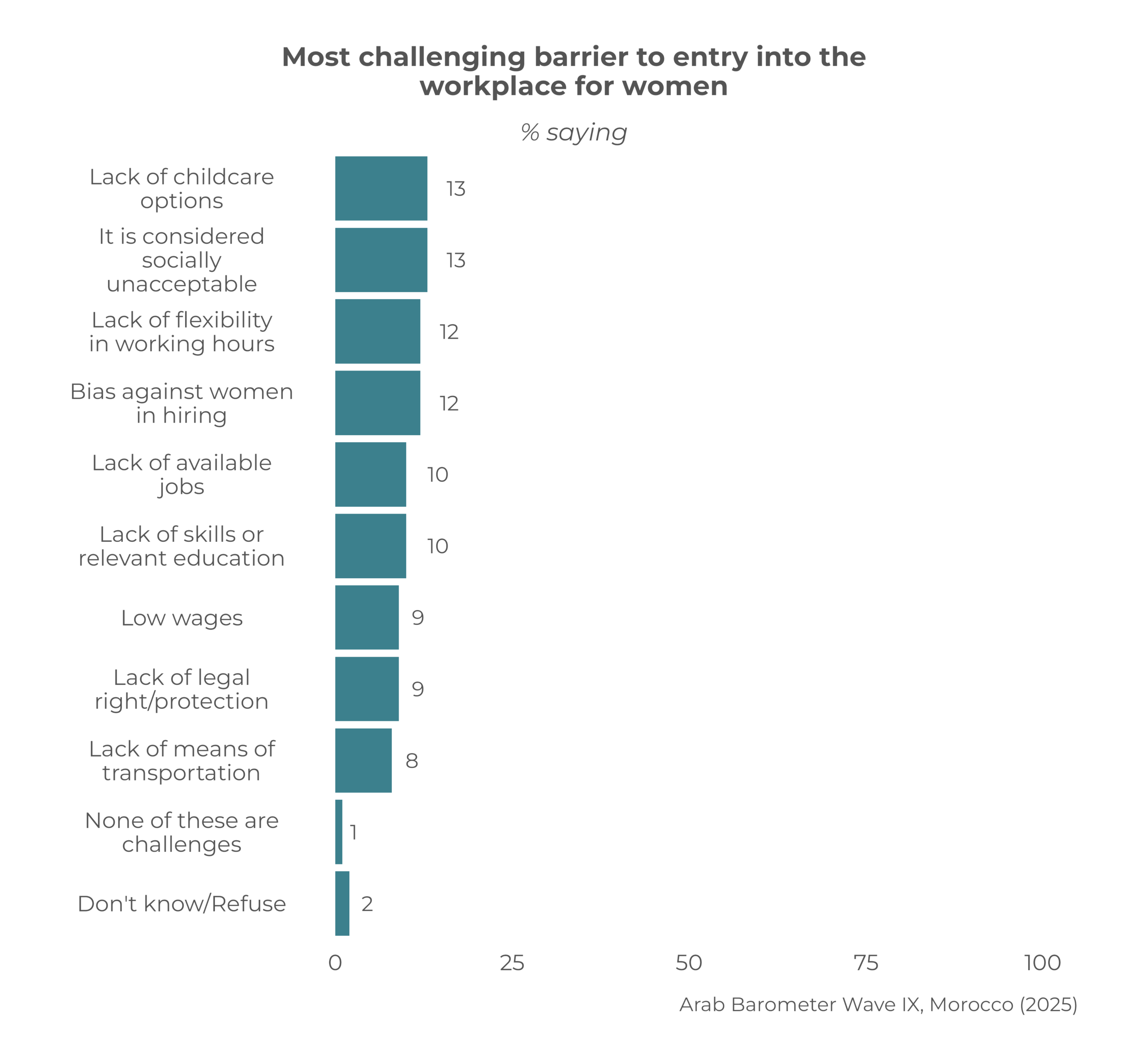
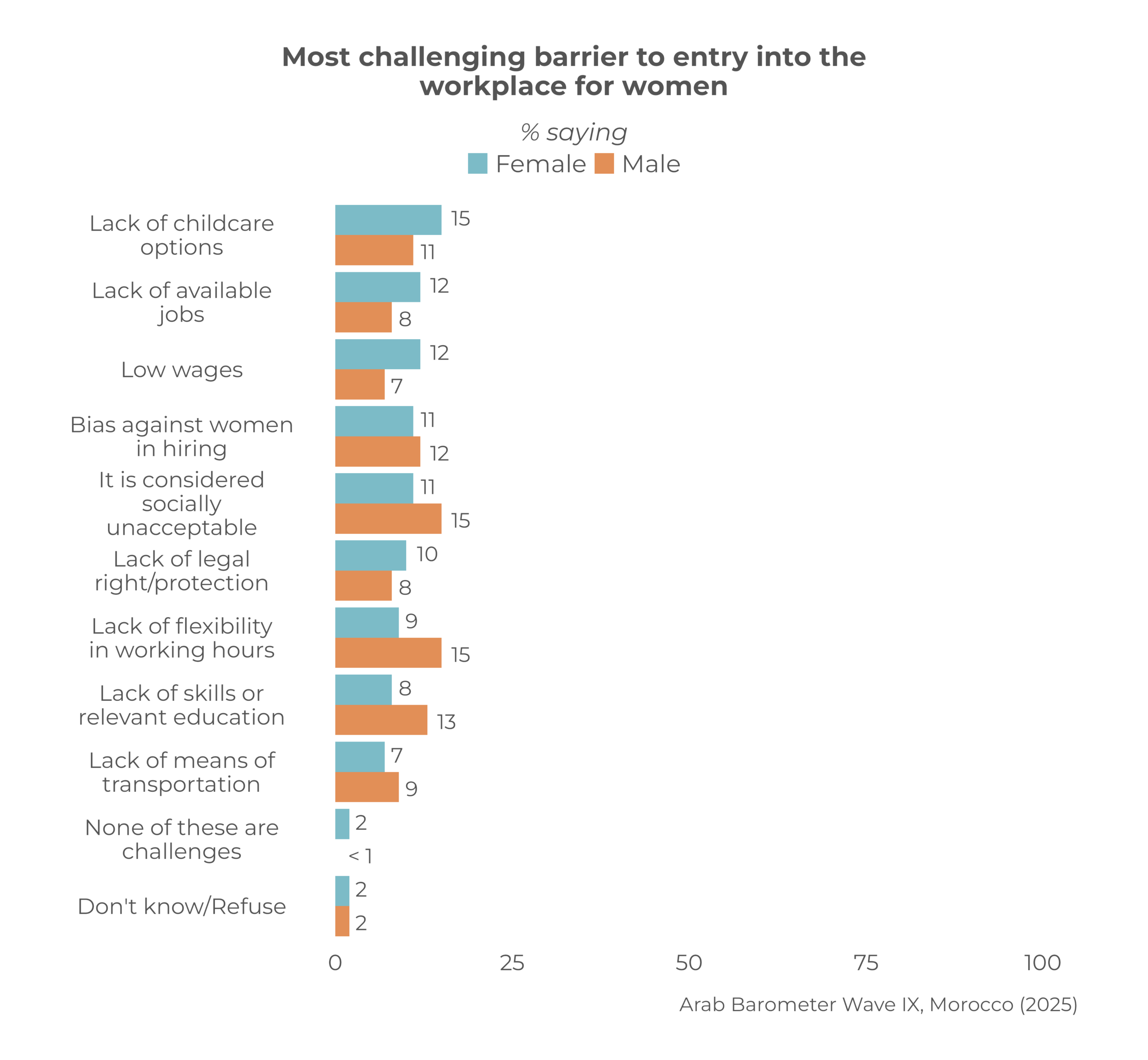
- Moroccans identified a range of barriers to women’s employment rather than a single dominant obstacle. Social unacceptability and lack of childcare were each cited by 13%, followed by inflexible working hours and bias against women in hiring at 12% each. Other barriers included lack of relevant skills or education and scarcity of jobs (10% each), low wages and insufficient legal protection (9% each), and transportation (8%). Women were more likely than men to cite childcare and the scarcity of jobs, while men were more likely to cite inflexible working hours and social unacceptability.
Concerns About Violence Against Women Persist, While Family Members and Police Are Seen as Key Sources of Help
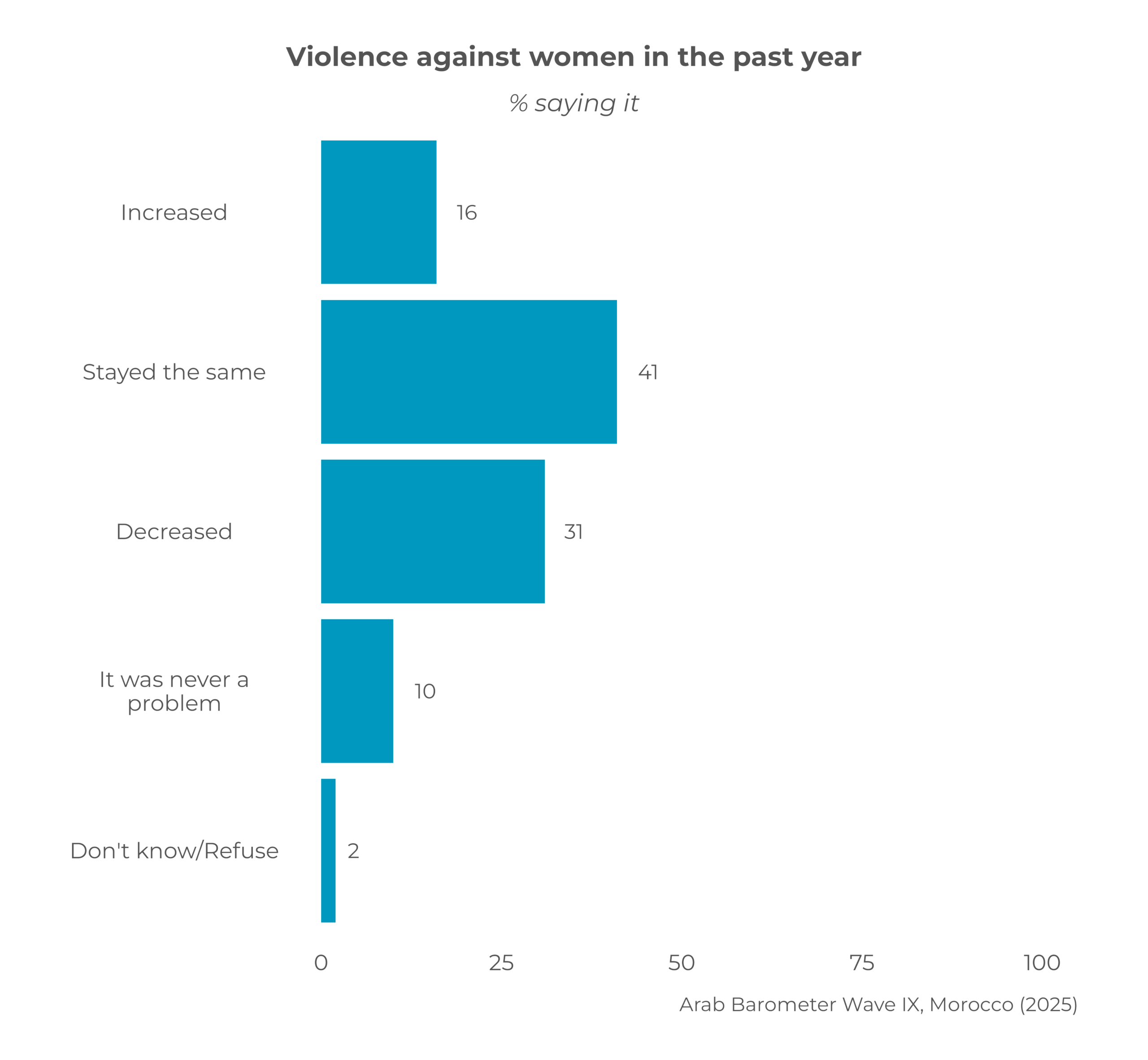
- Moroccans have differing views on changes in violence against women. 16% said violence against women had increased over the previous year, up from 13% in 2023-24, while 42% said it had stayed the same and 31% said it had decreased.
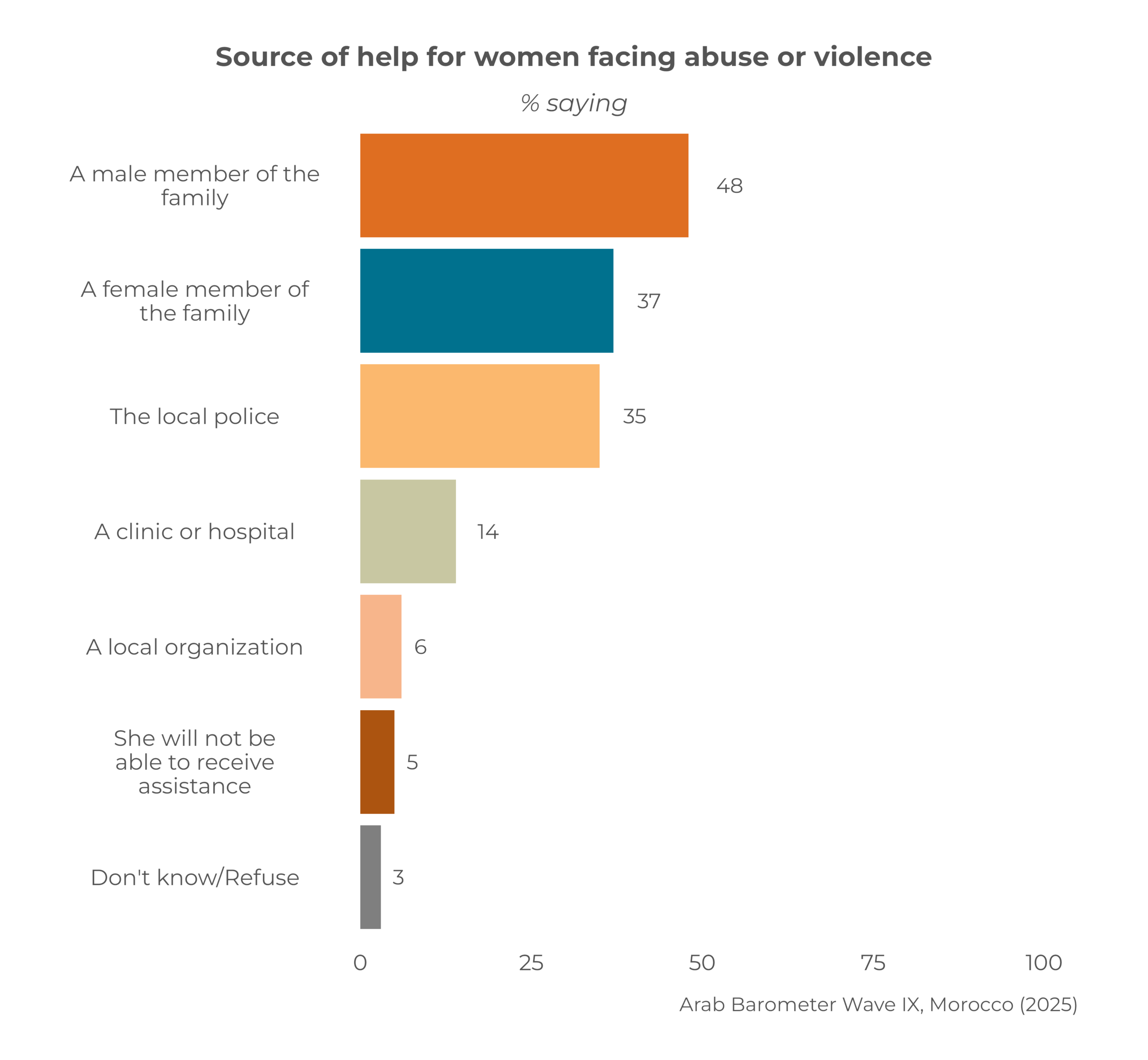
- Family members and police are the most commonly identified sources of help for women experiencing abuse or violence. 48% said a woman experiencing abuse could turn to a male family member for assistance, while 38% cited a female family member and 35% local police. Fewer identified a clinic or hospital (14%) or a local organization (6%), while 5% said a woman would not be able to receive assistance.
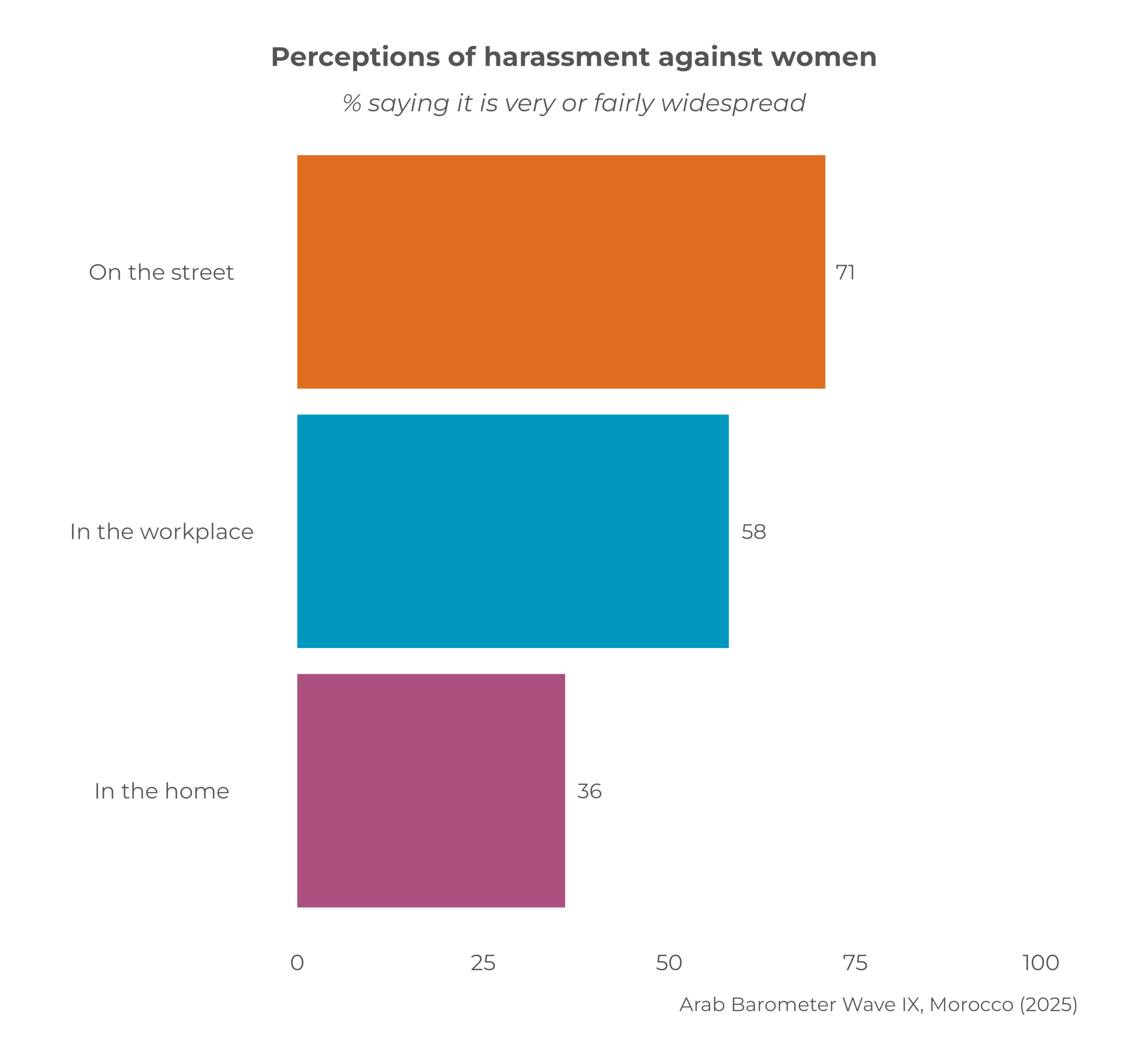
- Harassment of women remained widely recognized in fall 2025, although perceived levels had declined. 71% said harassment by strangers on the street was very or fairly widespread, down 8 points from 2023-24, while 58% said harassment was widespread in the workplace, down 7 points. 36% said harassment was widespread in the home.
Please credit Arab Barometer in any dissemination.
ENDS //
Arab Barometer Media Resources
For media inquiries, please contact Aseel Alayli, Director of Brand, Marketing, and Global Communications, at aalayli@princeton.edu.