Background
Egyptians are navigating a period marked by rising economic pressures, regional instability, and intensifying conflict across the Middle East. Against this backdrop, the ninth wave of Arab Barometer surveyed Egyptians on their views of economic conditions, governance, political reform, regional affairs, and media use.
This factsheet highlights selected key findings from Arab Barometer’s public opinion survey in Egypt.
How we did this survey
These findings are based on a nationally representative face-to-face survey conducted in Egypt. The survey included 1,225 randomly selected citizens from across the country and was fielded from 11–25 September 2025 using a multistage clustered sample. The margin of error for the reported results is ±3 percentage points. The survey is part of Arab Barometer’s ninth wave.
Economic Pressures, Governance, and Future Outlooks
Economic hardship dominates public opinion
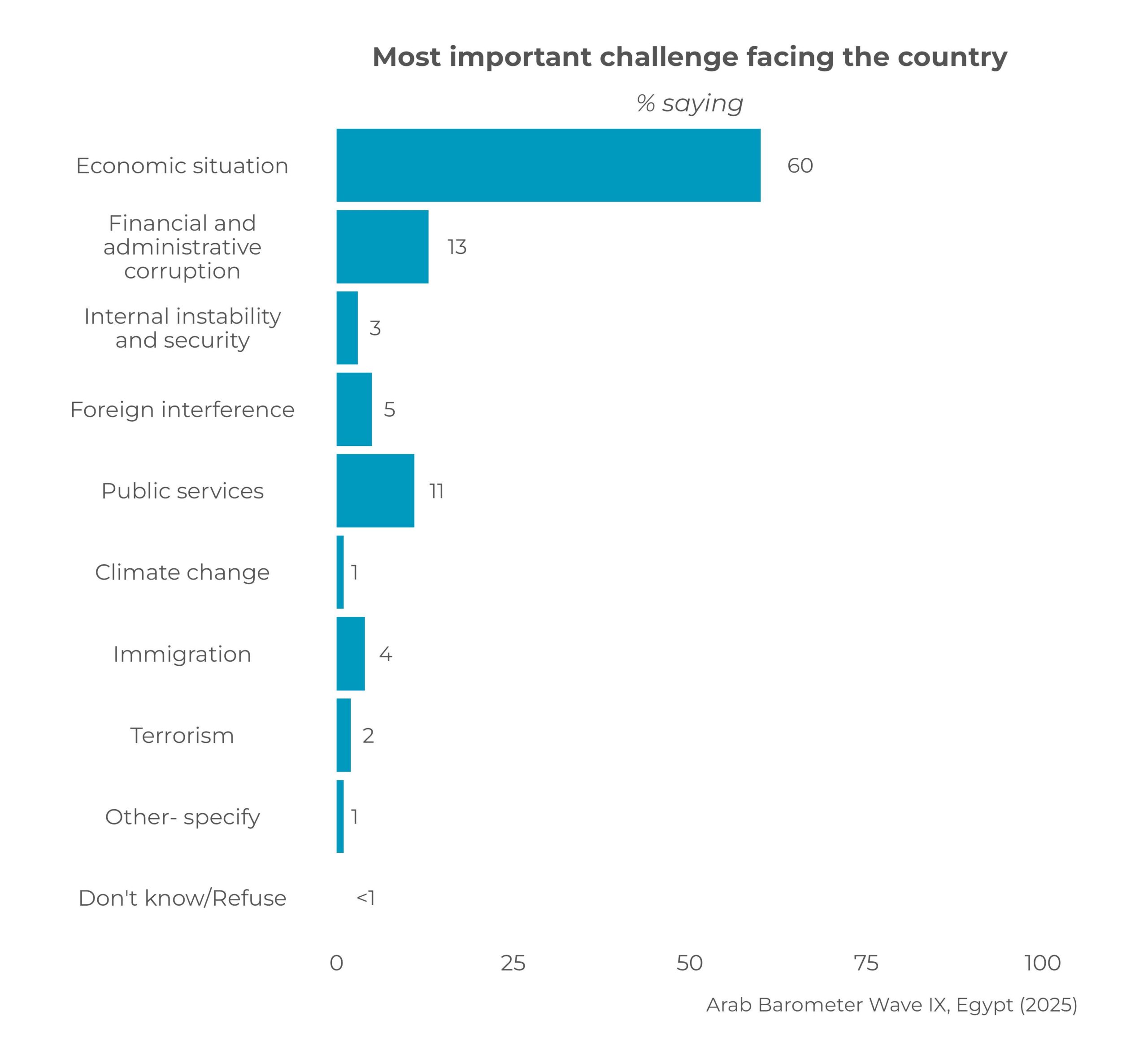
- Nearly three-quarters of Egyptians (72%) describe the economy as bad or very bad, while 60% identify it as the country’s most urgent challenge, up from 47% in 2022.
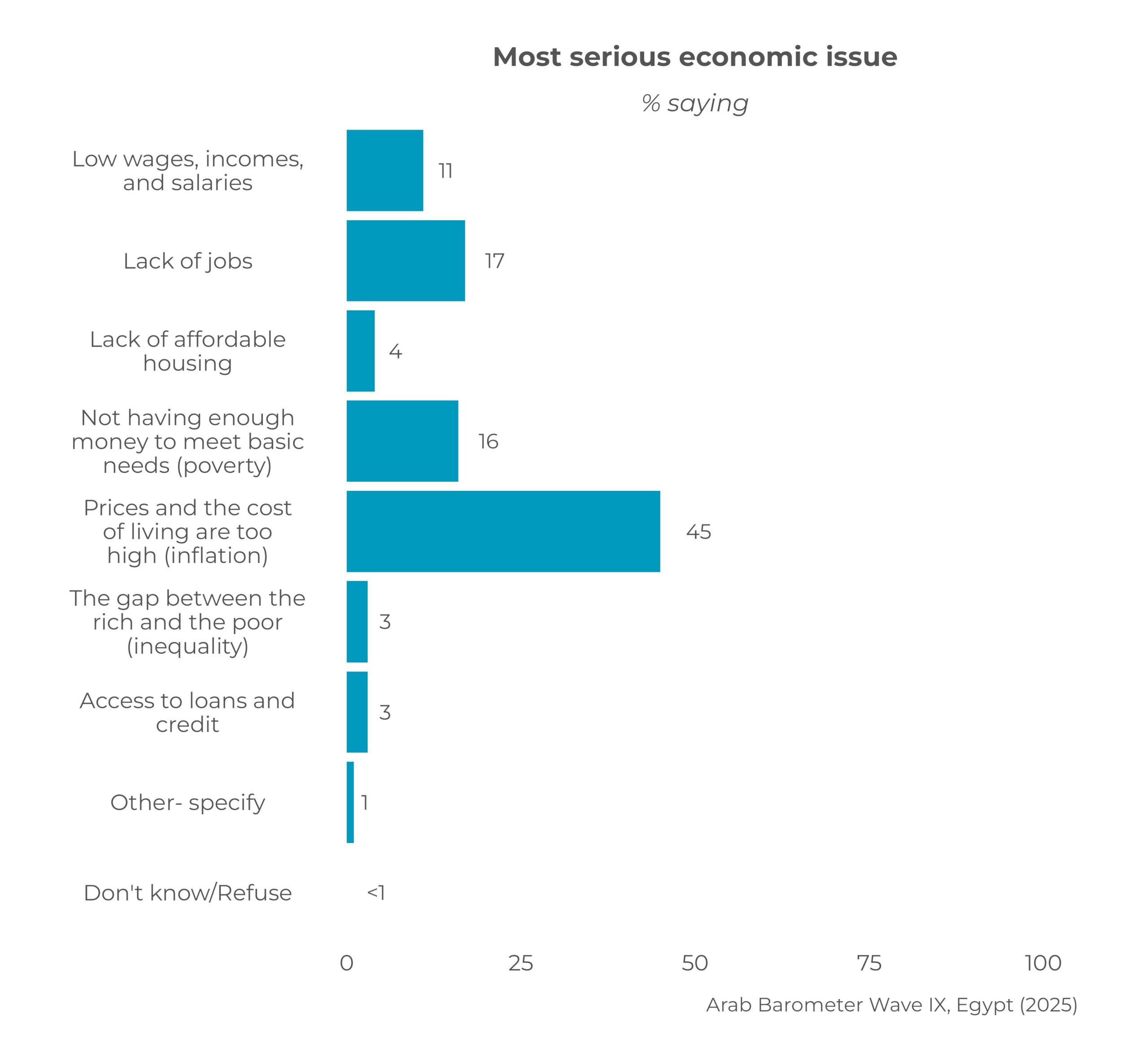
- The rising cost of living (45%) is Egyptians’ top economic concern, followed by lack of jobs (17%) and poverty (16%).
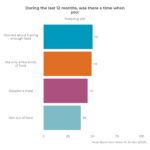
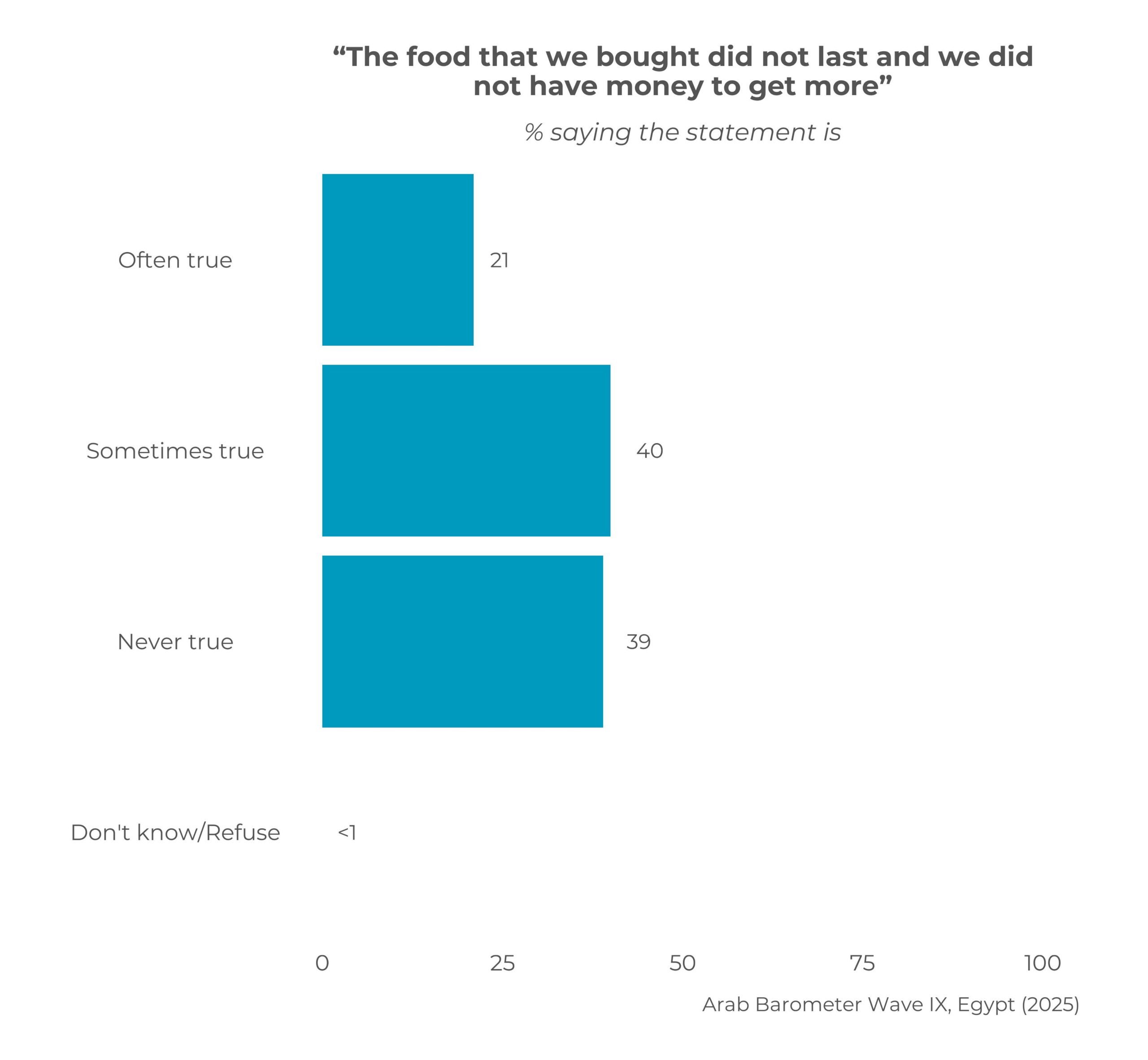
- Food insecurity is widespread, with around 60% saying they could not afford enough food in the last month, including 38% of those with at least a bachelor’s degree.
Strong approval of security and infrastructure, but strain on services
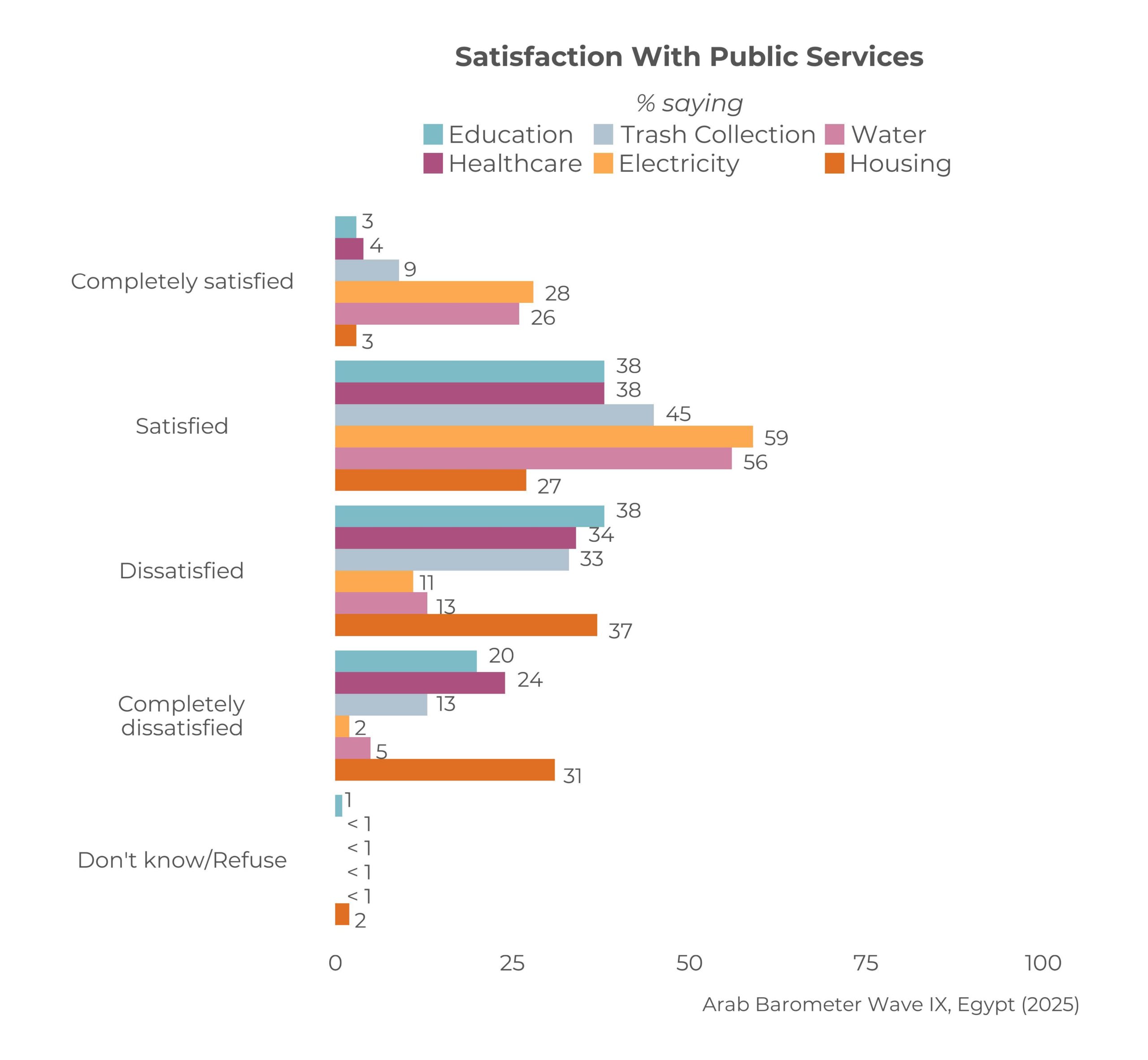
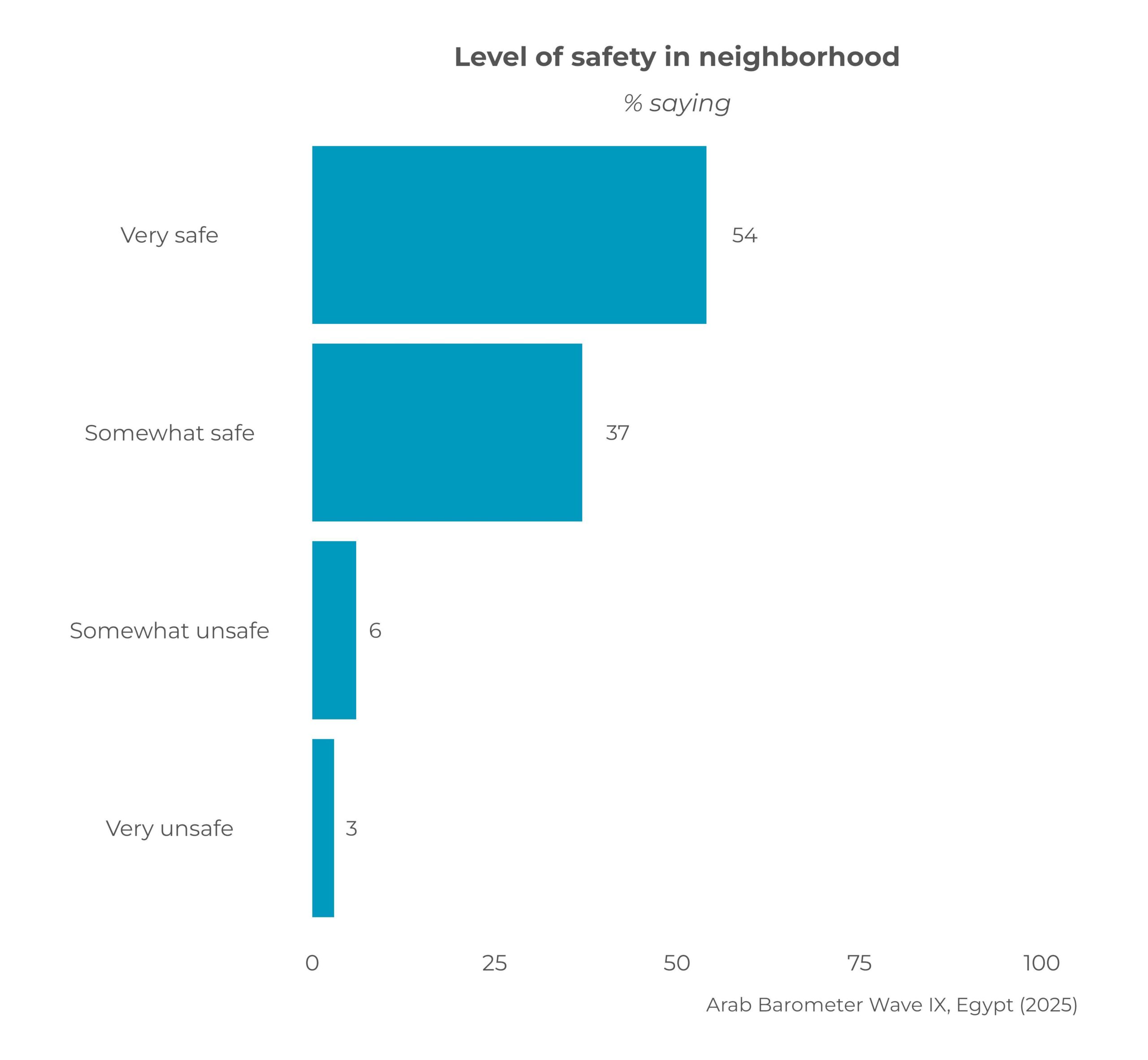
- Perceptions of safety and basic infrastructure remain relatively positive, with 91% of Egyptians feeling safe in their neighborhoods, 87% satisfied with electricity provision, and 81% with water supply. Dissatisfaction rises sharply, however, for everyday public services: 68% are dissatisfied with housing, 58% with healthcare and education, and 46% with trash collection.
Economic management receives the lowest public ratings
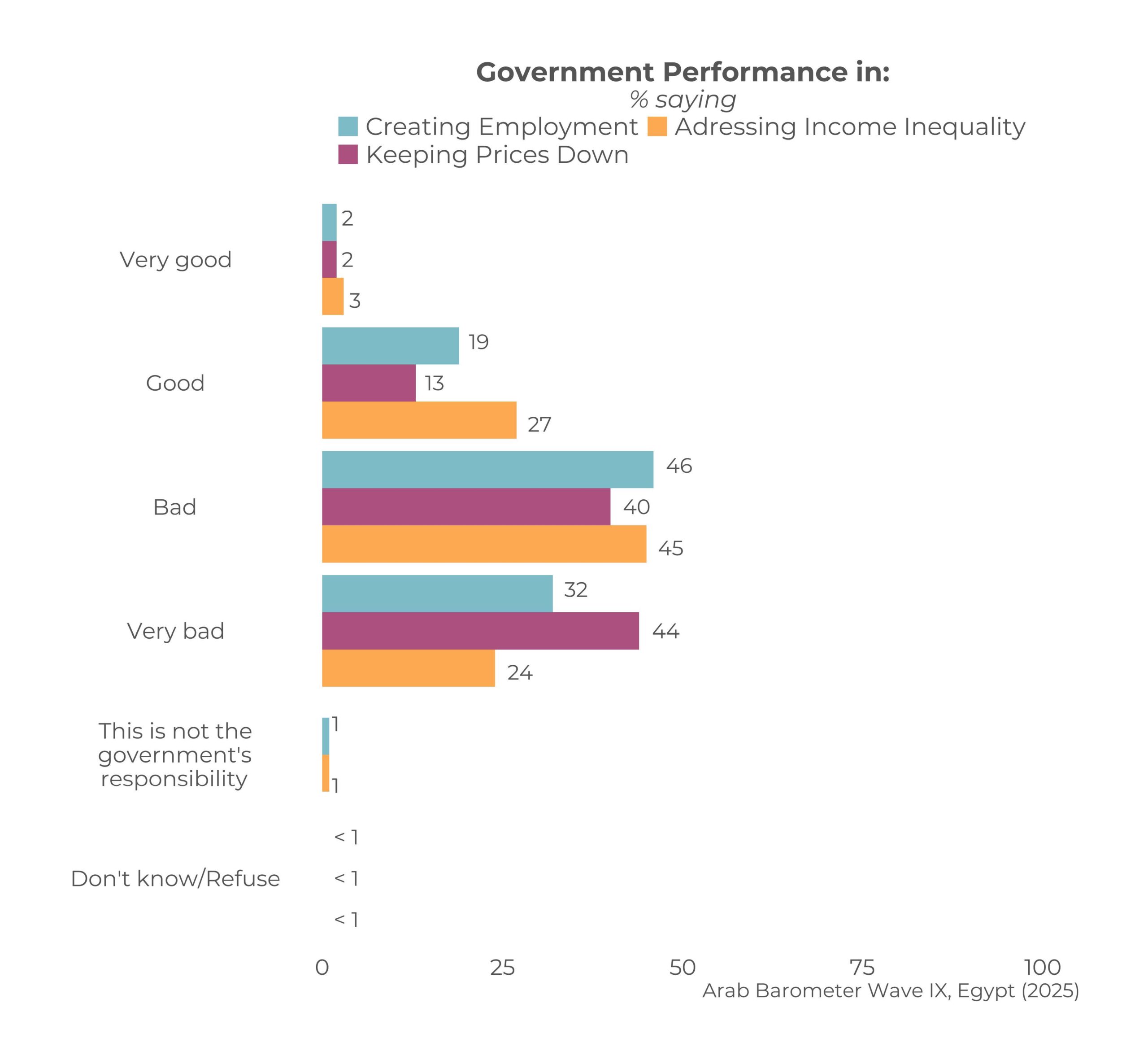
- Public assessments are most negative on economic management: 78% of Egyptians say the government is doing badly at creating jobs, 85% at keeping prices down, and 69% at reducing income inequality.
- Perceptions of integrity and accountability are somewhat less bleak, with 70% saying the government is countering corruption to at least a medium extent (47% “medium”, 23% “large”).
Migration intentions rise amid economic pressure
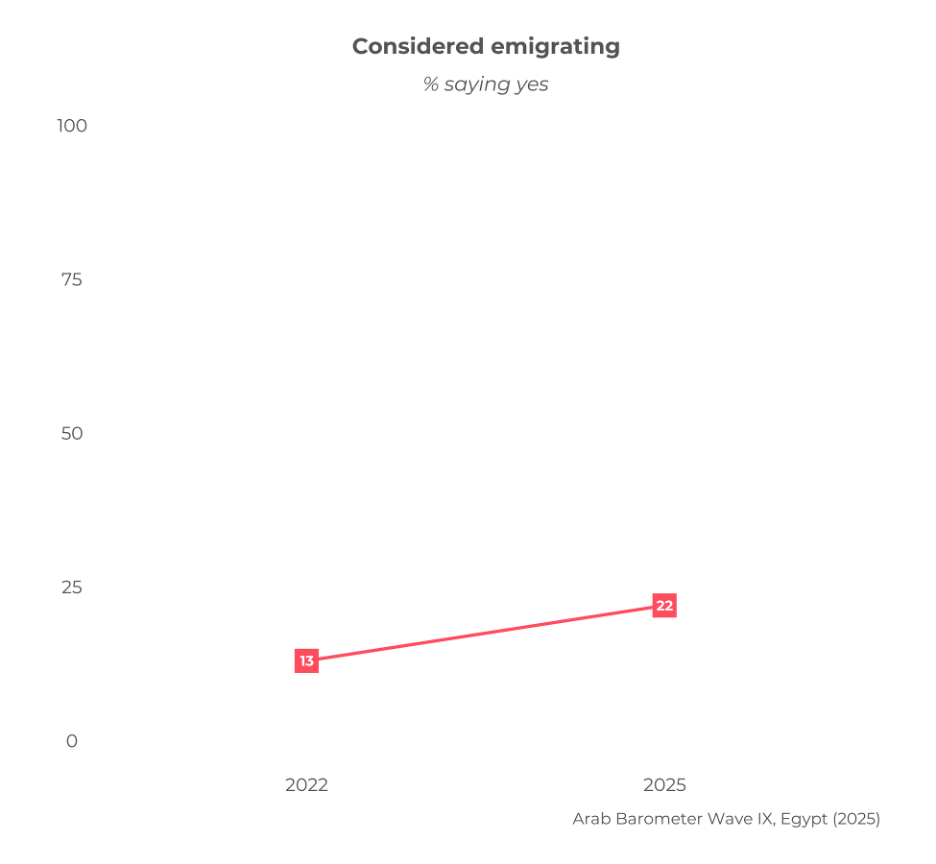
- More than one in five Egyptians (22%) have considered emigrating, up from 13% in 2022, with interest highest among youth, students, and the highly educated.
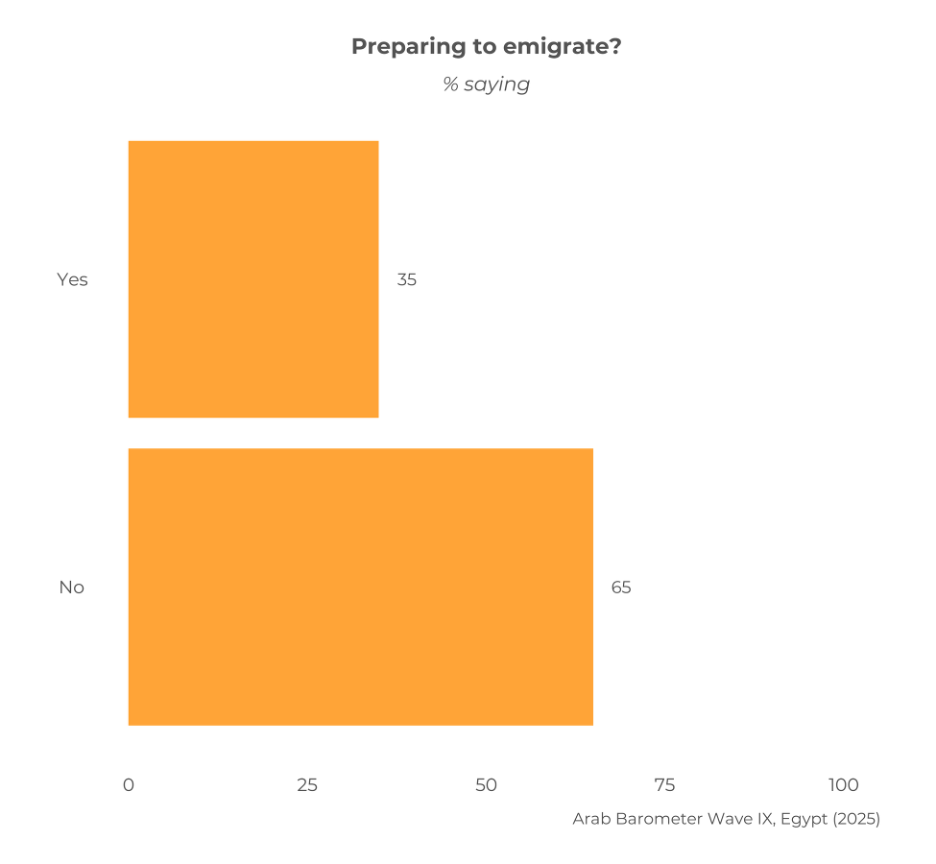
- Among those who have considered emigrating, about one-third report taking concrete steps to prepare, with motivations primarily economic rather than political or security-related, and very limited willingness to emigrate illegally.
Political Attitudes, Freedoms, and Democratic Governance
Political disengagement remains widespread
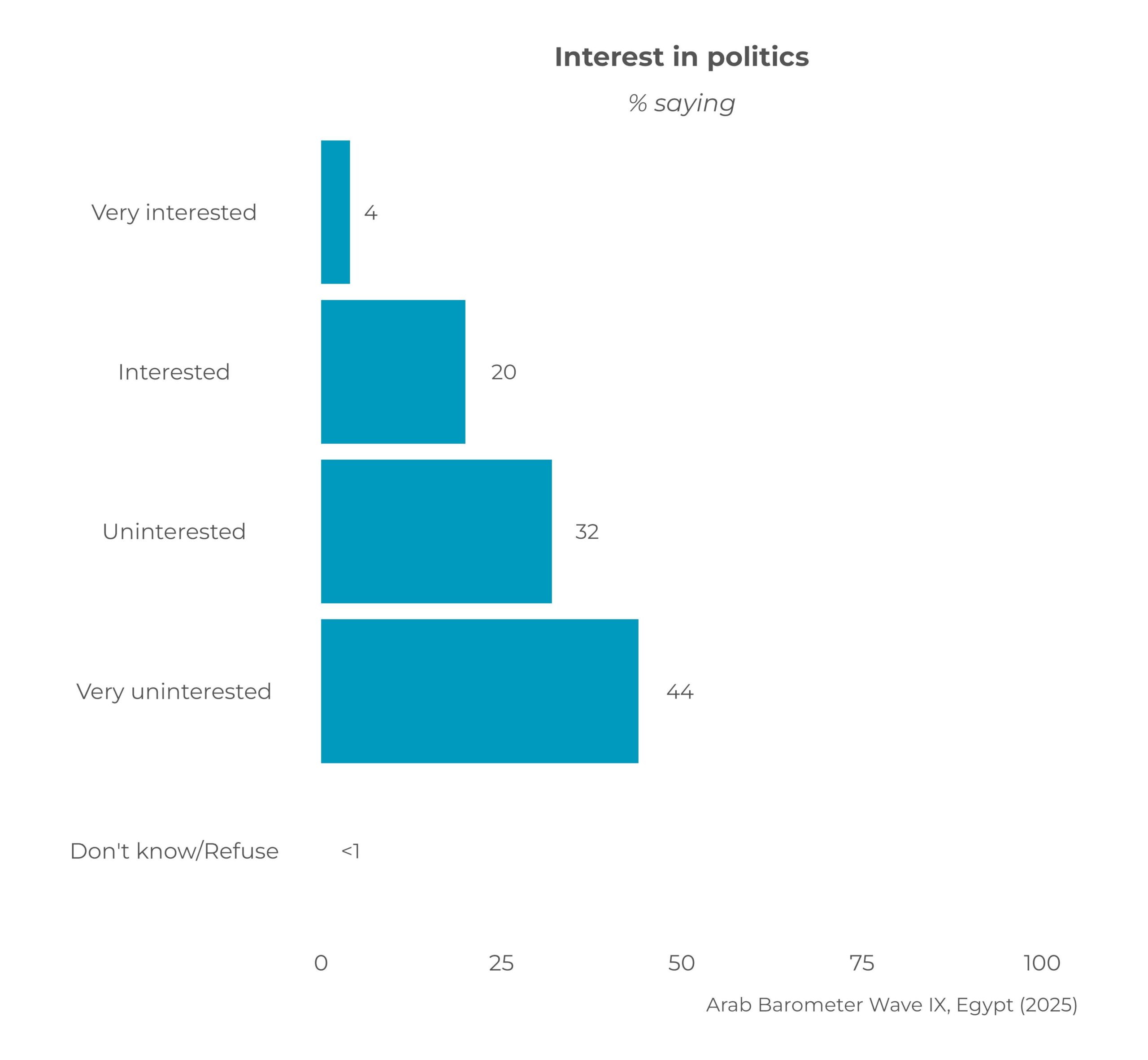
- Most Egyptians remain disengaged from formal politics: 76% say they are uninterested or very uninterested in politics, although this is down from 90% in 2022.
Many Egyptians perceive political freedoms as constrained
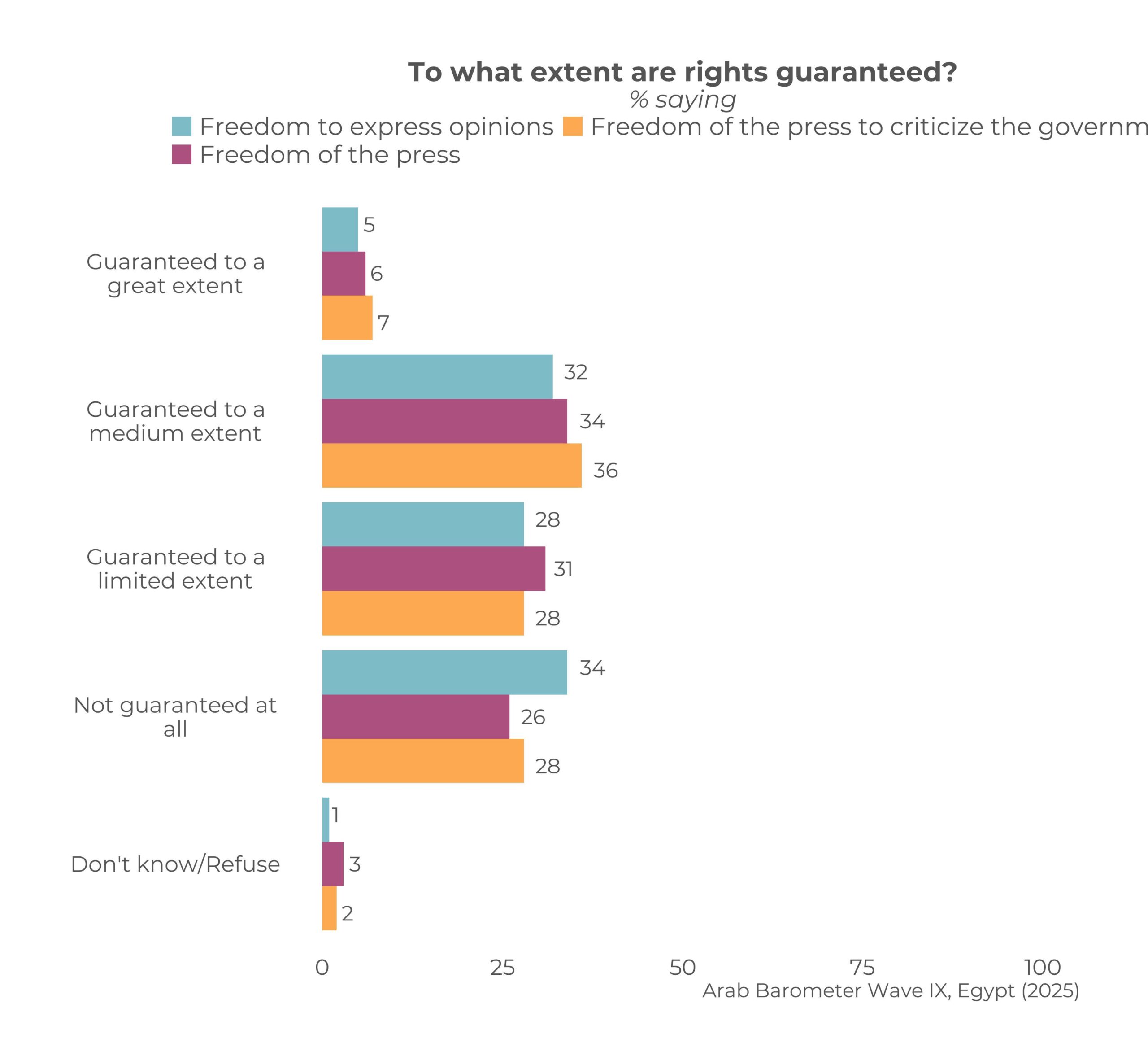
- 28% of Egyptians say freedom of expression is guaranteed only to a limited extent and 33% say it is not guaranteed at all. Views of press freedom are similarly negative, with 31% saying it is guaranteed only to a limited extent and 26% saying it is not guaranteed at all.
Gradual reform is strongly preferred
- Nearly three-quarters of Egyptians (74%) say political reform should happen “little by little” rather than abruptly.
Views on religion and politics remain mixed
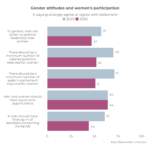
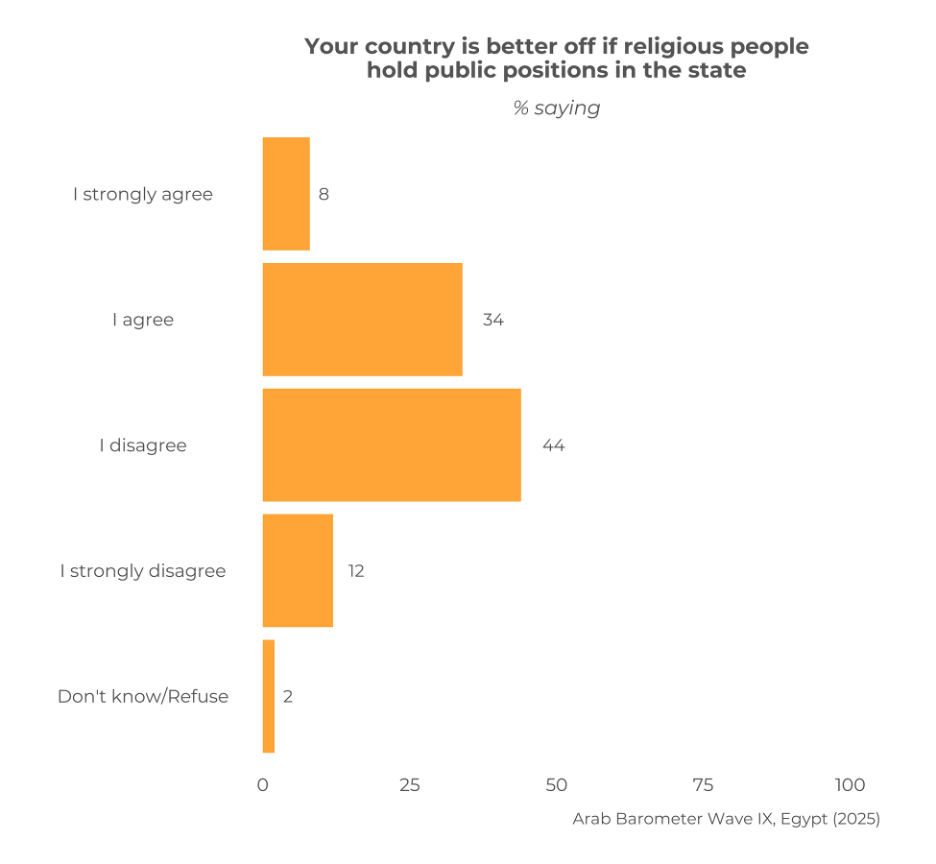
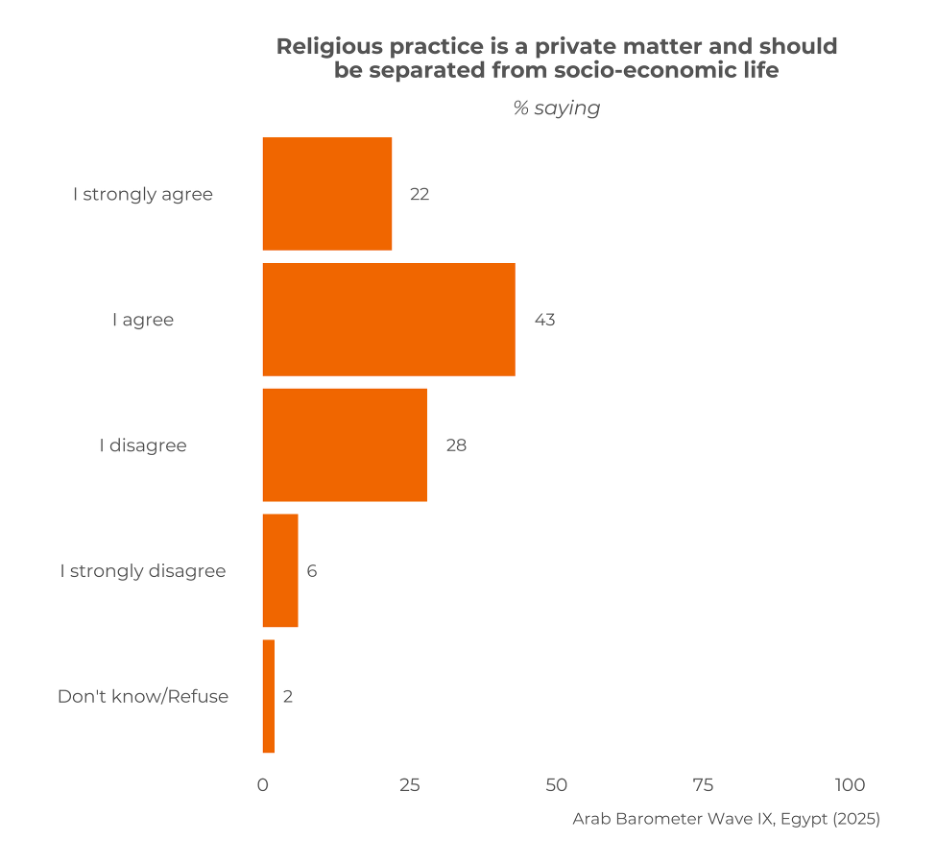
- A slight majority of Egyptians (56%) disagree that the country is better off when religious people hold public office, while 65% agree that religion should remain a private matter.
Democracy is linked more to material protection than electoral procedures
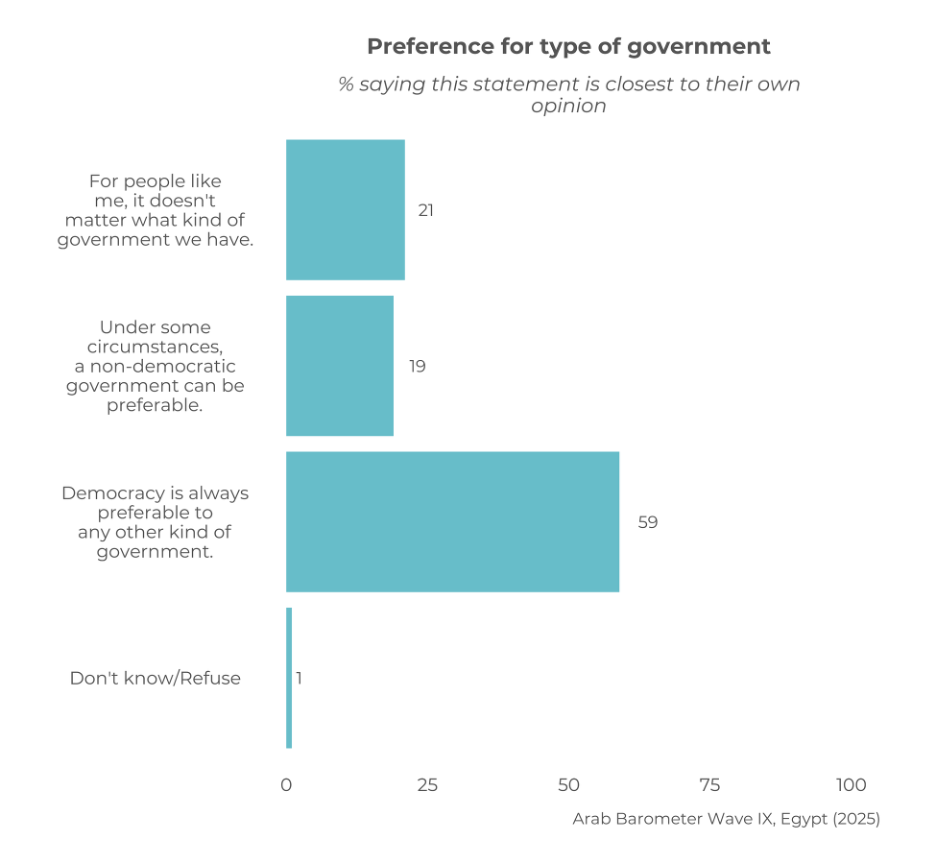
- A majority of Egyptians (59%) say democracy is preferable to other forms of government.
- Understandings of democracy are heavily performance-oriented: 43% identify guaranteeing basic necessities as democracy’s most important pillar, compared with 16% who prioritize fighting corruption, 15% equality under the law, and just 8% each who prioritize freely choosing political leaders or protecting civil liberties.
Economic stability often outweighs procedural preferences
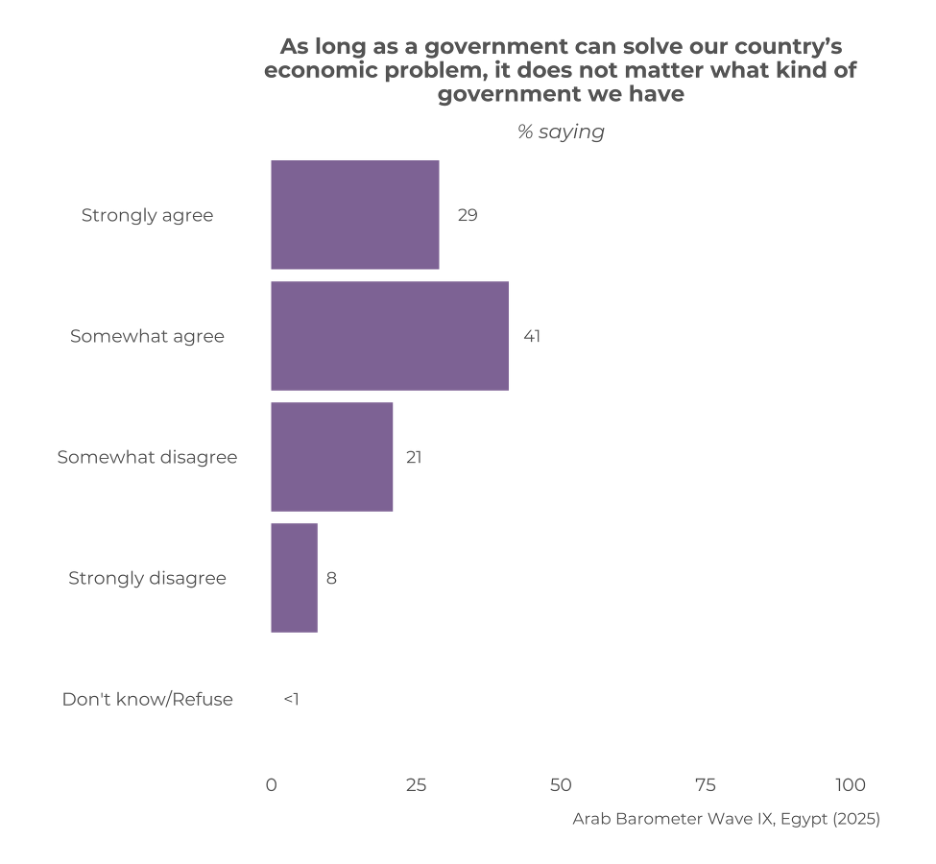
- Around seven in 10 Egyptians say the type of political system matters less if economic problems are solved (71%) and stability is maintained (68%).
Electoral participation and confidence in elections remain low
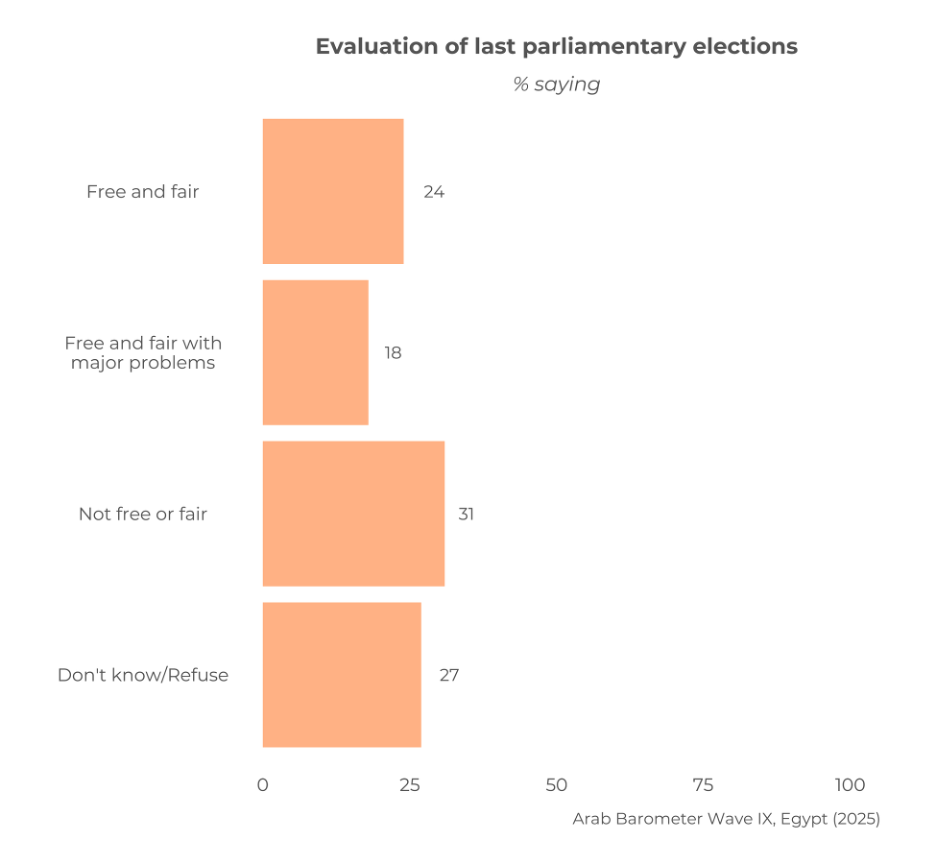
- Seven in 10 Egyptians (70%) say they did not vote in recent elections, while opinions remain divided over whether elections are free and fair, with 31% answering that they were not, 24% answering that they were, and over a quarter (26%) answering that they did not know.
Media Use and News Consumption
Egypt’s media landscape reflects a growing digital divide
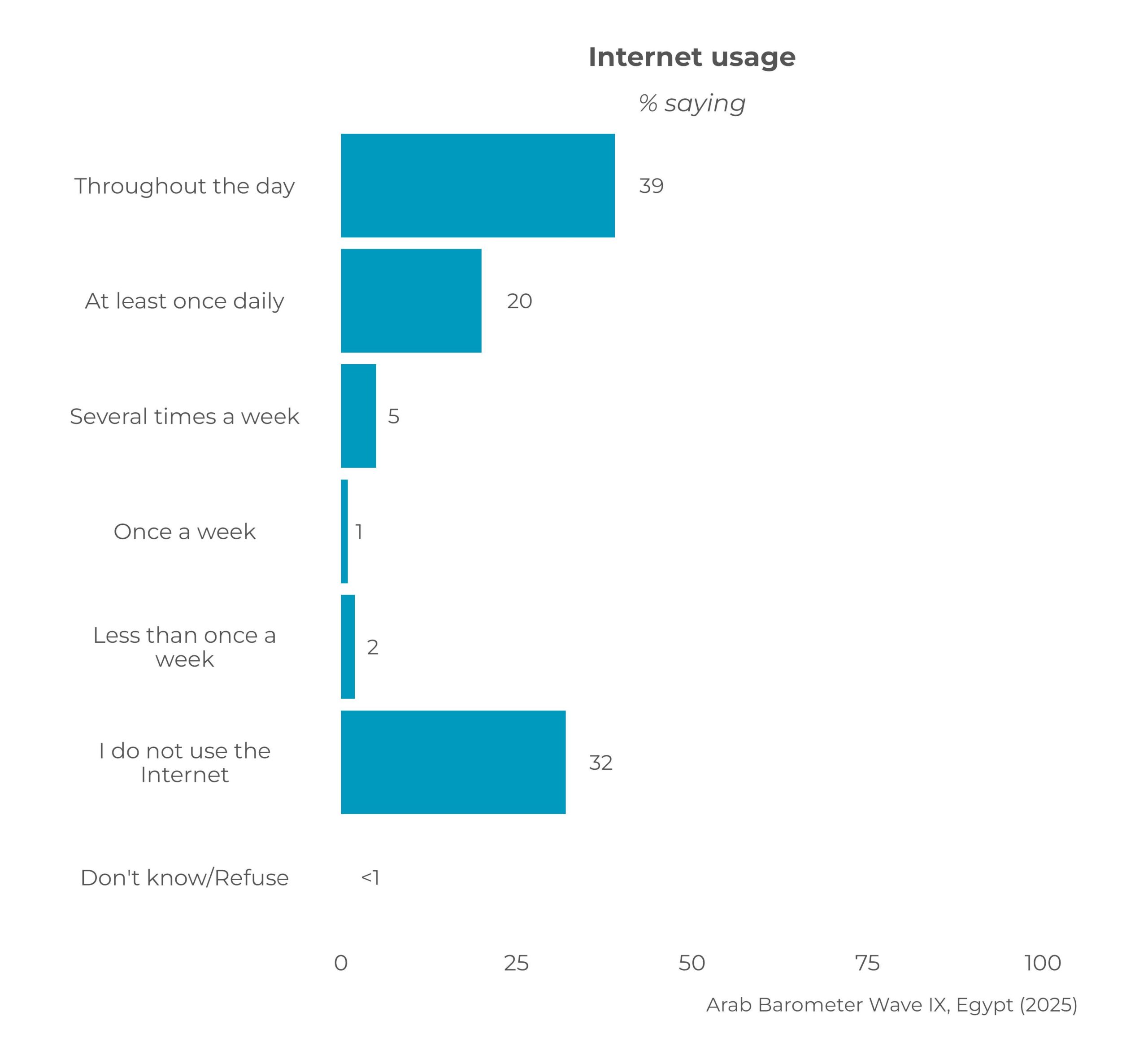
- While nearly two-thirds of Egyptians use the internet at least occasionally, around one-third remain offline, though this is down from 43% in 2022.
Television and social media now dominate news consumption
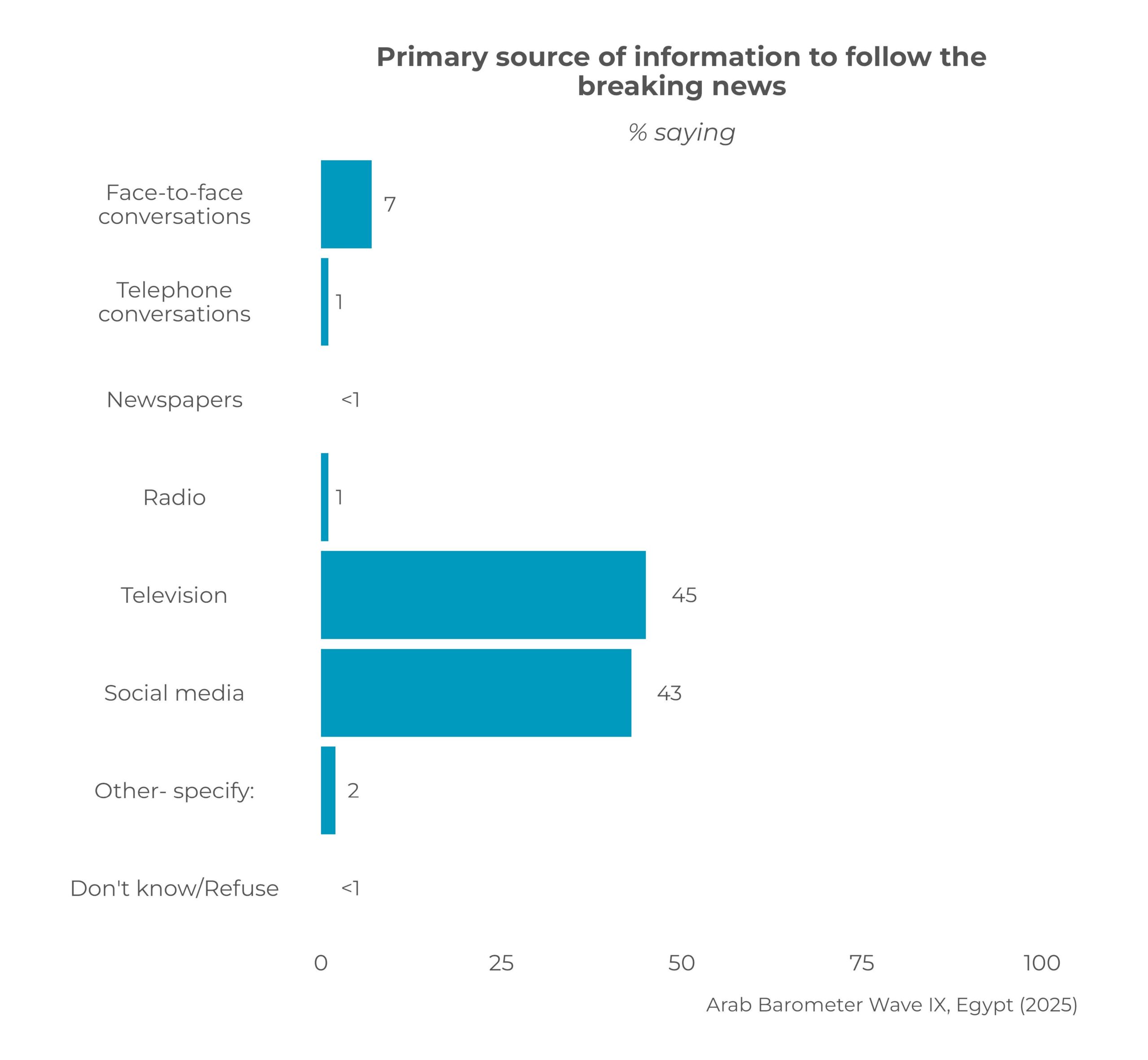
- Television (45%) and social media (43%) are now nearly equal as Egyptians’ main sources of news, creating a two-track media environment.
- Younger and more educated Egyptians rely far more heavily on social media for news, while older and less educated Egyptians continue to depend primarily on television.
Regional and International Affairs
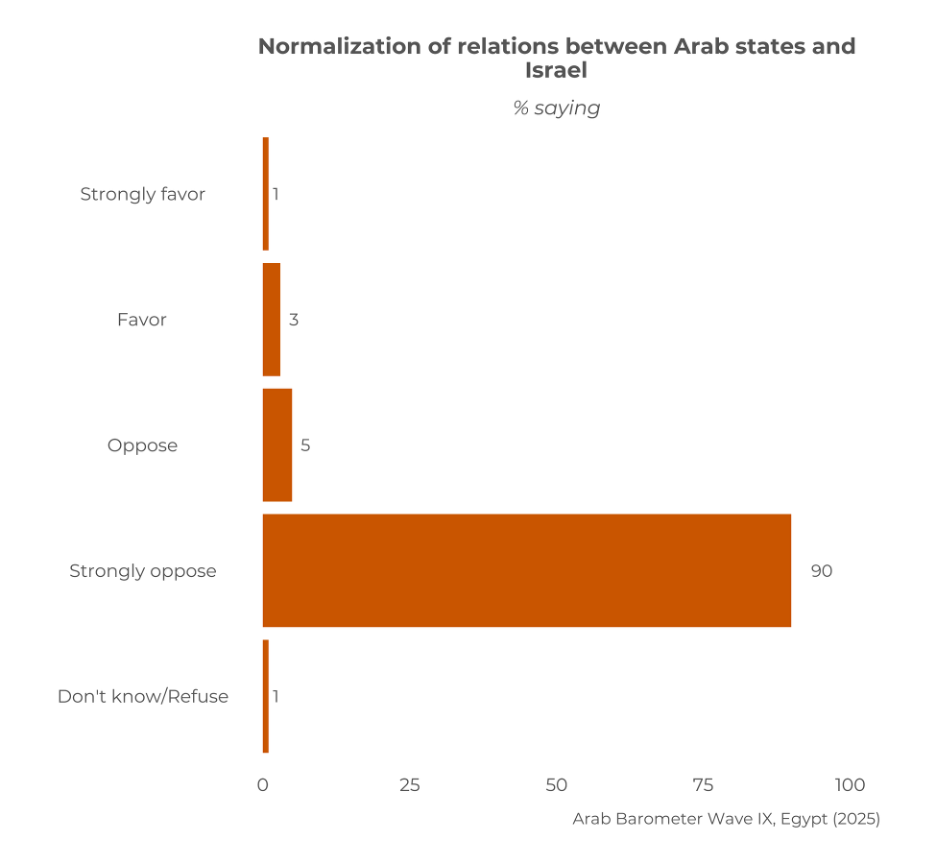
Opposition to normalization and negative views of the United States and Israel
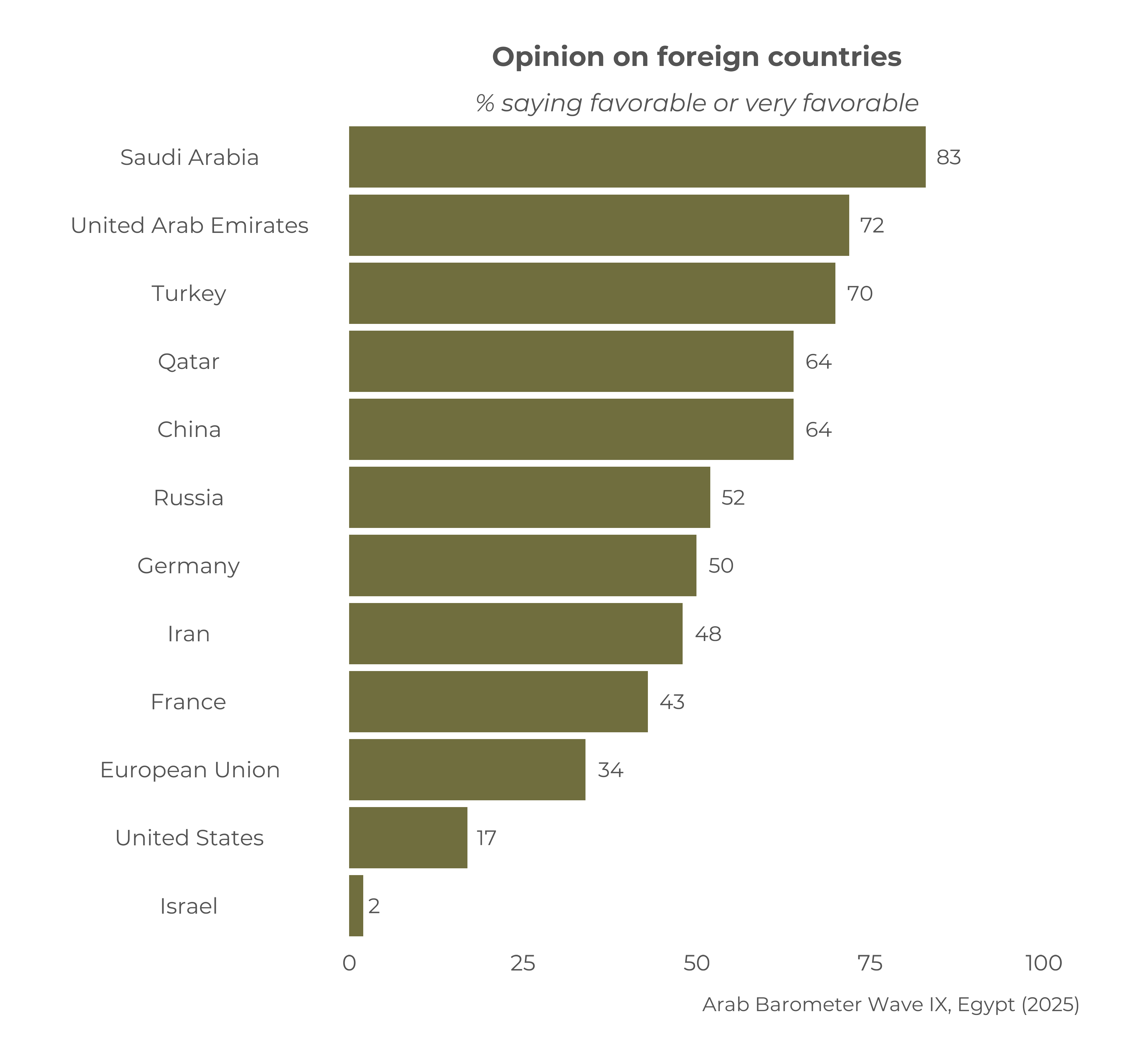
- Egyptians hold overwhelmingly negative views toward Israel and the United States: 95% oppose normalization with Israel, while 79% express unfavorable views of the United States.
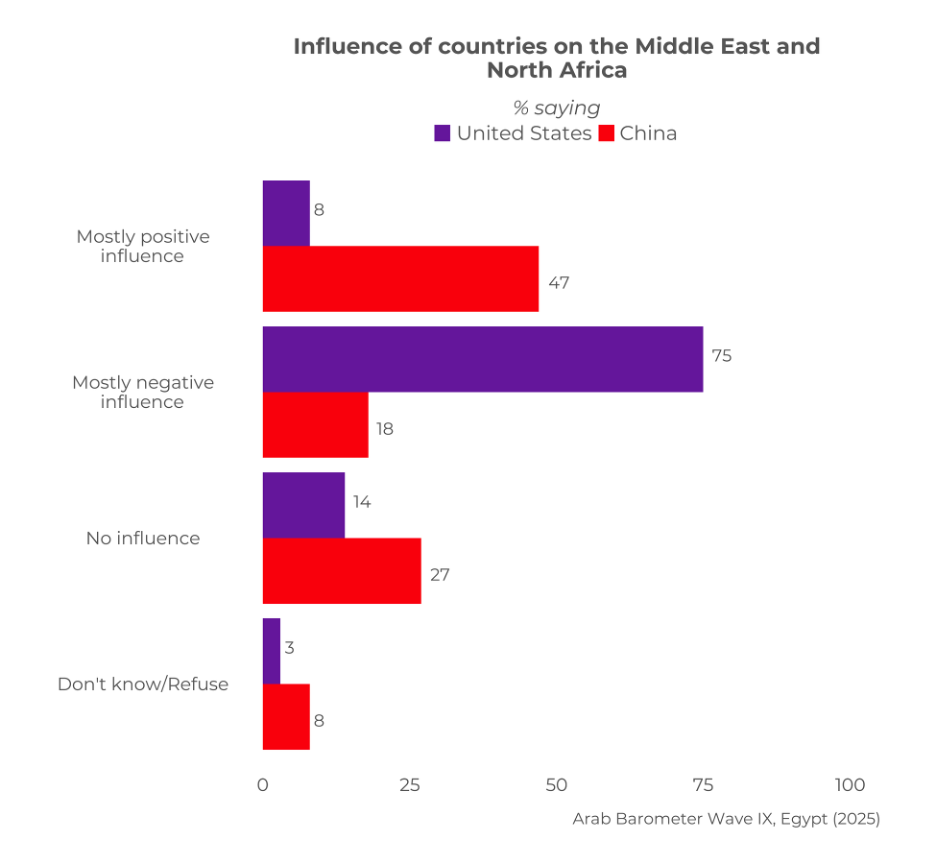
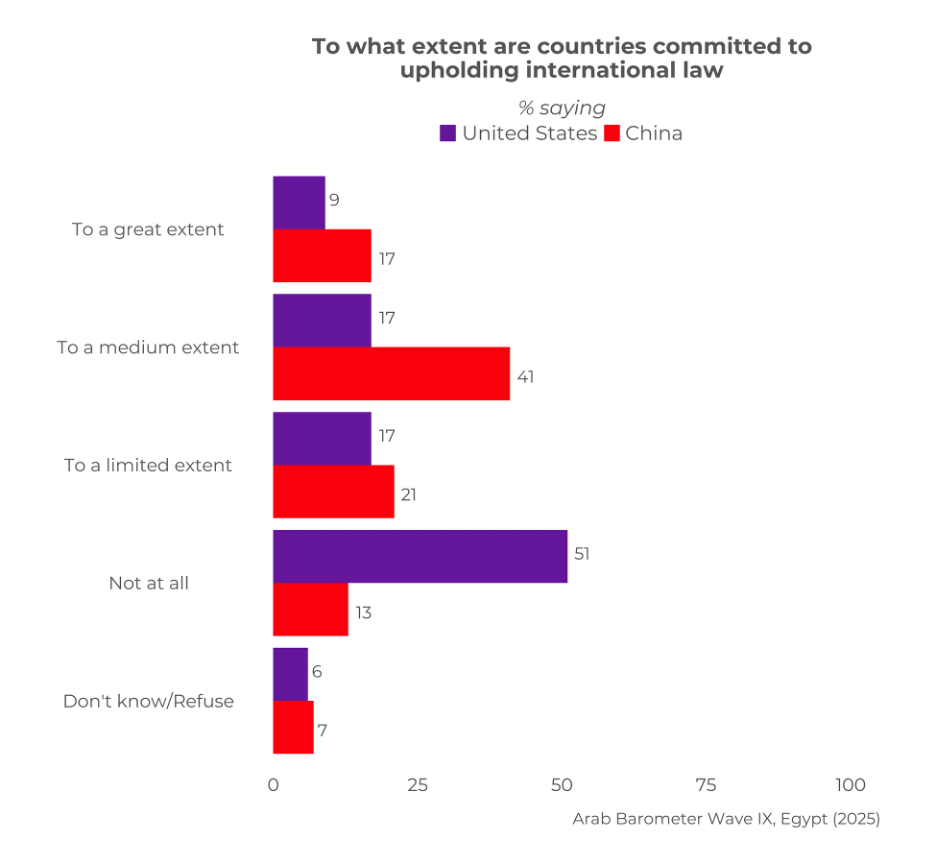
China viewed more positively than the United States
- More than half of Egyptians say the United States does not care about international law at all, compared with just 13% who say the same about China.
- While 75% view U.S. influence in the Middle East negatively, 47% view China’s role positively.
Gaza remains central to regional attitudes
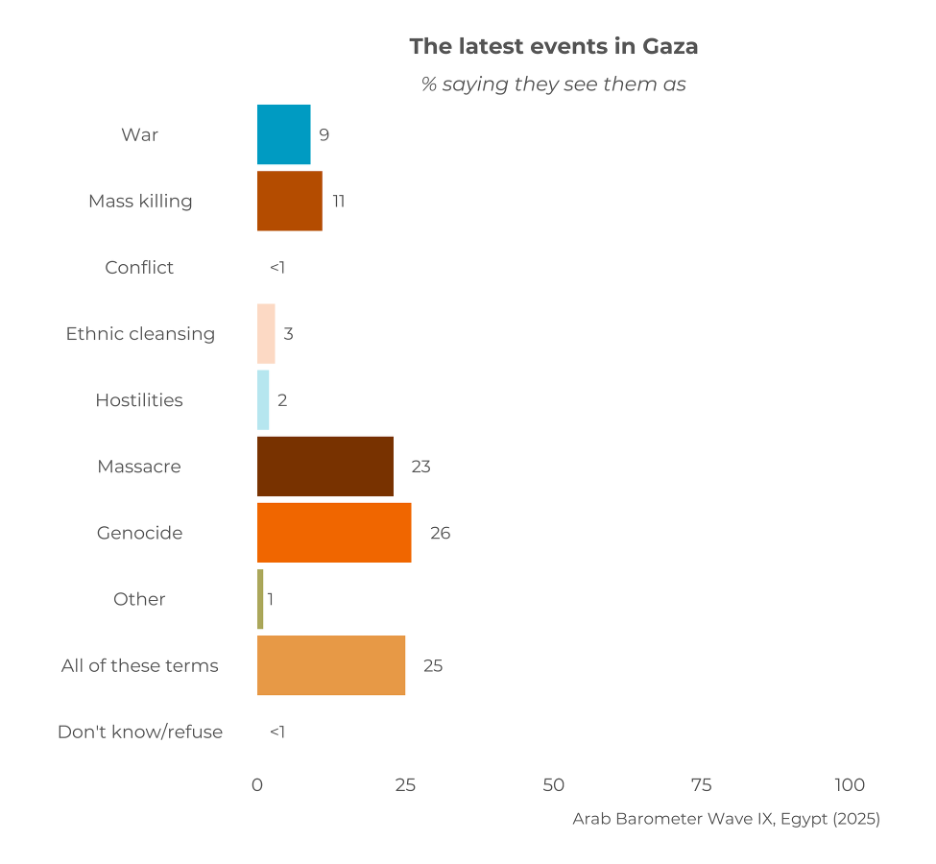
- Most Egyptians describe the war in Gaza as a “genocide,” while 94% say Egypt is more committed to defending Palestinians than Israelis.
- Most also reject a U.S. role in brokering a political solution in the Palestinian-Israeli conflict.
Favorable views toward regional and non-Western powers
- Egyptians express comparatively favorable views toward several regional and global powers, including Saudi Arabia (83%), United Arab Emirates (72%), Turkey (70%), China (64%), and Russia (52%), while views of Iran remain more mixed (48% favorable).
For additional results, graphs, and detailed breakdowns, please refer to the full report “Egypt: Public Opinion Report 2025”.
Please credit Arab Barometer in any dissemination.
ENDS //
Arab Barometer Media Resources
For media inquiries, please contact Aseel Alayli, Director of Brand, Marketing, and Global Communications, at aalayli@princeton.edu.
• Website: www.arabbarometer.org
• Resources for Media: www.arabbarometer.org/media-news
• FAQ: www.arabbarometer.org/frequently-asked-questions
• About Arab Barometer: www.arabbarometer.org/about
• Methodology: www.arabbarometer.org/survey-data/methodology