As the war involving Iran, Israel, and the United States continues to reshape the Middle East, data from recent public opinion surveys conducted in fall 2025 by Arab Barometer shed light on how publics across the Middle East and North Africa (MENA) are weighing threats, alliances, and changes in the region. Across the Arab world, many still see Iran’s nuclear program and regional influence as dangerous. Yet growing numbers also express support for Iran and, especially, for the foreign policies associated with the late Supreme Leader Ali Khamenei due to Iran’s staunch support for the Palestinian cause amid Israel’s war in Gaza. These shifts cut across Sunni-Shia lines, suggesting that public opinion is being shaped less by identity than by MENA publics’ judgments about seeking justice for Gaza.
Before the Gaza war, Iran generally fared poorly in Arab public opinion. In 2021-2022, favorability toward Iran was 30 percent or lower in every country for which data are available, while support for Khamenei’s foreign policies was below that threshold in eight of ten countries surveyed. At the same time, Arab publics expressed deep concern about Iran’s nuclear program and political influence. In eight of ten countries surveyed, at least half described Iran’s nuclear program as a critical threat. Four-in-ten or more in nine of ten countries also viewed Iran’s political influence as a critical threat to their national security.
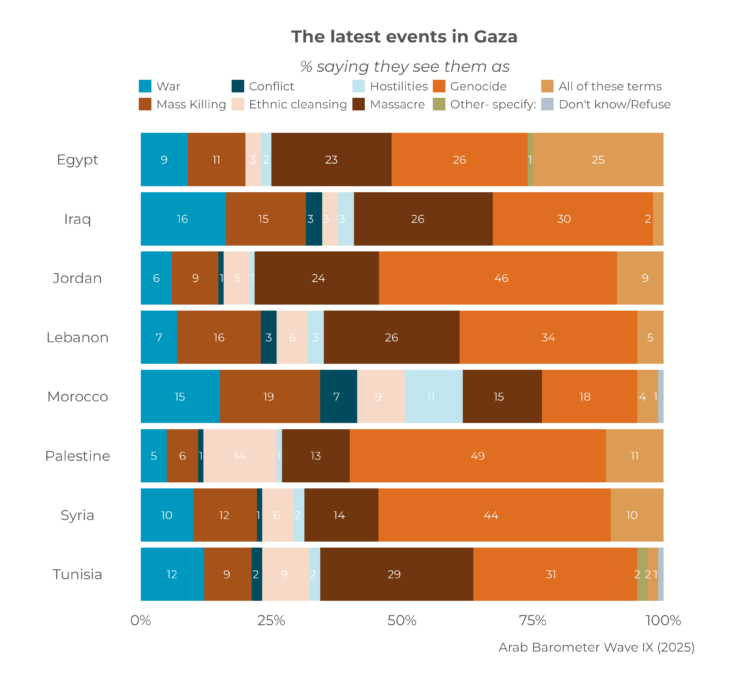
The central shift since October 7 is not that Iran has transformed its regional image, but that the political context around it has changed. Israel’s military campaign in Gaza and the broader escalation across the Middle East have altered how MENA publics perceive regional and international actors. Iran has paired rhetorical support with humanitarian assistance, including aid directed at Palestinian civilians, but Israel’s conduct in Gaza have increased the salience of the Palestinian issue as images from this war have appeared on TV and social media across the region. As a result, support for the foreign policy of Iran’s late leader rose more sharply than favorability toward Iran itself.
This distinction is visible in the trend data. By 2025, general favorability toward Iran rose meaningfully in in Iraq (20 points) and Palestine (12 points), while movement in Lebanon and Jordan was effectively unchanged when considering the survey’s margin of error. However, support for Khamenei’s foreign policies increased more broadly and more dramatically over the same period: by 29 points in Tunisia, 20 points in both Iraq and Palestine, and 12 points in Morocco. MENA publics, in other words, are not suddenly embracing Iran wholesale. Rather, many appear to be separating their broader attitudes toward Iran from their more specific assessment of Iran’s foreign policy.
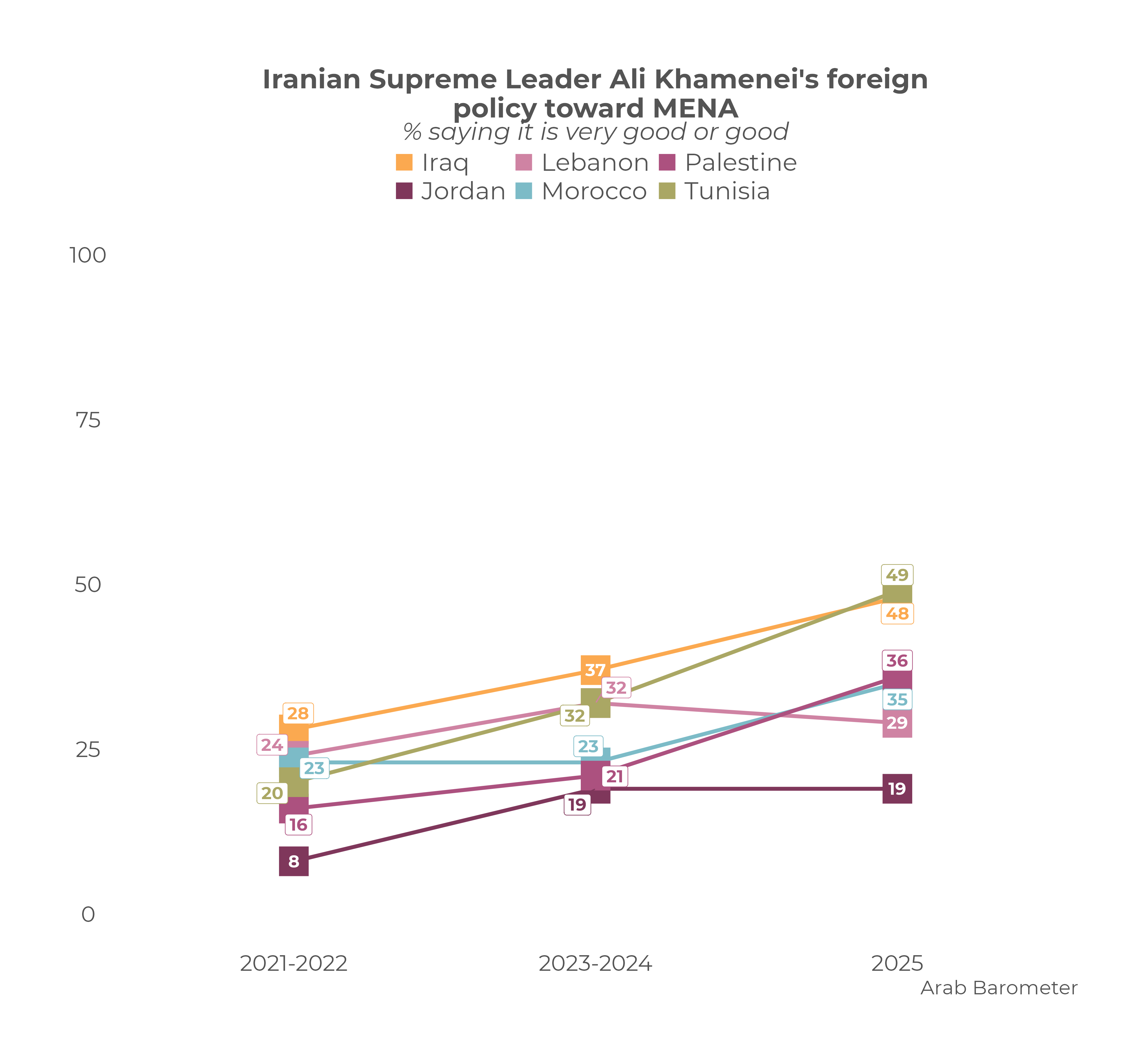
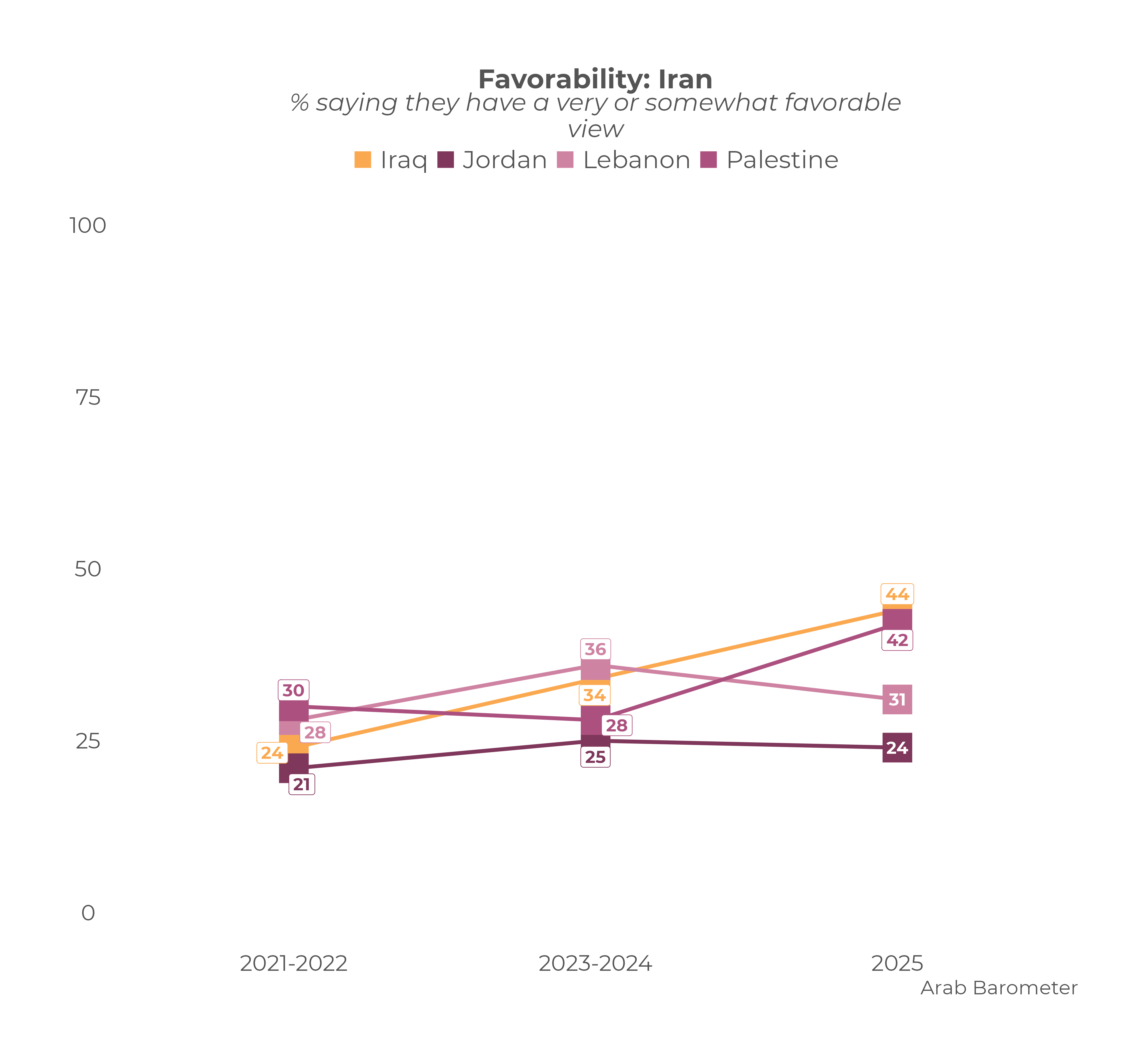
Notably, these gains come despite deep concerns about Iran’s overall policies. In late 2025, at least six-in-ten respondents in five of seven countries surveyed still said Iran’s political influence in the region represented a critical threat, while four-in-ten said the same in the remaining two countries. Concern about Iran’s nuclear program was even greater, with majorities in all seven countries describing it as a critical threat, including 85 percent in Syria, 75 percent in Egypt, and 73 percent in Jordan. In other words, the positive toward Iran and Khamenei was not across the board. The rise in views of Khamenei’s foreign policies come despite concerns about Iran’s nuclear program and support for proxies across the Middle East, which are not widely supported.
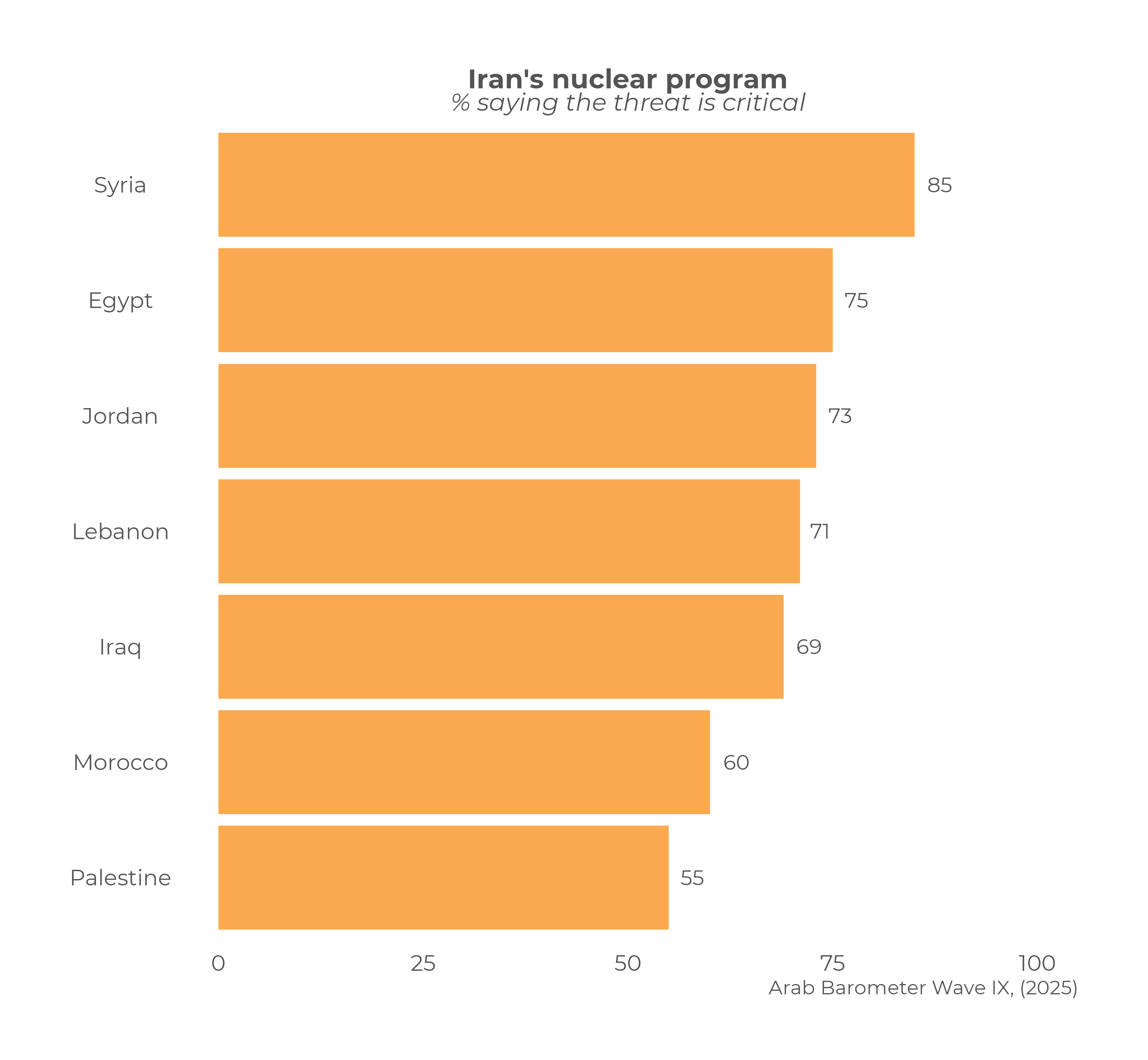
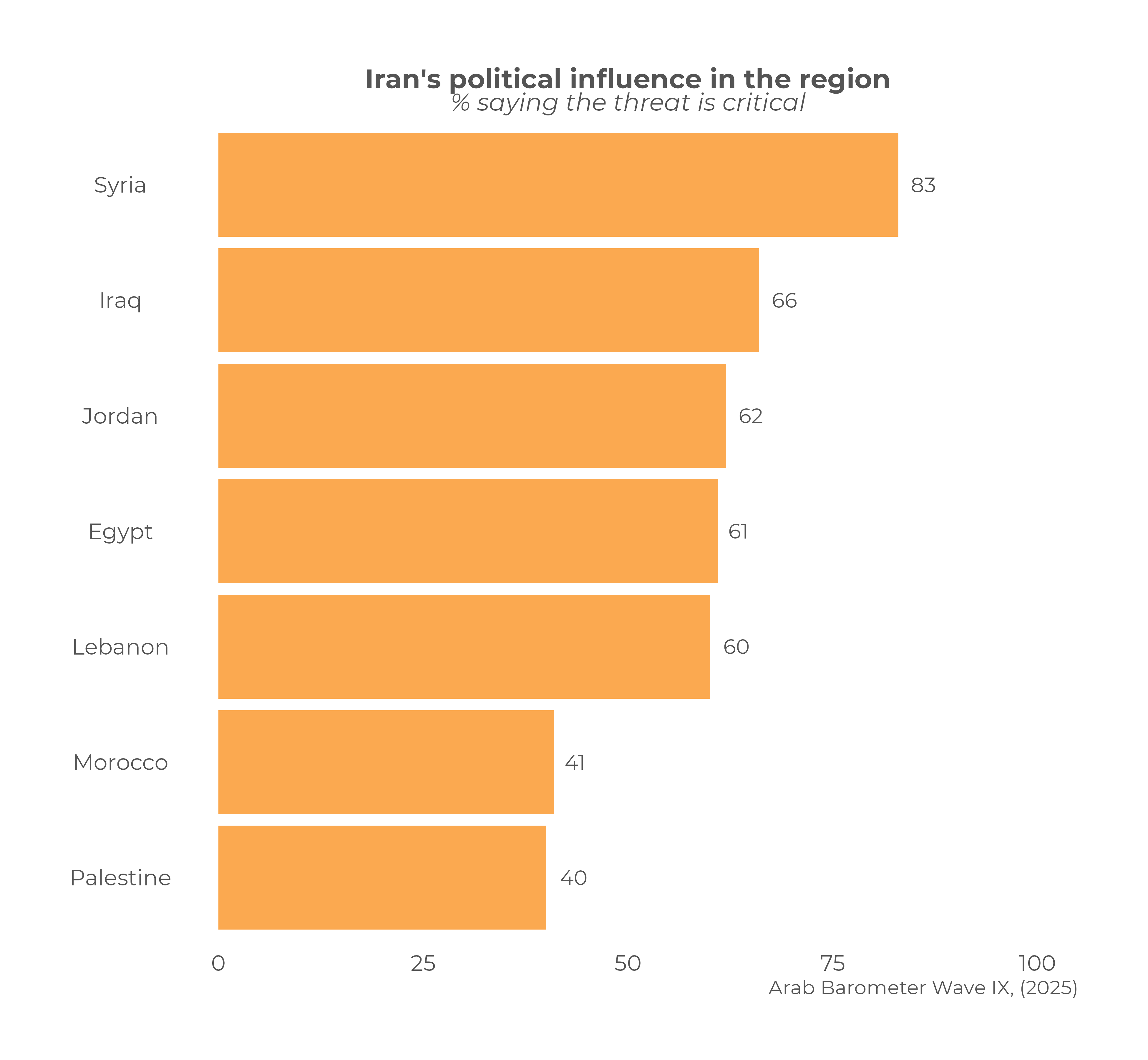
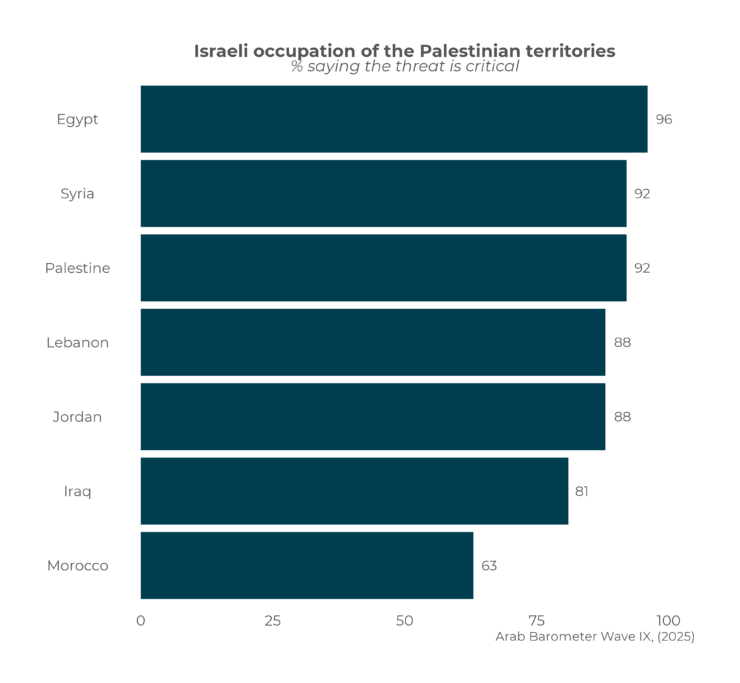
The most plausible explanation is that MENA publics weigh Iran’s support for Gaza more heavily than Iran’s nuclear policy or political influence across the Middle East. This reality is made clear by examining views toward Israel. In six of seven countries surveyed, at least 80 percent said Israeli occupation of the Palestinian territories represented a critical threat. Even in Morocco, the lone exception, 63 percent said the same. Although Iran remains widely mistrusted, Israel’s conduct in Gaza has nonetheless become the dominant lens through which many MENA publics have come to judge regional powers.
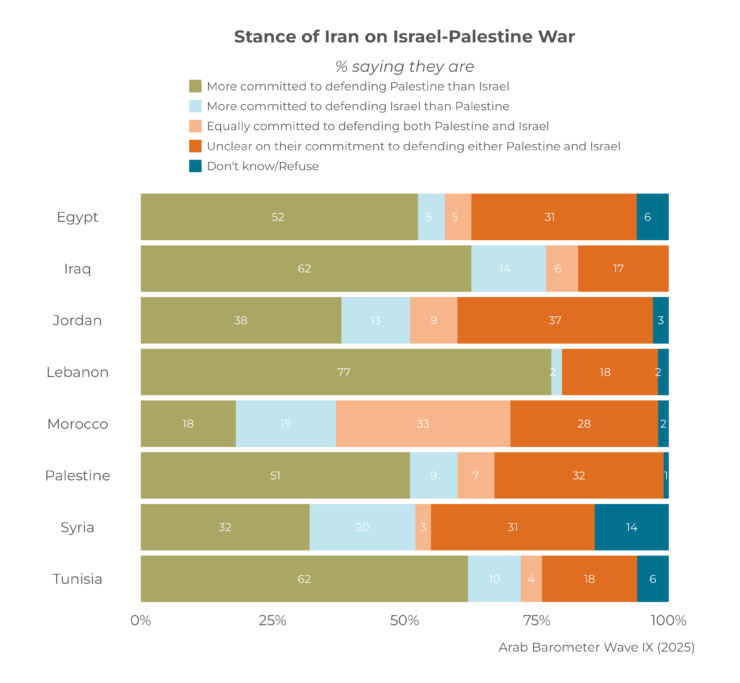
The clearest explanation for growing support for Iranian foreign policy is therefore not affection for Iran itself, but recognition of its support for the Palestinian cause. In five of eight countries surveyed, at least half said Iran is committed to defending Palestinian rights, including 77 percent in Lebanon, 62 percent in both Iraq and Tunisia, 52 percent in Egypt, and 51 percent in Palestine. Only in Jordan, Morocco, and Syria did this fall below a majority. Across the region, these figures place Iran alongside countries such as Qatar and Saudi Arabia, which are widely seen by MENA publics as the strongest supporters of the Palestinian cause.
Notably, these shifts are not confined to countries with large Shia populations. Even in majority Sunni contexts, support for Iran’s foreign policy has increased. That finding reinforces a central point: the current shift is being driven less by sectarian identity than by judgments about policies toward the war in Gaza. With regard to Iran, public opinion across MENA increasingly reflects a balance between an underlying tension – Iran as a potential threat versus Gaza as an overriding injustice. In effect, Israel’s policies toward Gaza have driven MENA publics closer to Iran with the basic logic of my enemy’s enemy is my friend.
Whether these trends endure will depend on how the war with Iran evolves. MENA publics are unlikely to endorse Iran’s attacks on Gulf states, but if Israel is seen as the aggressor in this war, public opinion may continue shifting in ways that narrow the political distance between MENA publics and Iran. If MENA publics blame Israel for starting this war while seeing Iran as another victim of Israeli attacks, then the war could drive MENA publics even further into sympathy and, potentially, support for the Iranian side.