Food insecurity across the Middle East and North Africa (MENA) is already widespread and deepening. New Arab Barometer data show that large segments of the region’s population are struggling to meet basic nutritional needs. Now, the escalating war involving the United States, Israel, and Iran risks pushing millions closer to hunger, turning an already fragile situation into a more acute crisis.
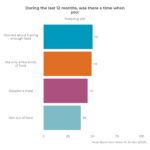
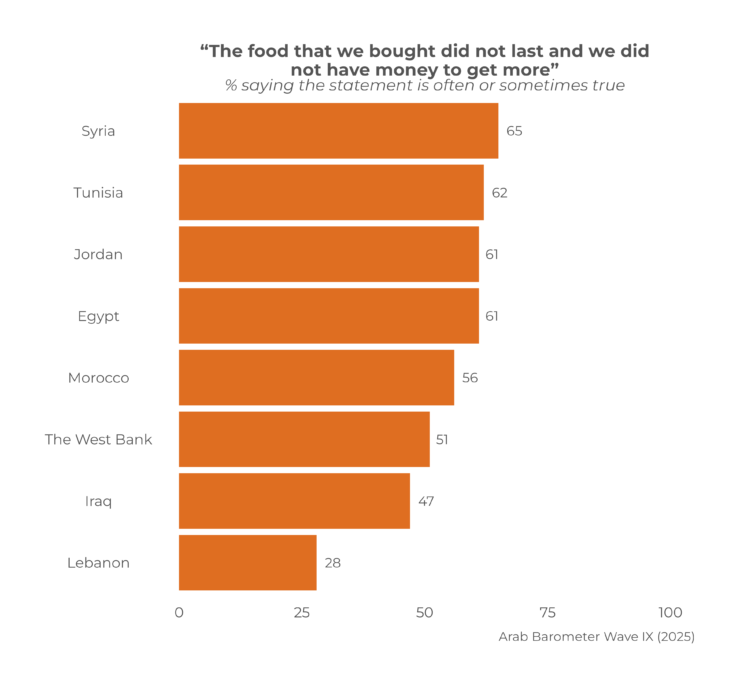
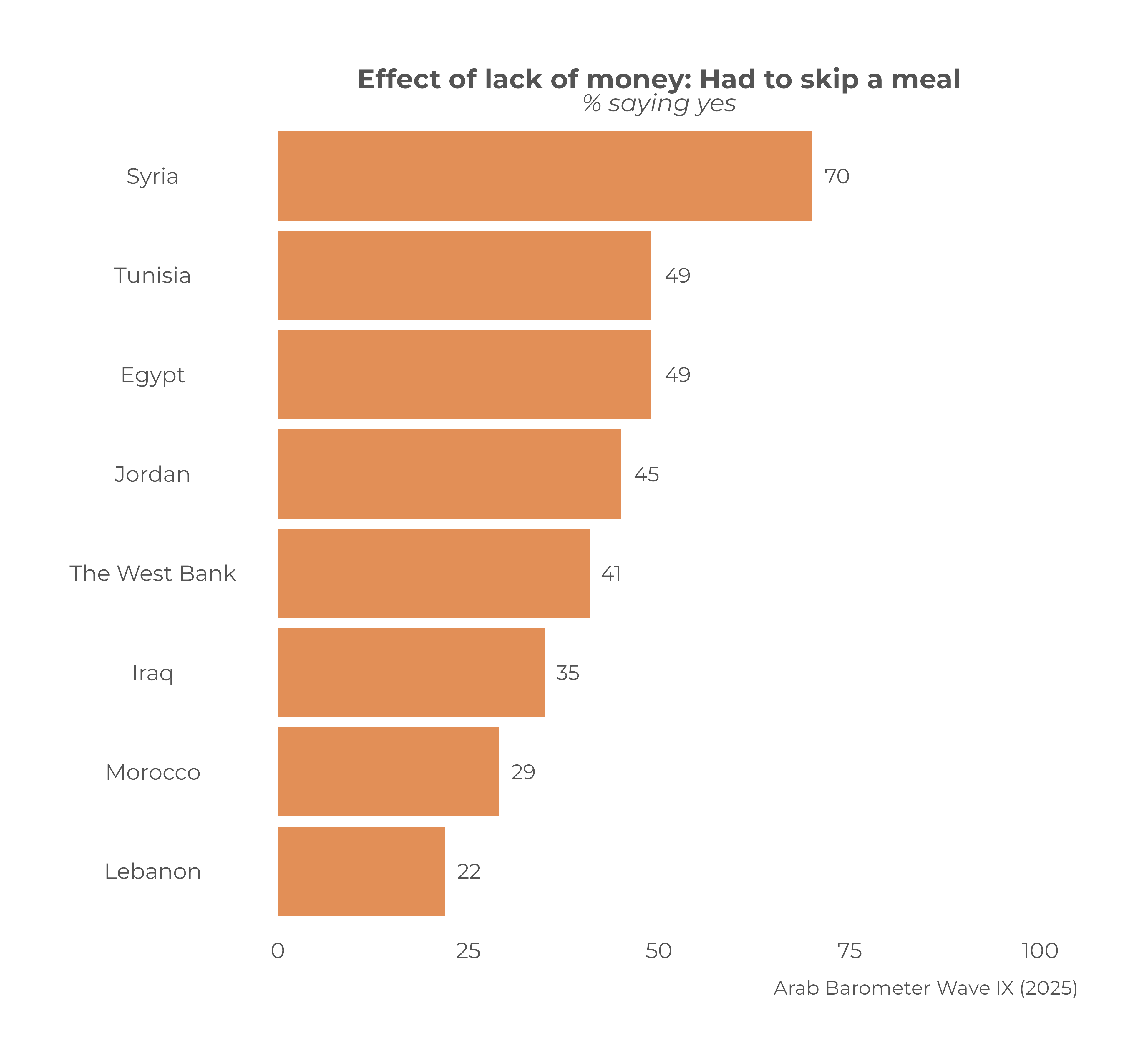
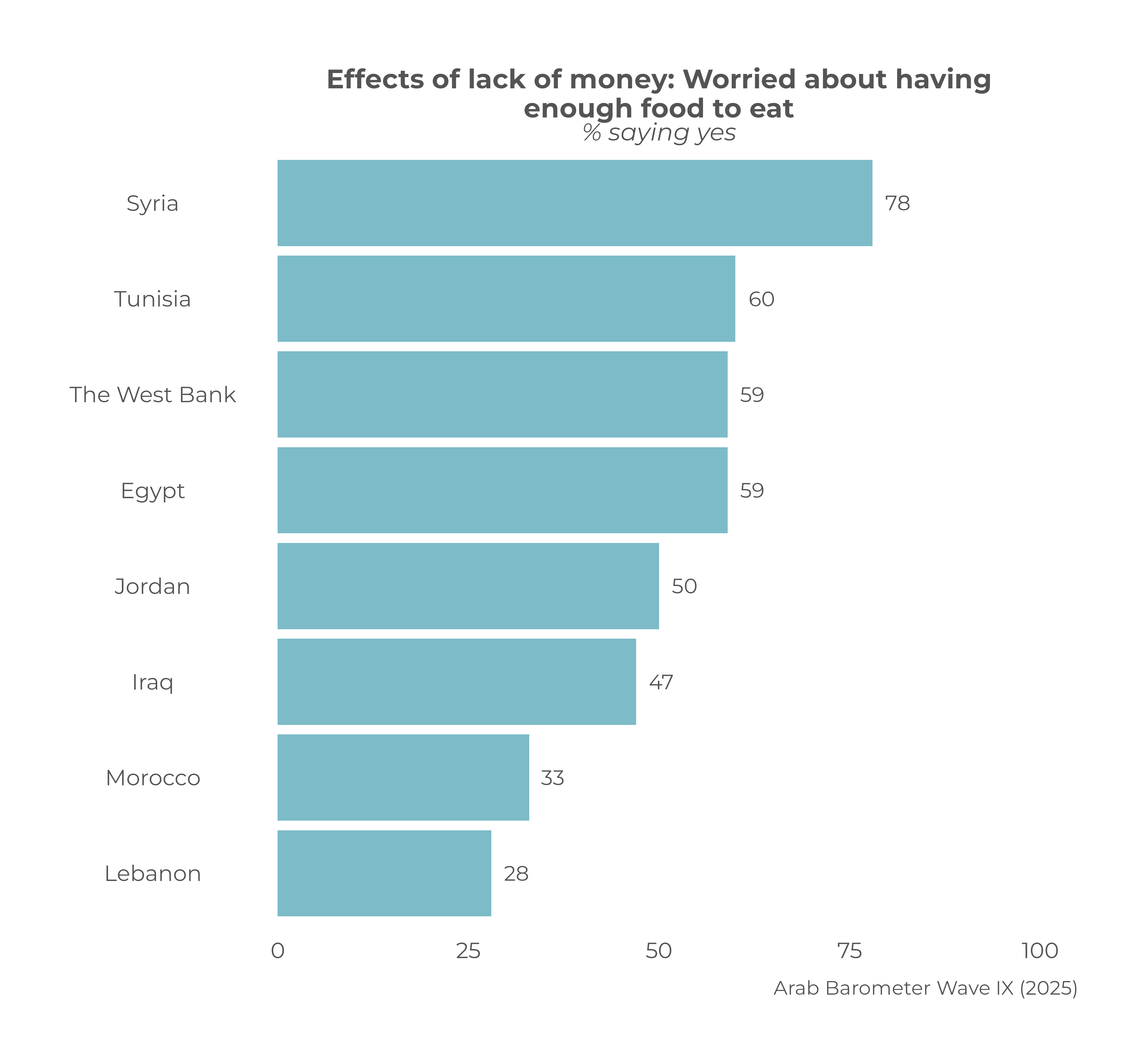
Surveys conducted by Arab Barometer in Egypt, Iraq, Jordan, Lebanon, Morocco, Palestine, Syria, and Tunisia from August to November 2025 reveal the scale of the challenge. In six of the eight countries surveyed, at least half the population report that their households had run out of food without being able to afford more. In most countries, at least one-third report having to skip meals due to financial constraints. These patterns reflect not temporary hardship, but deep-rooted structural vulnerability.
The current war has not led to this level of food insecurity, but it is surely exacerbating it. Following U.S. and Israeli airstrikes on Iran in late February, Tehran restricted movement through the Strait of Hormuz, a critical global chokepoint through which roughly 20 percent of the world’s oil and gas supply passes. The resulting spike in oil prices is already driving up transportation and food production costs worldwide, in addition to major disruptions to fertilizer supplies, with direct consequences for household food prices across MENA.
The risks are significant. The World Food Programme has warned that the conflict could push an additional 45 million people into acute hunger globally, with a substantial share in MENA, one of the regions most exposed to external shocks.
In economies already grappling with inflation, these additional pressures are likely to push more households into food insecurity. Across the region, households are beginning to feel the impact in their daily lives. In Egypt, for example, authorities have introduced measures to contain economic fallout, including limiting business hours and raising fuel and transportation prices. While intended to stabilize the economy, such policies risk exacerbating pressures on already vulnerable populations.
Even prior to the escalation, six in ten Egyptians reported frequent concerns about securing enough food, and roughly half said they had skipped meals due to financial constraints. Inflation is already identified as the country’s most pressing economic challenge by 45 percent of Egyptians. As costs rise further, these pressures on the food supply are likely to intensify.
The region’s structural vulnerabilities compound these risks. Many MENA countries are among the most food import-dependent in the world, rendering them highly exposed to global price shocks and supply disruptions. According to the Food and Agriculture Organization (FAO), a prolonged conflict could disrupt supply chains and lead to significant food shortages, particularly in import-reliant economies.
Iraq illustrates these risks clearly. The country imports roughly 70 percent of its food supply, with significant reliance on imports from Iran, including wheat and dairy products. Before the current escalation, large shares of Iraqis reported food insecurity, with many households struggling to maintain consistent access to food and nearly half expressing concern about whether they would have enough to eat. Disruptions to trade flows and rising prices could therefore have immediate and severe consequences.
Importantly, the full impact of the conflict may not be immediate. Shocks to food systems are typically felt only in the months or years after an event. Rising fuel and fertilizer costs today can translate into reduced agricultural output and tighter global supplies months later. The FAO has warned that these dynamics could soon drive up the prices of staple foods such as wheat and rice, further constraining access for vulnerable populations.
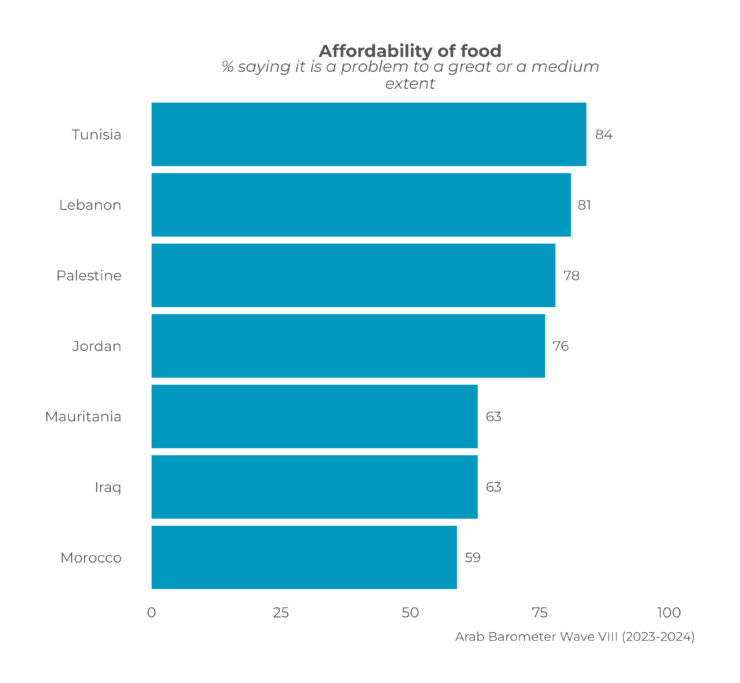
For ordinary citizens across MENA, this means that the effects of the conflict are likely to intensify over time. What is already unaffordable today may become even more so tomorrow. Arab Barometer data show that millions of households are already living with little or no financial buffer. Wave VIII surveys, conducted between Fall 2023 and Spring 2024, show that overwhelming majorities in all countries surveyed viewed the affordability of food as a serious problem. In a region where millions already struggle to secure sufficient food, even small price hikes can have far-reaching consequences.
This unfolding crisis highlights a broader reality: food insecurity in MENA is a structural failure, rather than an individual one. It is driven by a combination of domestic policy shortcomings, economic inequality, and vulnerability to external shocks. While these failures predate the current crisis, the war’s disruptions are rapidly intensifying their impacts.
Without urgent action, the consequences for ordinary households will be severe. Governments must move quickly to strengthen social protection systems, protect purchasing power, and ensure access to essential food items. Without such measures, each new crisis, whether internal or external, will hit harder than the last.