
For decades, Islamic governance held allure in the Middle East. Now some scholars say the Islamist wave has passed.
About a year after the Iranian revolution in 1979, Ayatollah Ruhollah Khomeini, the supreme leader of the new Islamic government, detailed his plan to govern according to Islam. The bearded, turbaned cleric said the state would support farmers and laborers and distribute land in line with “religious regulations.” Universities and journalists would propagate the divine cause. The courts would serve as “perfect examples of the implementation of God’s religion.”
The result, he declared, would strengthen Iran against foreign powers and create a model for the liberation of Muslims everywhere. “We must strive to export our revolution to the world,” he said. “Despite all the painful hardships we endure, we confront the world from an ideological standpoint.”
In the years since, Iran has done just that. For nearly five decades — even through the strain of its current war with the United States and Israel — Iran’s government has run a major Middle Eastern state under the guidance of clerics while building a formidable military force. That puts the country at the vanguard of modern experiments with political Islam, or the application of the world’s fastest growing religion to statecraft, an ideal that has remained both alluring and elusive across the Muslim world.
Many Muslim-majority states cite the Quran as a source of legislation. Saudi Arabia, Pakistan and Afghanistan officially claim Islamic bona fides. Islamist parties use politics to advance religiously inspired policies in Iraq, Lebanon, Malaysia, Indonesia, Bangladesh and Turkey. And recent decades brought new efforts to apply Islam to politics in the Middle East. Governments, political parties and militant groups across the region have sought political power by vowing that greater Islamic adherence would usher in a new era of just governance.
Now, however, political Islam in the region has withered. The map of the Middle East is dotted with examples of idealistic Islamist visions that failed to manifest into real-world successes. Their proponents may have marshaled popular support, for a time. They may have held the levers of power. They may have governed, or tried, in line with their views of Islamic law. But today, in most cases, they did not last.
“As organized political forces, be they governing forces, political parties or organized movements, Islamist groups are definitely on the back foot,” said Monica Marks, an assistant professor of Middle East politics at New York University Abu Dhabi.
Osama bin Laden’s attempt to ignite a civilizational war against the United States did not work out. The Islamist parties that rushed into politics during the Arab Spring uprisings of 2011 failed to maintain power over any state. The U.S. military and its allies smashed the Islamic State’s self-declared caliphate in Syria and Iraq. Leaders in Saudi Arabia and Syria — and even Iran — now rely more on nationalism and less on Islam to rally their people. Few of the world’s two billion Muslims, including many in Afghanistan, want the fundamentalism that the Taliban offers.
Each of these failures had its own context and history, but the causes overlap. Western military might demolished the most extreme Islamist projects. Others never amassed the popular or international support needed to prevail over authoritarian forces that rose up in their own countries, often backed by powerful neighboring states.
Still in power, Iran’s revolutionary government is the most prominent exception, although its ideals face new dangers. American and Israeli bombs have killed its leaders and battered its military. Many Iranians made their distain for the clerical government clear through recurrent protests. The country’s international isolation is deep, and Ayatollah Khomeini’s dream of the revolution sweeping the Muslim world never materialized.
Iran’s current travails have intensified discussion among experts about whether political Islam has crested and what that means for the Middle East and the broader Muslim world.
A rise and fall
Experiments combining Islam and politics have been around since the religion arose in the Arabian Peninsula in the seventh century. By the 16th century, emirates, sultanates and other polities that drew on Islam had ruled or were still thriving in areas between modern-day Spain and the Indian subcontinent as well as parts of Africa.
The nation states that arose in the 20th Century redrew what remained of that map. The victors in World War I dismembered the Ottoman Empire; its heart became modern Turkey, a secular republic that abolished the caliphate in 1924. Since then, republics and monarchies, some with Islam-inspired laws, have prevailed.
Still, many believers have clung to the idea that politics needs more religion, not less. They see Islam as not just a personal faith but also a comprehensive societal program. Repression and corruption in Muslim countries, often by regimes supported by the West, fueled the belief that only pure Islamic governance could deliver justice and prosperity.
These ideas were central to the Iranian revolution and rose again during the Arab Spring uprisings that toppled strongmen across the Middle East.
In Egypt, the fall of the regime in 2011 led to free elections. The Muslim Brotherhood, an Islamist group, campaigned on the slogan “Islam is the solution.” It won control of the Parliament, then the presidency.
Those victories were short-lived. Protests erupted against the new authorities, whom critics accused of breaking promises to rule inclusively and using their government posts to expand their power. The military remained intact, and in 2013, it ousted the president, Mohamed Morsi. A year later, Gen. Abdel Fattah el-Sisi became president through an election widely regarded as undemocratic. He remains in power, at the helm of a new autocracy.
A similar story played out in neighboring Tunisia, where Islamists rode elections to power but failed to win the trust of secular voters. Protesters and other political parties opposed them, and an
election in 2019 elevated a populist president, Kais Saied, who has since granted himself almost limitless powers.
The fall of regimes in Libya and Yemen, after popular movements there, led to civil wars. Islamists took part in both but never gained complete control of either country. Syria, too, collapsed into a brutal civil war. The Islamists finally won in 2024 and promised a moderate path, not a strict Islamic regime.
For now, many scholars doubt that political Islam will rise again soon. In a new book, “Waning Crescent: The Rise and Fall of Global Islam,” Faisal Devji, a historian at Oxford, compares political Islam to Communism, Baathism and other ideologies that sprang up during a specific historical moment and later lost their relevance. Terrorism tarnished the Islamist brand, too, Professor Devji told me. Most Muslims abhorred the cinematic violence of Al Qaeda and the Islamic State, also known as ISIS. “With the emergence of Al Qaeda and ISIS, you had a massive rethinking of what a Muslim public life and politics should look like,” he said.
Of course, measuring what people want across an area as vast as the Middle East is difficult. A further tangle is how to define political Islam, which can encompass everything from President Recep Tayyip Erdogan of Turkey, an Islamist at the head of a constitutionally secular state, to radical jihadists who attack anyone who disagrees with them, including other Muslims.
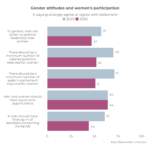
To avoid such complications, Arab Barometer, a public opinion tracker, focuses on specifics, said Michael Robbins, the group’s director. Its surveys ask whether it is better for religious people to hold state positions, whether clerics should have sway over government decisions and whether religion should be private and separated from socio-economic life. It compares those indicators in six Arab countries — Egypt, Jordan, Morocco, Iraq, Lebanon and Tunisia.
Overall, its results suggested that only a minority was enthusiastic about political Islam. From 2012 to 2025, support for religious people in government ticked above 50 percent in just two of the countries, Jordan and Morocco. Support for clerical influence over state policy rose in five countries, but was above 40 percent only in Iraq, at 58 percent. (In the United States, by comparison, 43 percent of people say the government should promote Christian values, according to the Pew Research Center.) Solid majorities in four of the countries agreed that religious practice should be a private matter.
But public opinion holds limited sway in the Middle East. Polling in many countries is scant, and power is held mostly by autocrats who don’t have to worry about angry voters chucking them out in the next election…
Read full article at New York Times